Uncategorized

To the Cheese market

During every Spring and Summer season, Alkmaar is hosting the weekly cheese market on Fridays from 10:00 to 13:00 on Waagplein. This market is believed to be the most popular cheese market in the world and attracts thousands of visitors each year. It is more than 400 years old and houses around Waagplein has been demolished to increase the size of the plein. Although cheese are not traded in the same manner today, this beautiful tradition gives an insight on how cheese were carried, evaluated, weighed and sold back in the 16th century. As a newcomer into the Netherlands, you first visit all the touristic attractions and then it become the ‘normal’. For me the cheese market will always be special as it was one of the first trips I did with my children when we arrived in the Netherlands. I still enjoy the spectacle and it is also a first on the agenda when family or friends come to visit. It is a wonderful relaxed event where you can soak up the summer sun, enjoy the beautiful city of Alkmaar and taste the local delights and cheeses of the region. There are quite a lot to do and see in Alkmaar, like the cheese museum or a boat trip on the canal.

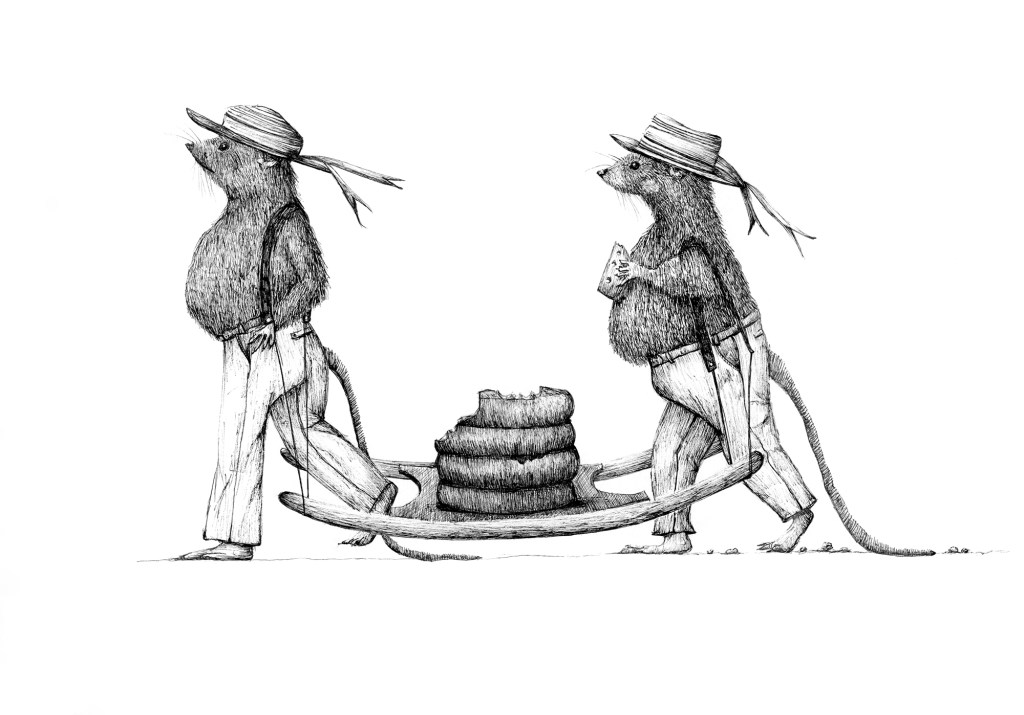
The event shows a typical day in the the selling and buying of cheese. The fist thing you will notice are the cheese carriers or Kaasdragers with the different colour straw hats, who are accompanied by the Cheese Father. They have different tasks: You have the Tasman, who is responsible for placing the weights onto the cheese scales, the Zetter who is responsible for taking the cheese from storage to the market, the Ingooier who takes the cheese from the market to storage at the end of the day, the Bootelier who is responsible for getting drinks after the market is over, and the Voorman who is the head and often the oldest member of the company.

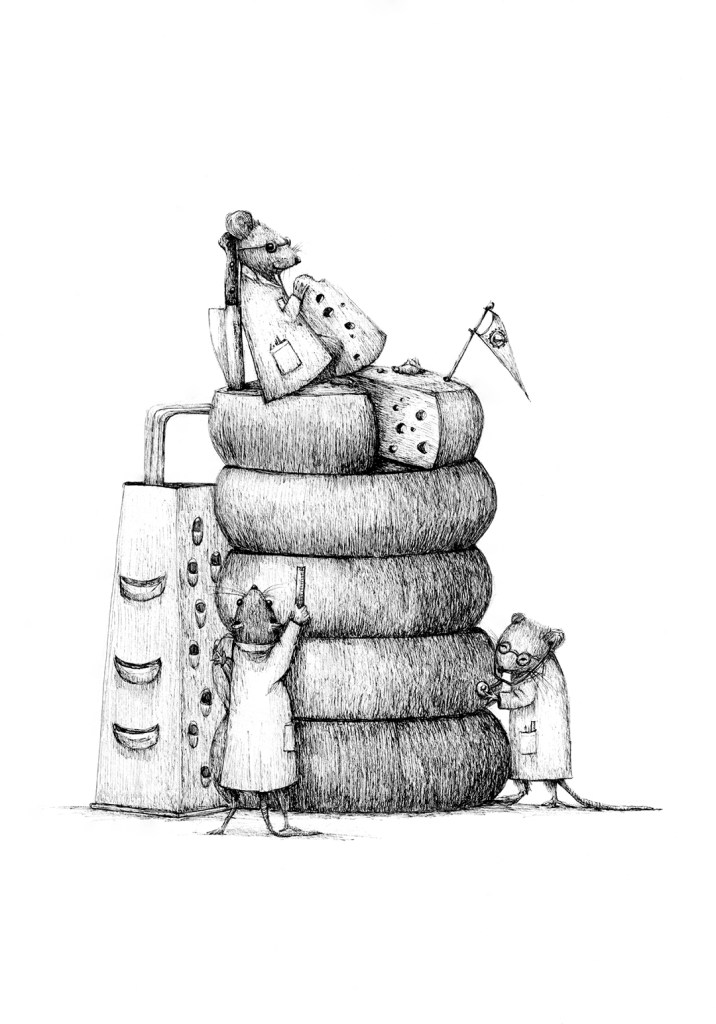
After the market opens, testers in white lab coats, use a special scoop to take sample cheese from the cheese wheel in terms of feel, smell, and taste. They also make sure the cheese have enough holes or eyes. After a batch is sold it is carried by two men on a wooden barrow to the scales to be weighed. These cheeses can weigh up to 120 kg and the men walk in a specific rhythm in order to carry the weight more easily. The Tasman weighs it in front of the ‘Waagmeester’ to ensure the buyer gets the right amount of cheese. The unsold cheese are carried back to storage.

You can find more interesting facts on https://fullsuitcase.com/alkmaar-cheese-market/

As an artist, you sometimes struggle to find the right ‘material’ or inspiration to work from, but I feel that portraying my everyday life or a peek of my life in The Netherlands, might be interesting to another person not knowing the country and its traditions. My trademark are also my storybook animals and thus combining the two will give my everyday story ‘another’ story’. I thought that this might lead to a series of illustrations depicting an event on another level.

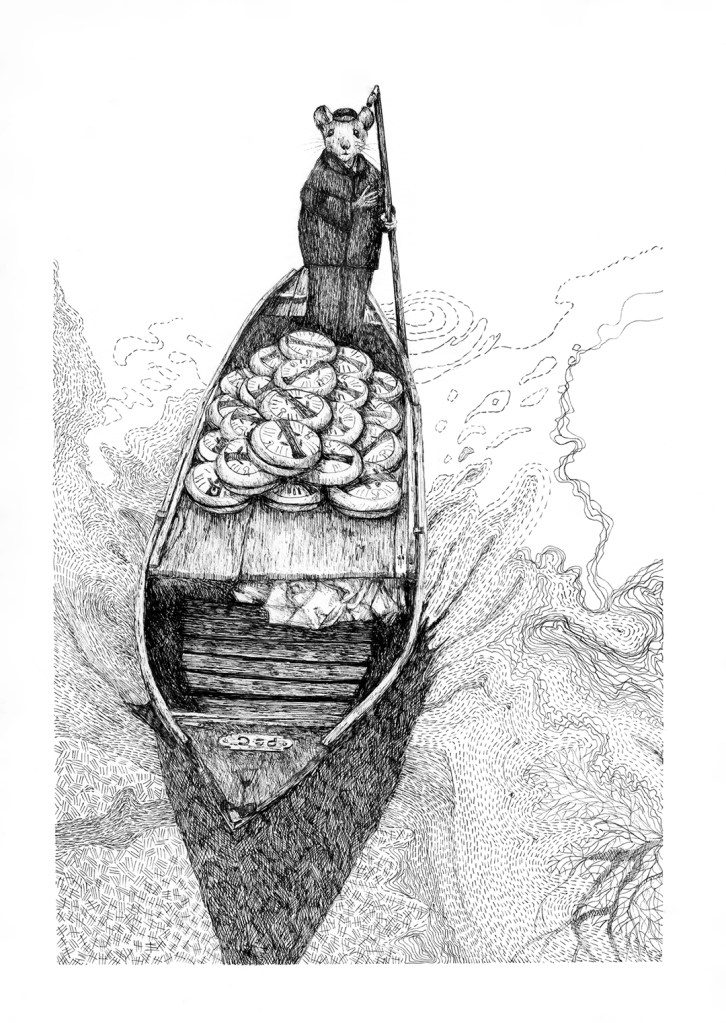
Thus the first illustration shows how the cheese were transported to the markets back in the days. Because The Netherlands have so many water canals that link cities and towns, boats were the obvious choice of transportation. Every Friday morning the cheese famers with their boats, carrying the precious golden cargo, are off to the cheese market in Alkmaar. I usually do my drawings with 0.03 Unipin markers onto 200 gsm Fabriano paper. I have used some line patterns in order to illustrate the movement of the water instead of just ‘shading’ or hatching.

Thus the starting point of my cheese story…
Cheese inspection
the Cheese carriers
Uncategorized

Some inking ‘no-life’ art

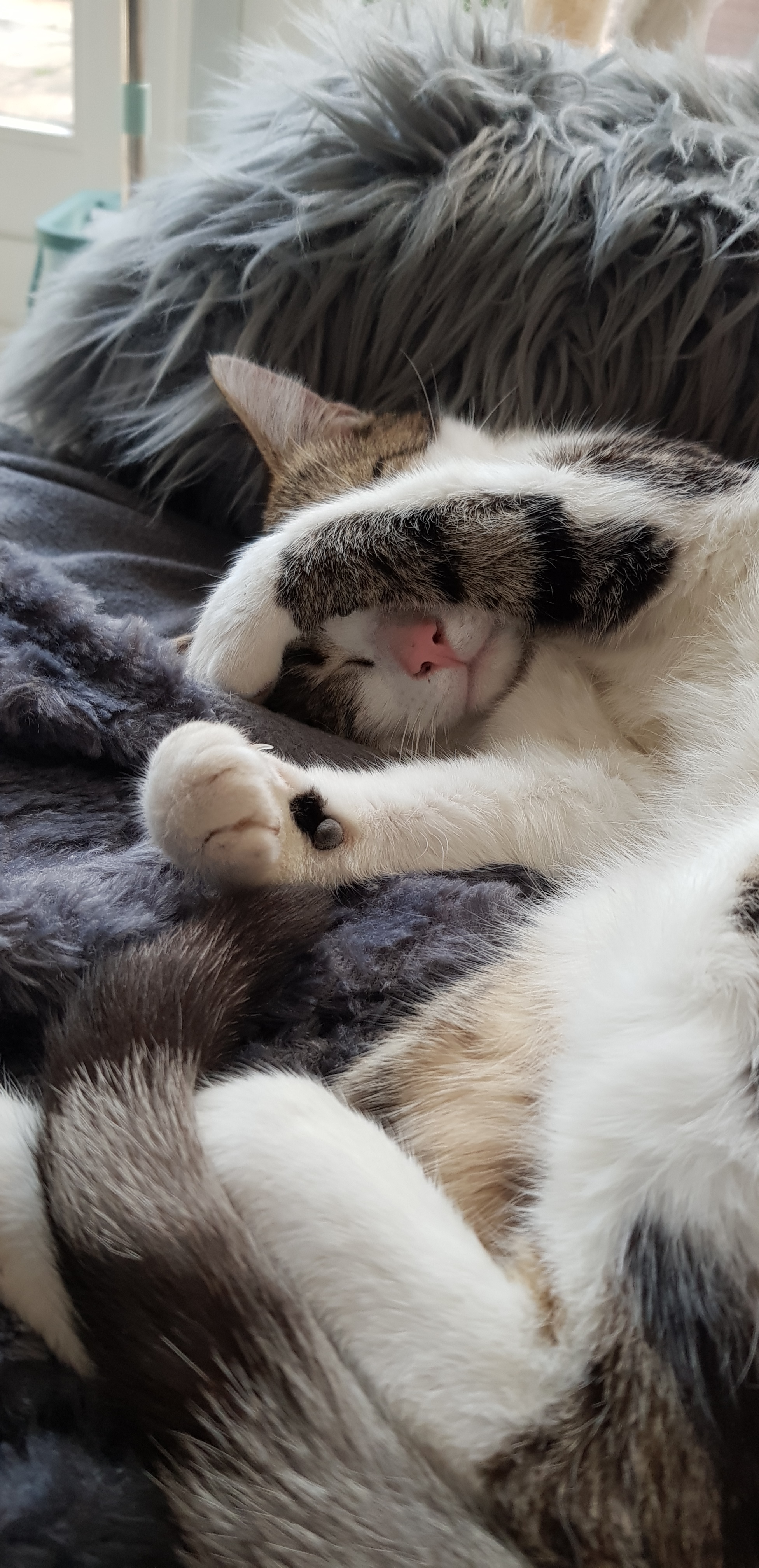
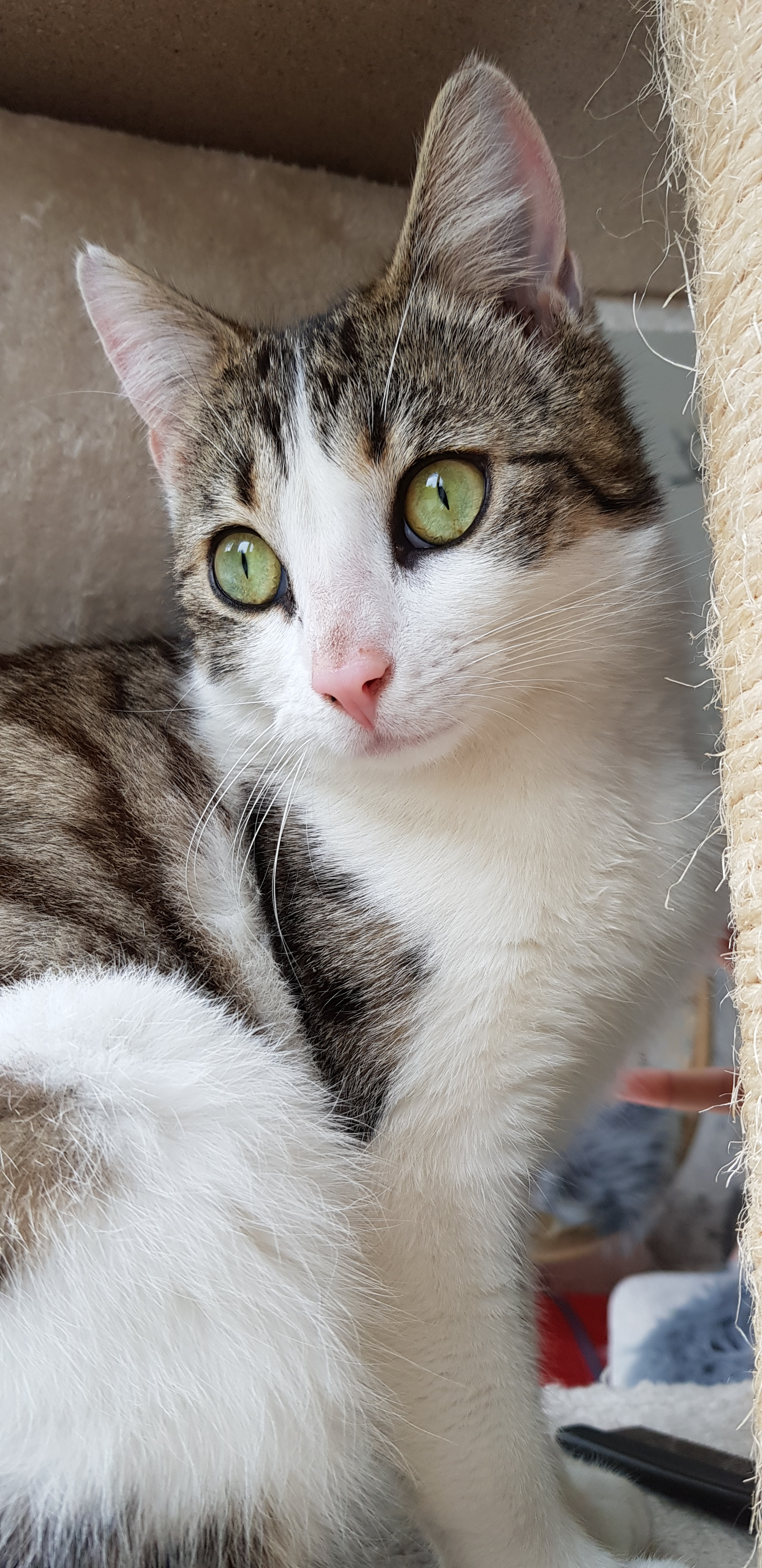
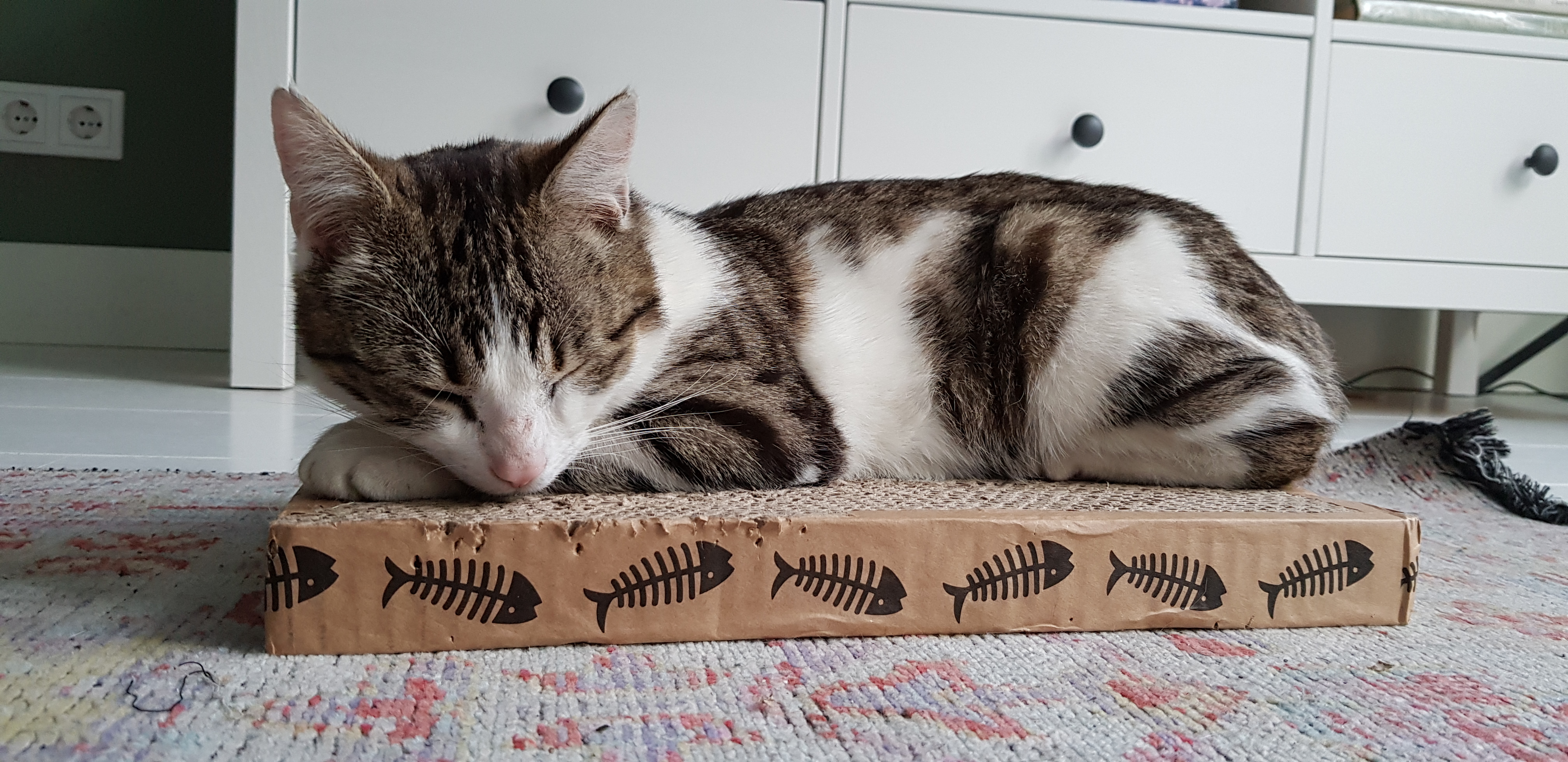
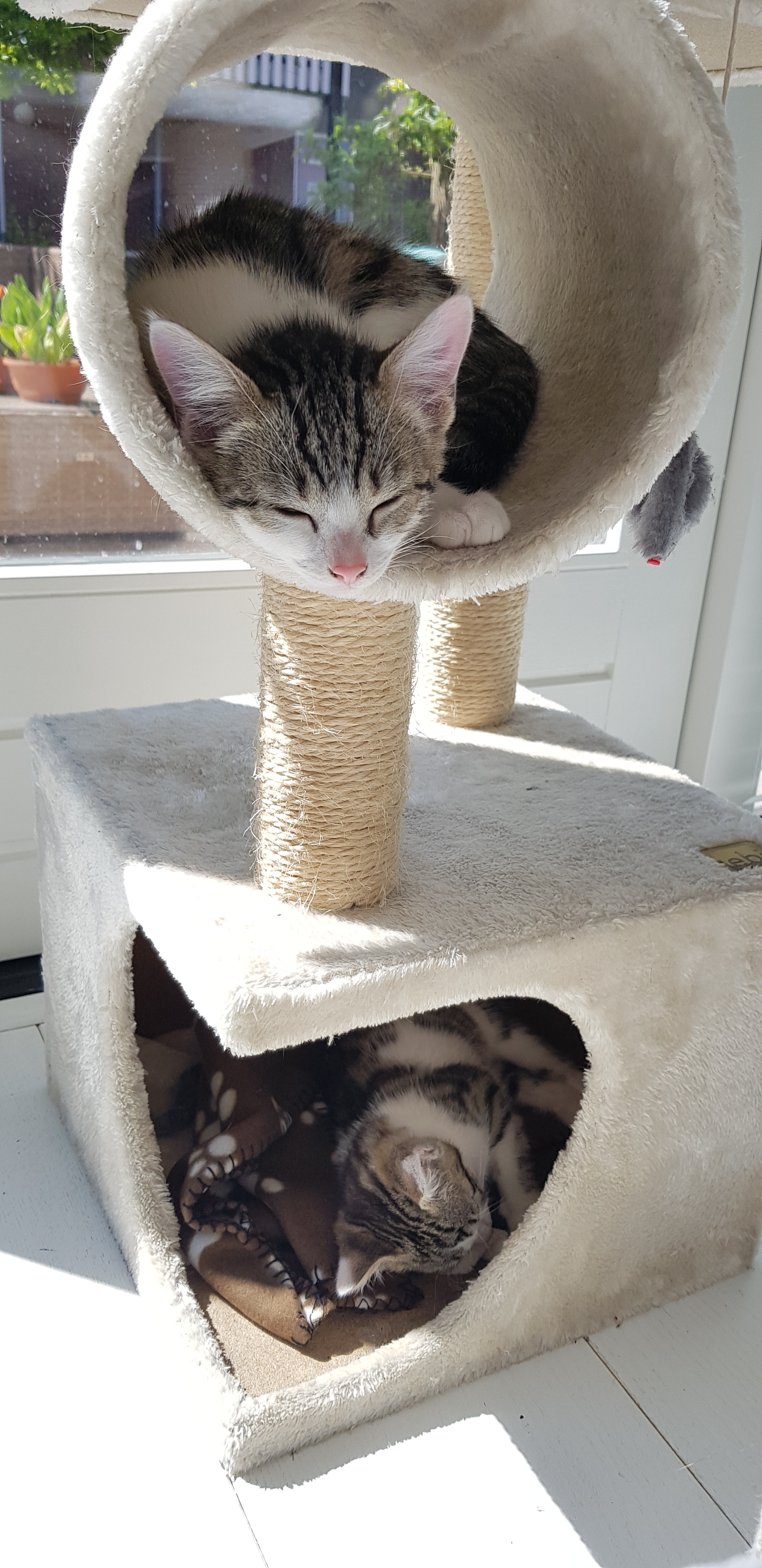
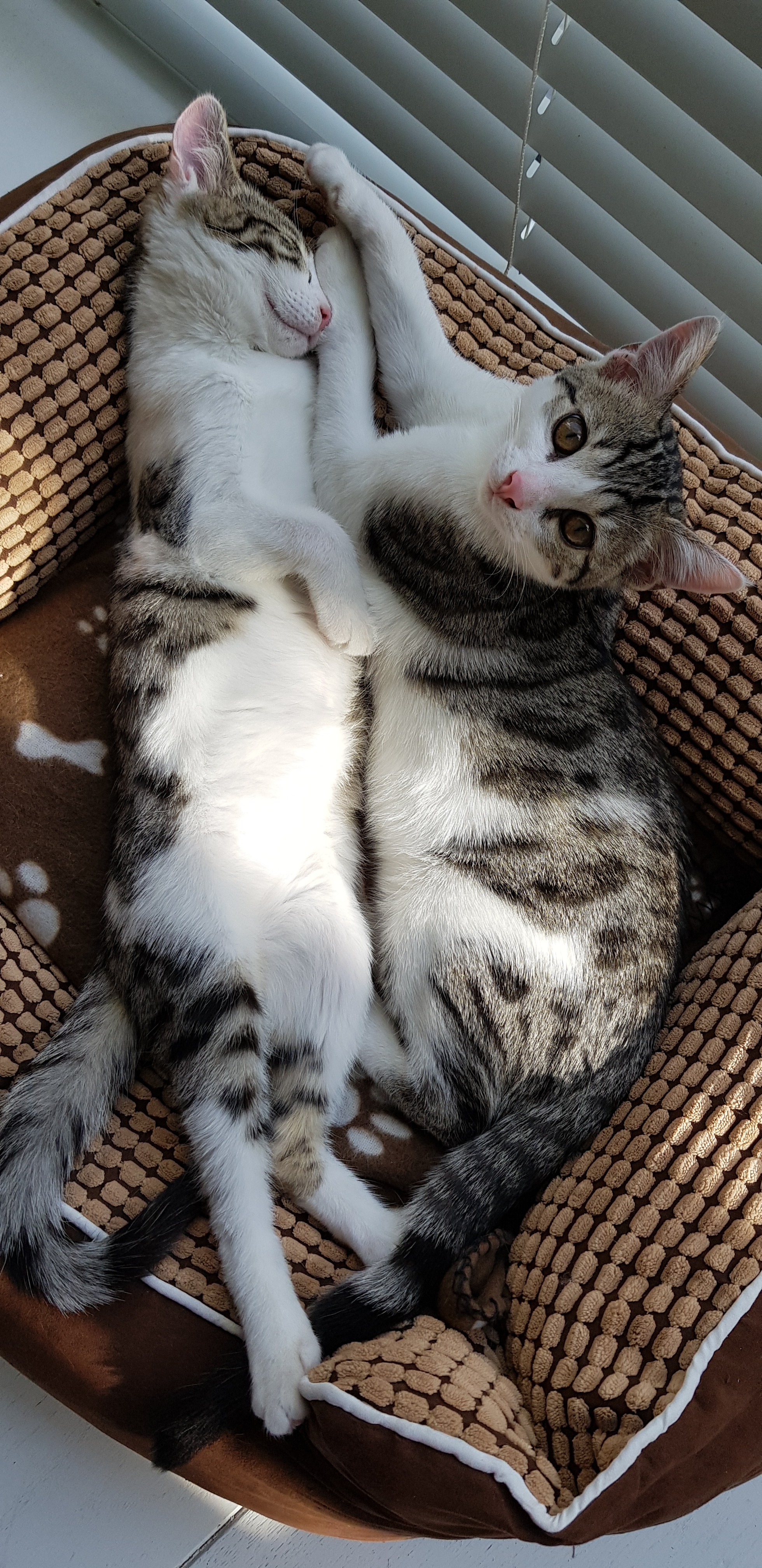
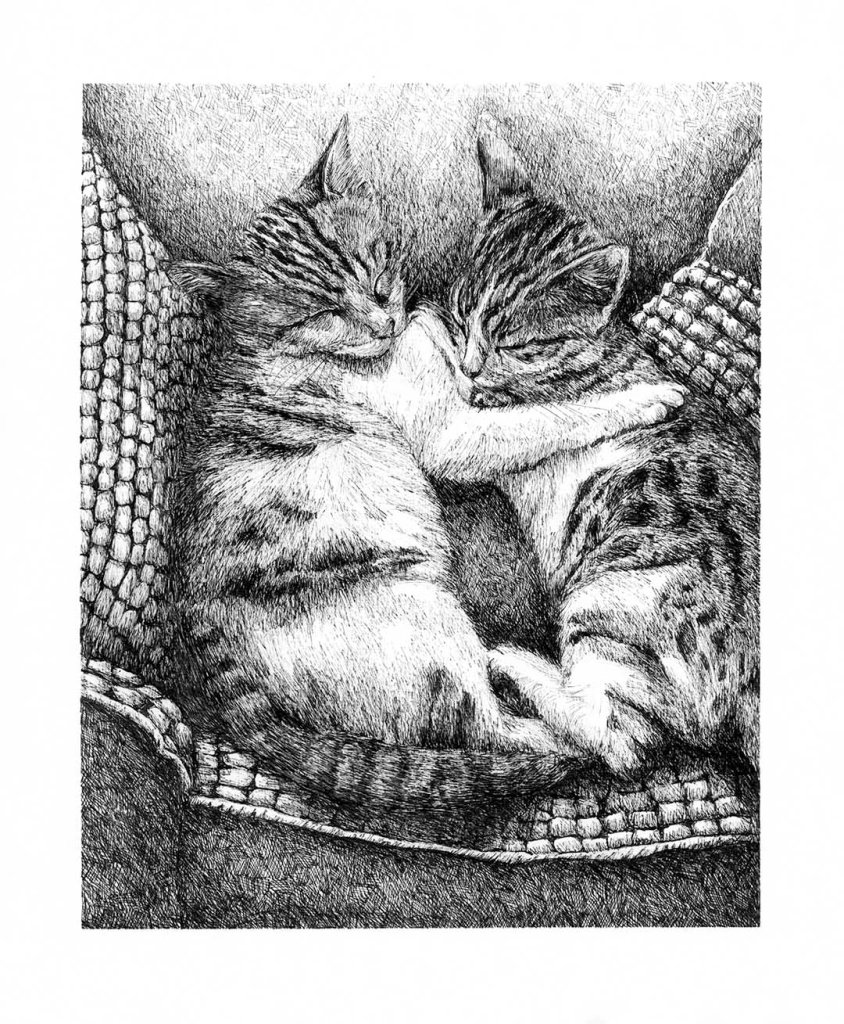
Inktober 52 had a prompt no. 26, called ‘Cuddle’ and I immediately saw a picture of my two cats, cuddling each other. They are sisters that groom each other, sleep together, play together and even give each other space to finish their food. I had so many lovely pictures of these two cuties:
I took up the challenge although I knew that this inking process will take a lot of time and ink to complete. For years I struggled to make peace with the fact that I get caught up in detail. I have tried many courses to loosen up my style, but with no success. My children (teenagers) call my art style ‘no-life’ art, because of the hours that go into it due to the detail or shading. But lately, I have decided that by embracing it and not working against it, my art is better than before and the method of repetition of the detail is extremely relaxing. The art making process becomes a meditation process. By working against my natural tendency towards detail and realism, art creates stress and deprives me of the joy it should give in the first place.
I usually work with A4 200 gsm Fabriano paper and a 0.03 Unipin Fineliner. I have a series of Unipins with worn tips at different degrees. The worn tips give me more options to work towards lighter shading without harsh marks.

This challenge was a first in a long time where I focused on detail like the fur of the cats and the patterns. I loved the process and I think the love for my two cats showed in the final artwork. Inktober also listed it as their favorite on Instagram.

Uncategorized

Printing with milk Cartons

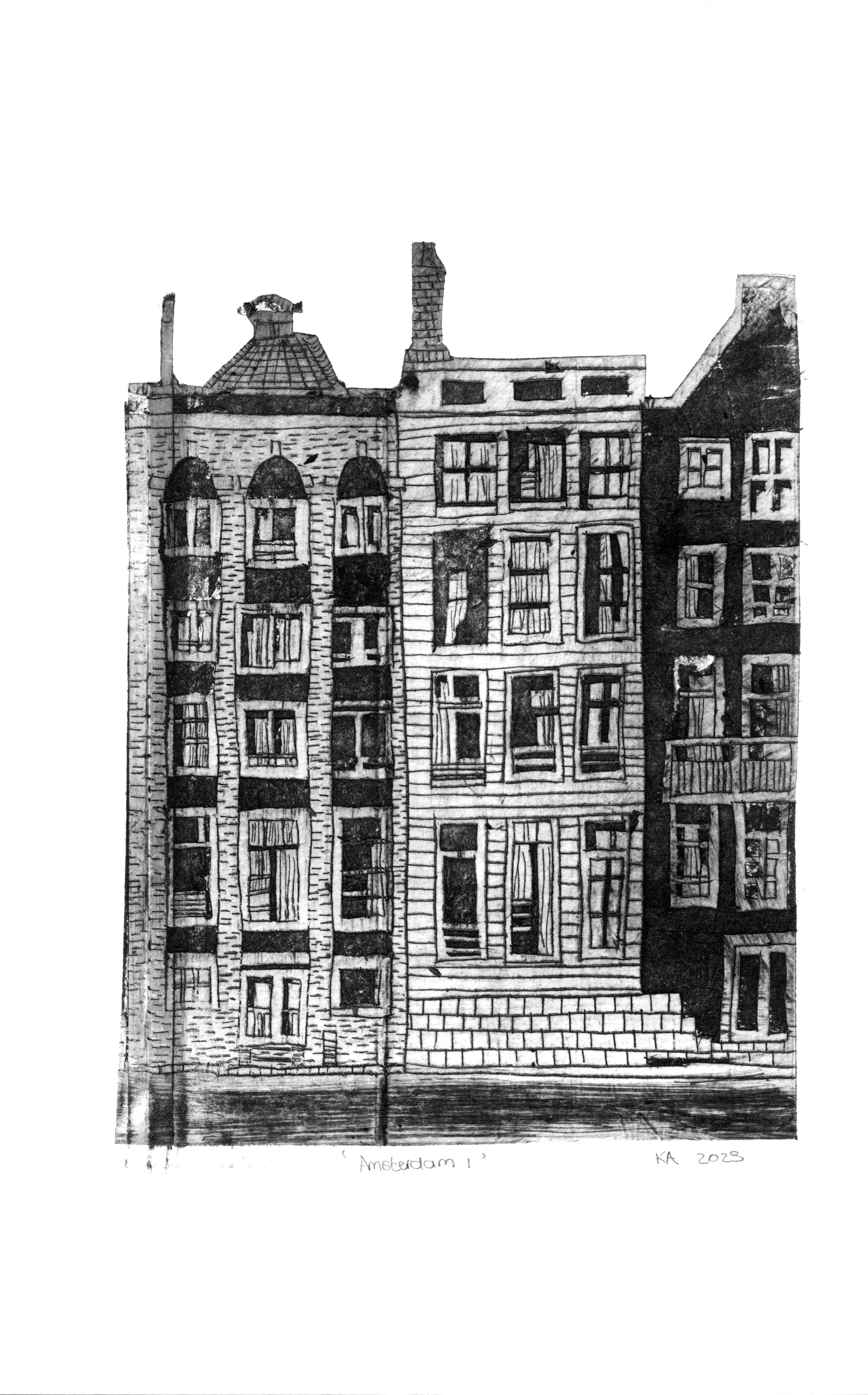
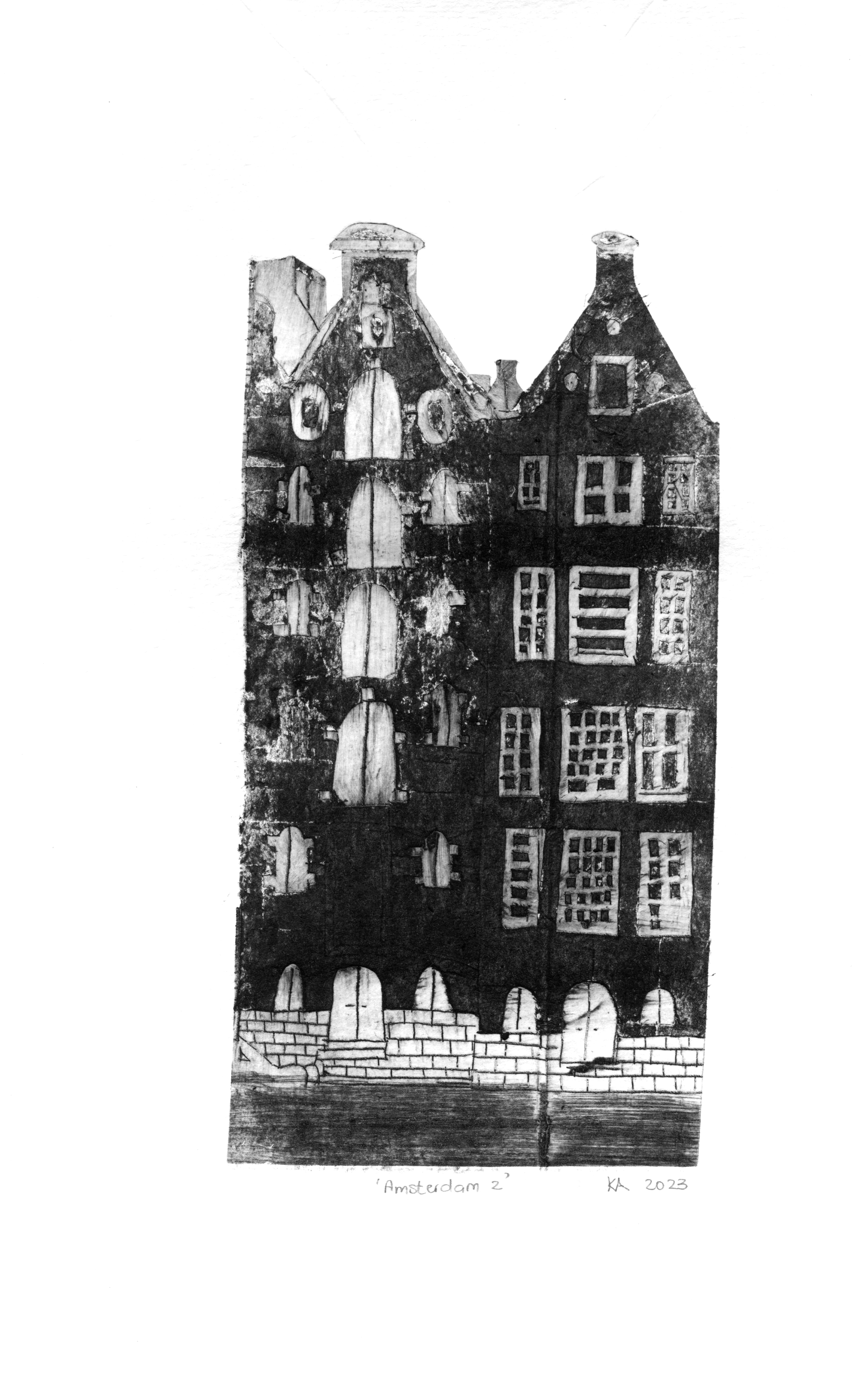
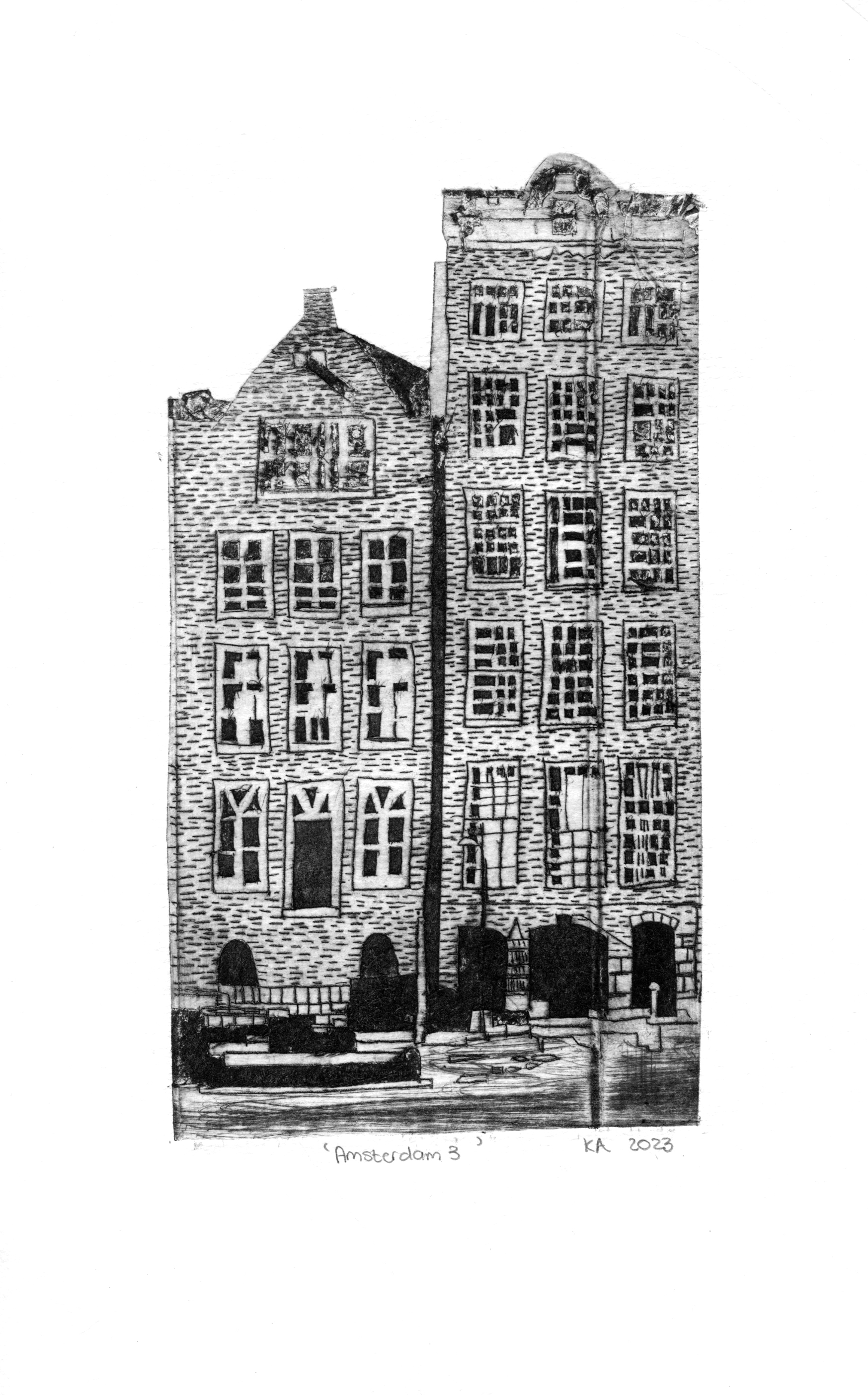
As with my previous tutorial on printing with plastic containers and a pasta machine, drypoint printing can also be done with milk cartons. It is also an exciting printing process and good for the environment.

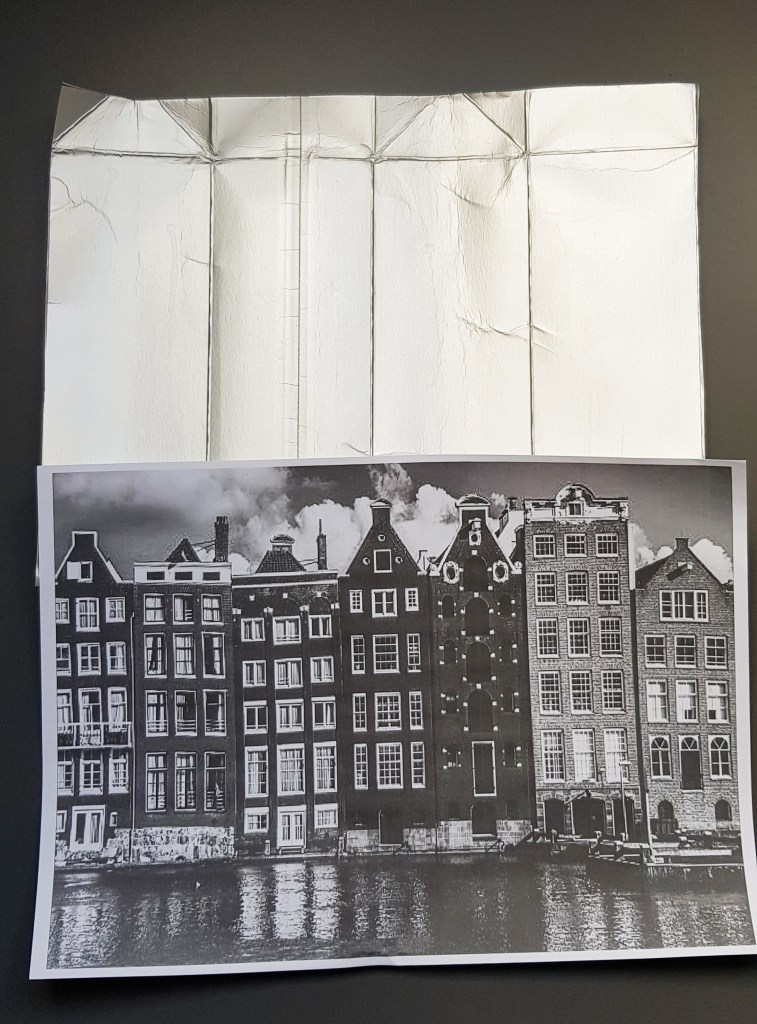
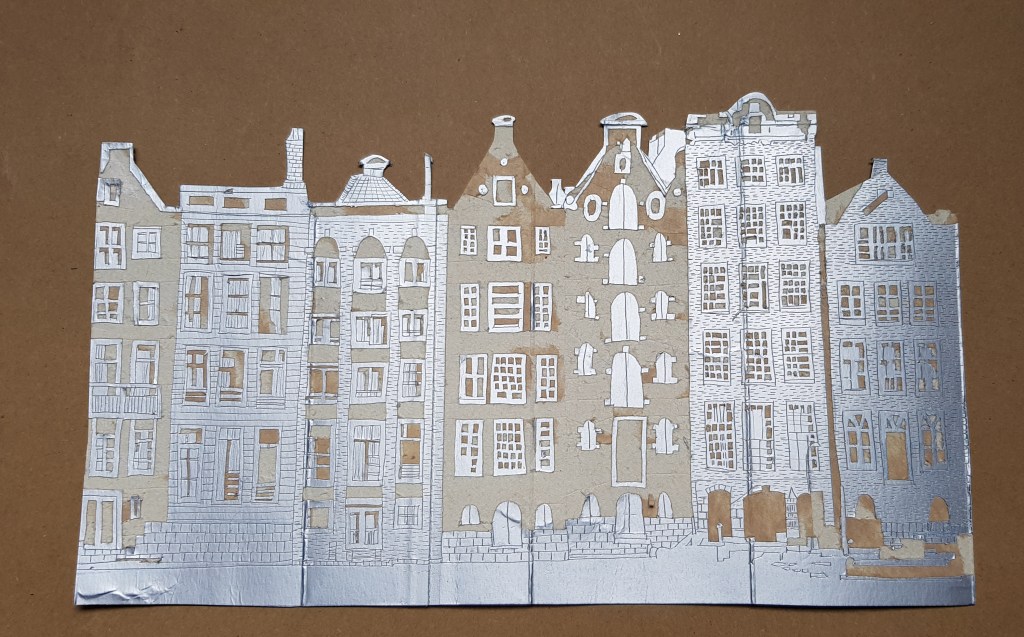
It basically works the same way as with the plastic. Grooves are made into the silver foil of the milk cartons and the ink, when rubbed across the surface, stays in the grooves while the rest is wiped away. Once again, if you do not have an etching press, the pasta machine works just as well as the press.

What you need:

  • Sketch/photograph
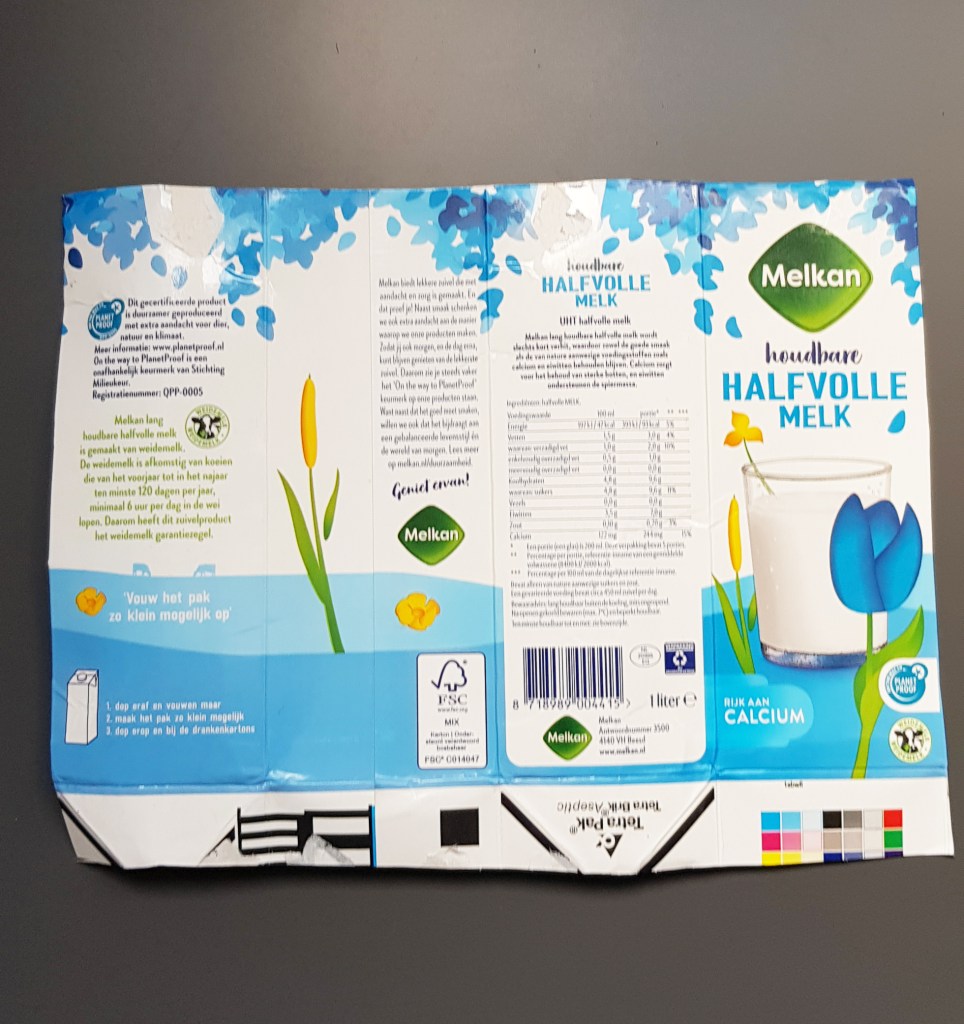
  • Milk carton with foil lining
  • Washi tape or sensitive masking tape: too strong masking tape might tear the surface of your sketch paper or image
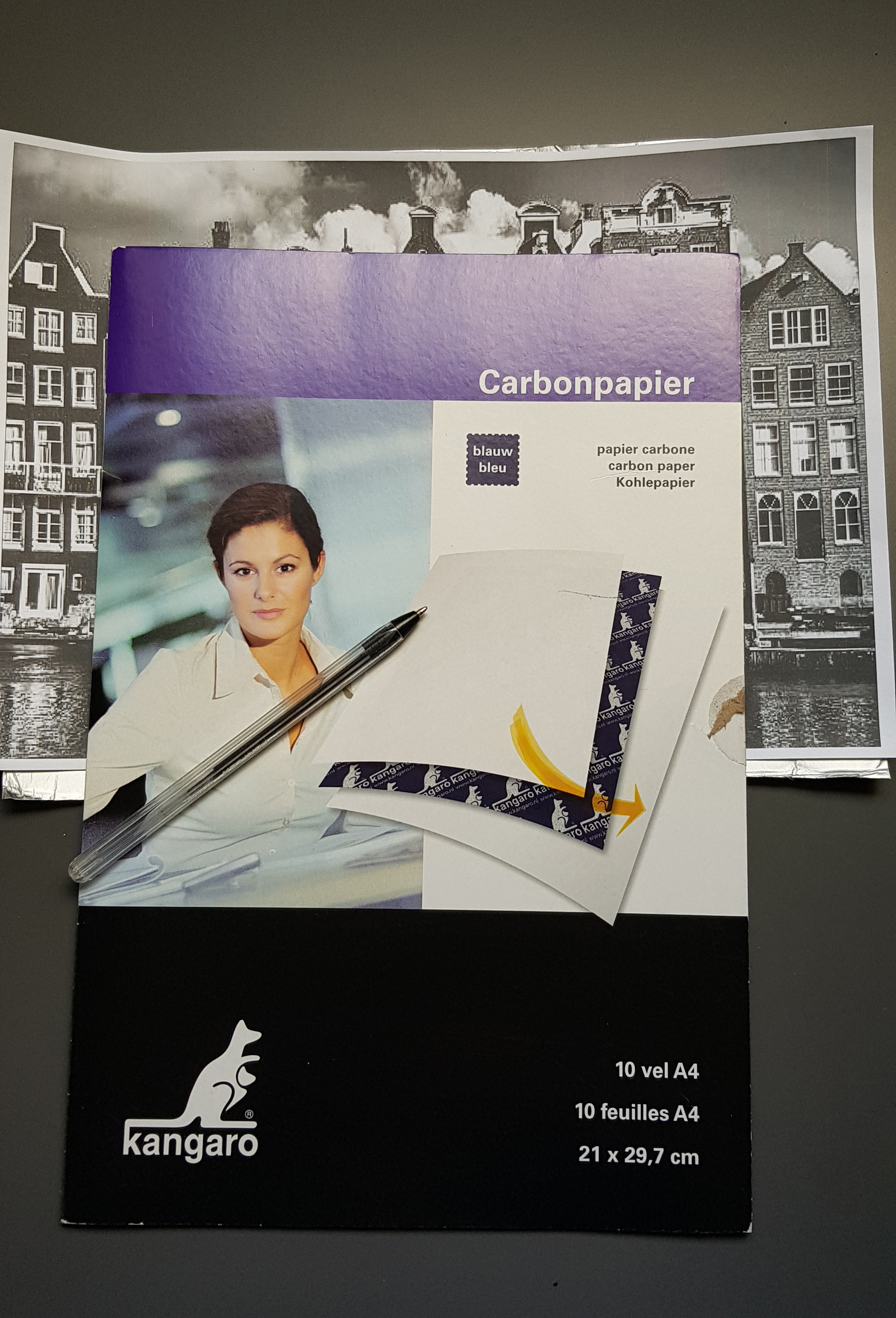
  • Carbon transfer paper (optional)
  • Etching tool or craft knife
  • Watercolor paper
  • Rectangular bowl with water
  • Plastic gloves
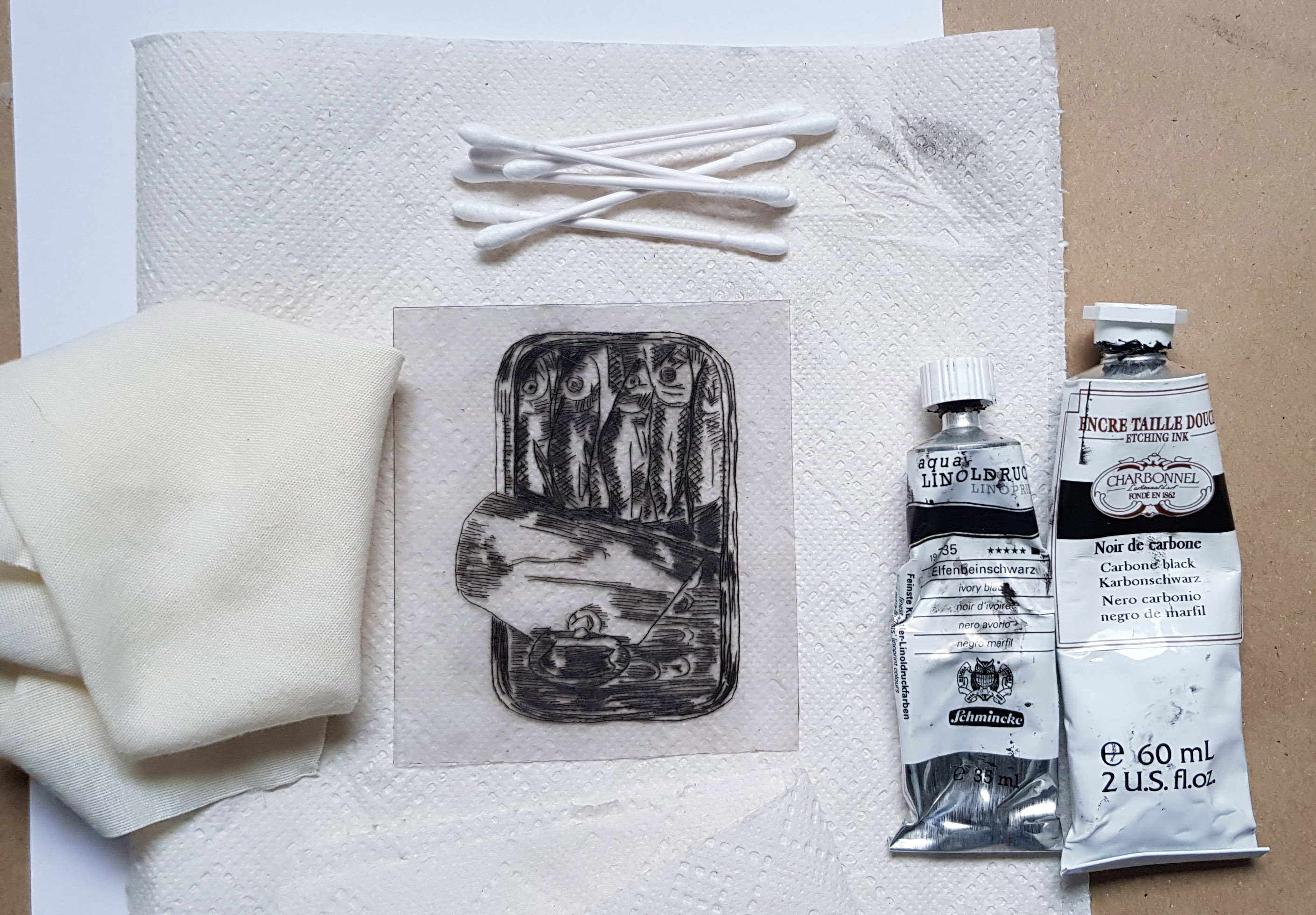
  • Etching ink e.g. Intaglio ink works the best
  • Soft cotton fabric like cheese cloth
  • Kitchen towel
  • A few cotton swabs
  • Paper (it can be printing paper or unprinted newspaper)
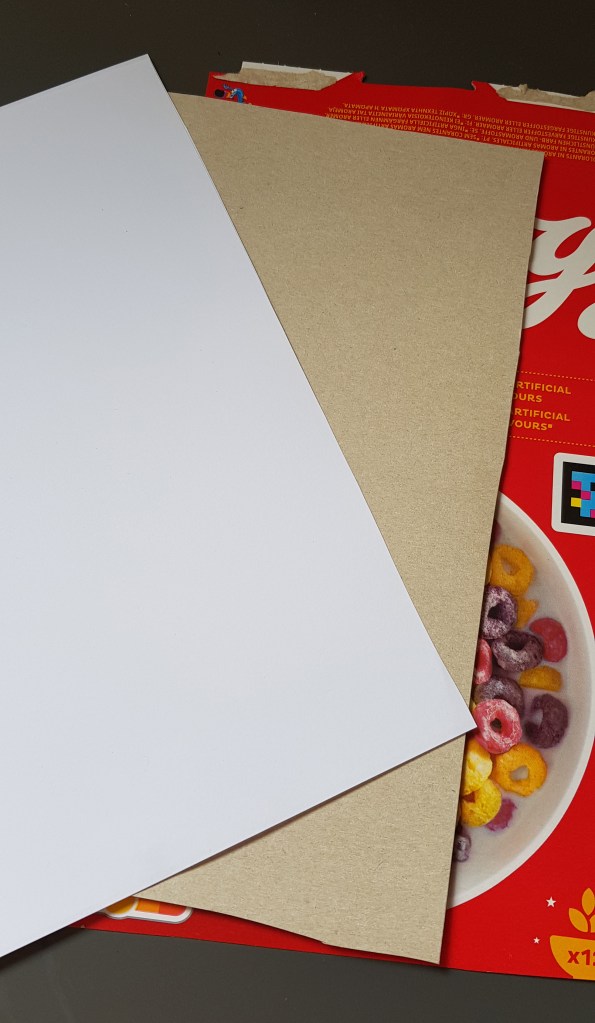
  • Cardboard from cereal box
  • Pasta machine, mounted firmly on a table

Method:

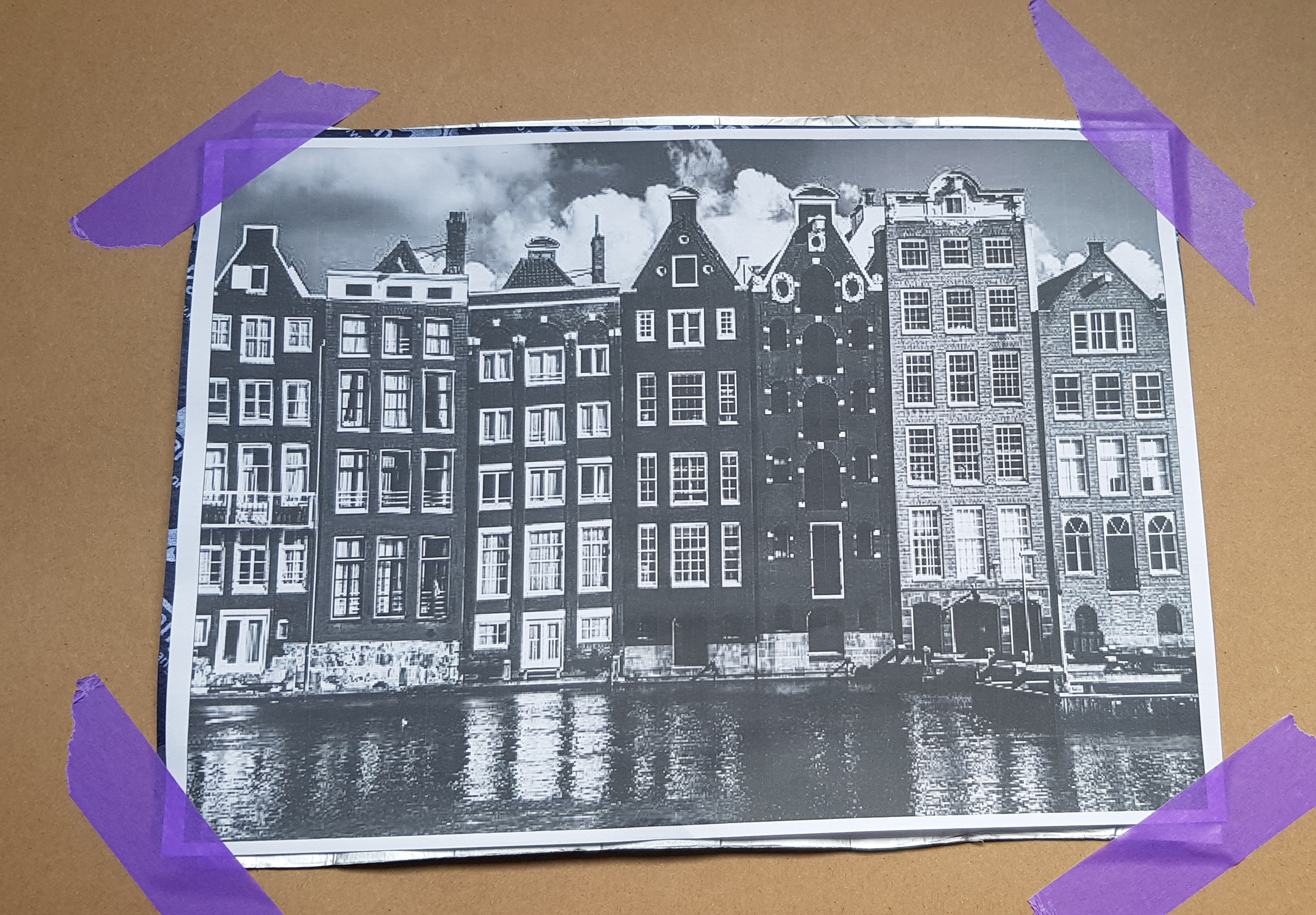
  1. Make a sketch on paper or in your sketchbook or use a picture or photograph. REMEMBER: your image is going to print as a mirror image. If you use text, keep that in mind.

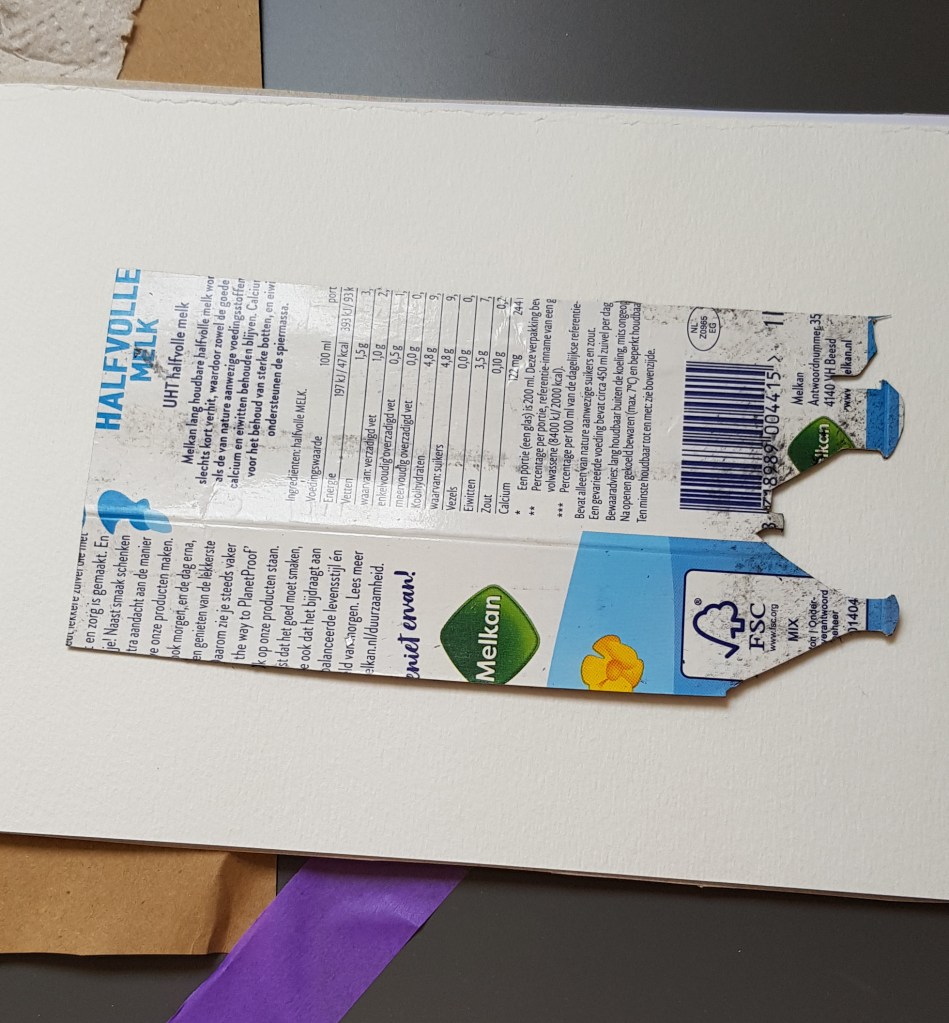
2. Cut the milk carton open and clean the inside. Cut it to the size of the print you want to do. You may use the smooth surfaces only, but keep in mind that the creased surfaces make interesting textures to your print. If you do not have carbon paper, you will still be able to see the image. The carbon paper makes it a bit clearer.

3. Place the image or sketch on top of the carbon paper on top of the carton and keep it in place by using the tape.

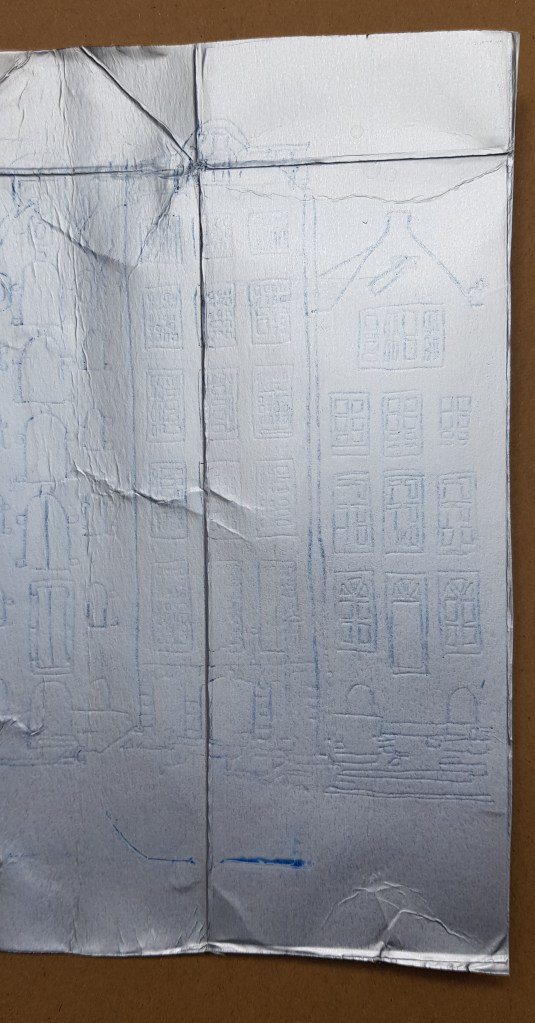
4. With a pen, trace along the drawing lines or lines of the image. Remove the image and carbon paper, but keep your image alongside as reference to your shading.

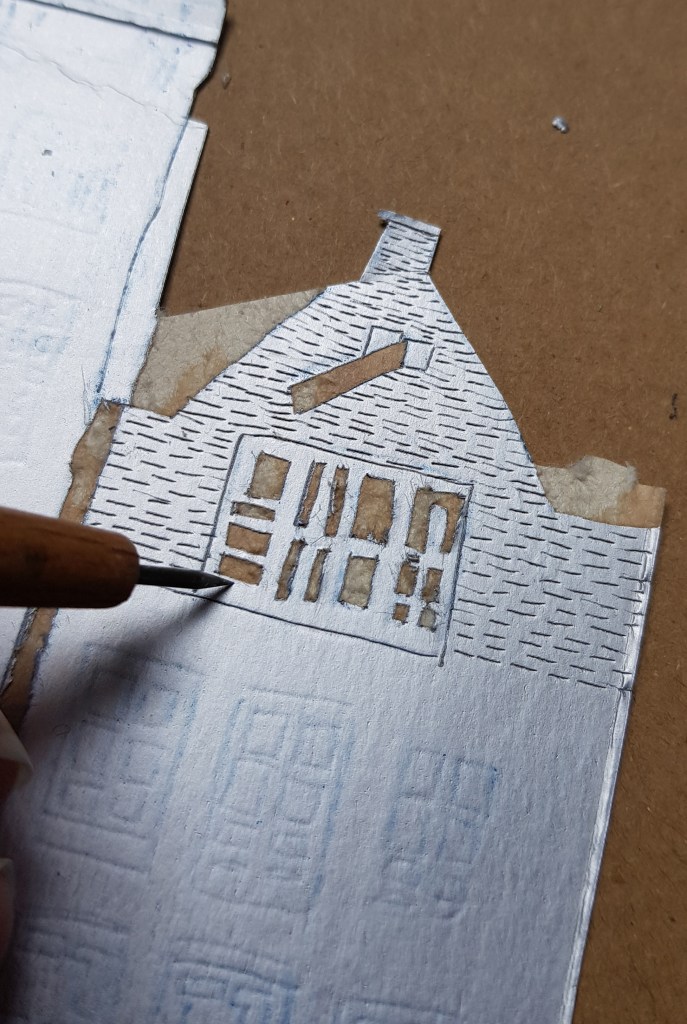
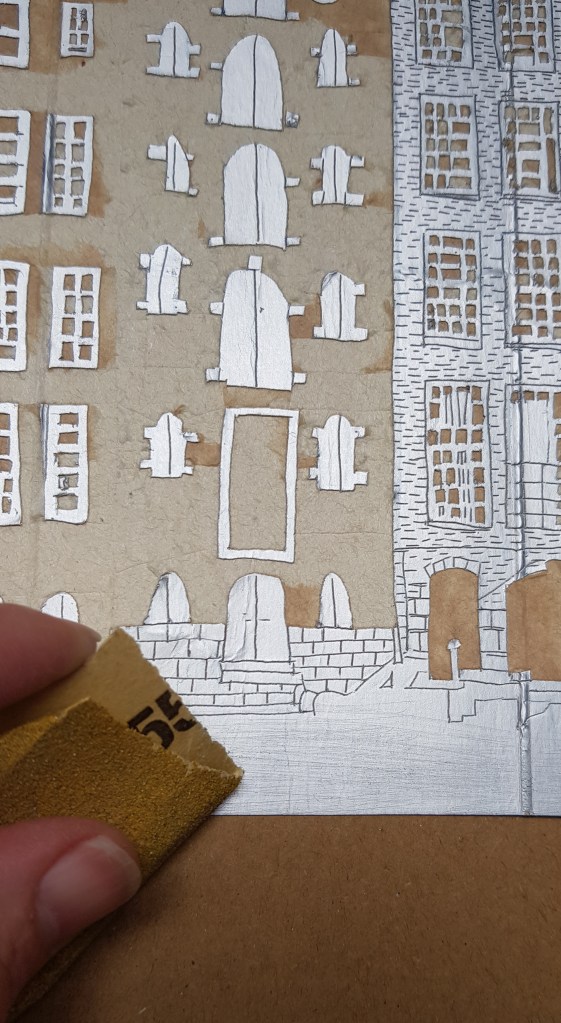
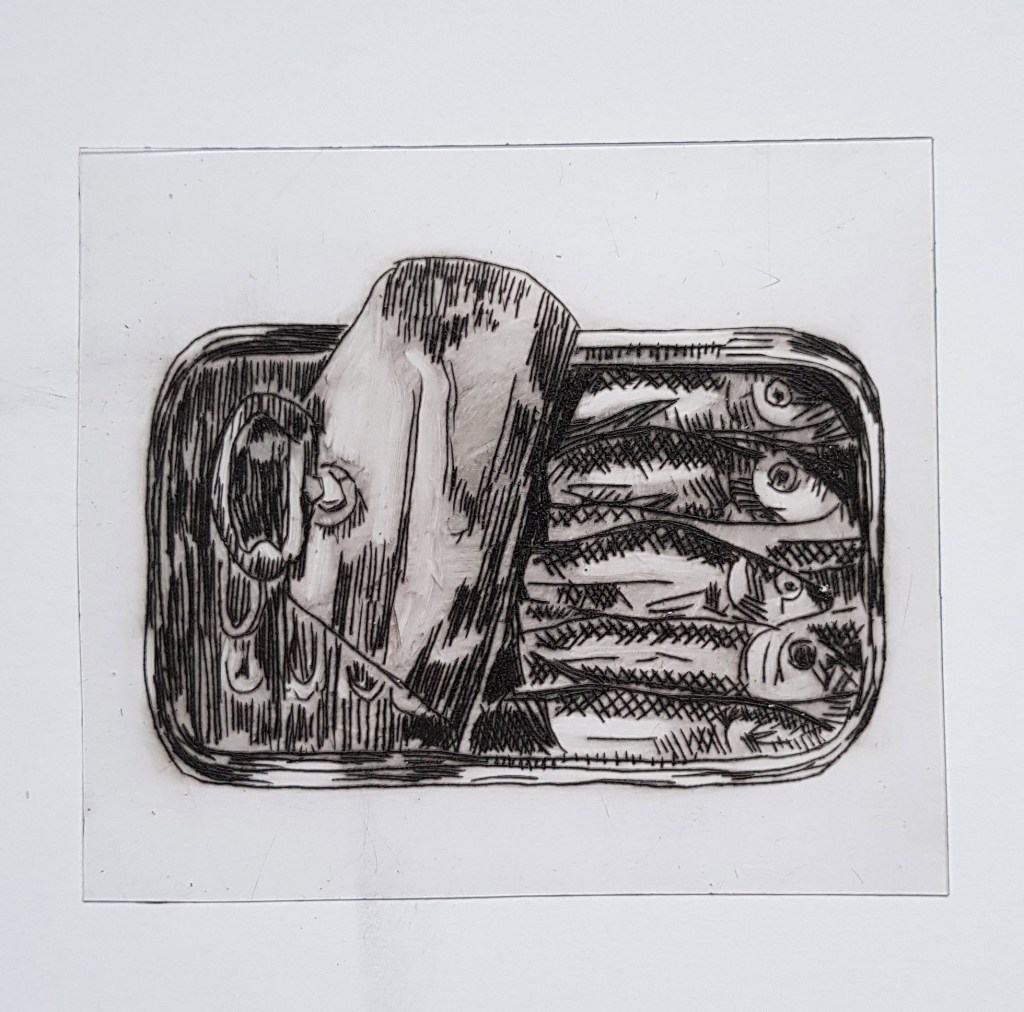
5. Use the etching tool or the sharp point of a craft knife and make engravings into the foil along your black sketch lines. If you want dark areas, make small hatch engravings. For pure black areas, the foil can be teared off. The areas that are not engraved are the light areas, the engraved areas will be darker and the cut-out areas will be the darkest. I have used sanding paper for the water areas to add a finer texture.

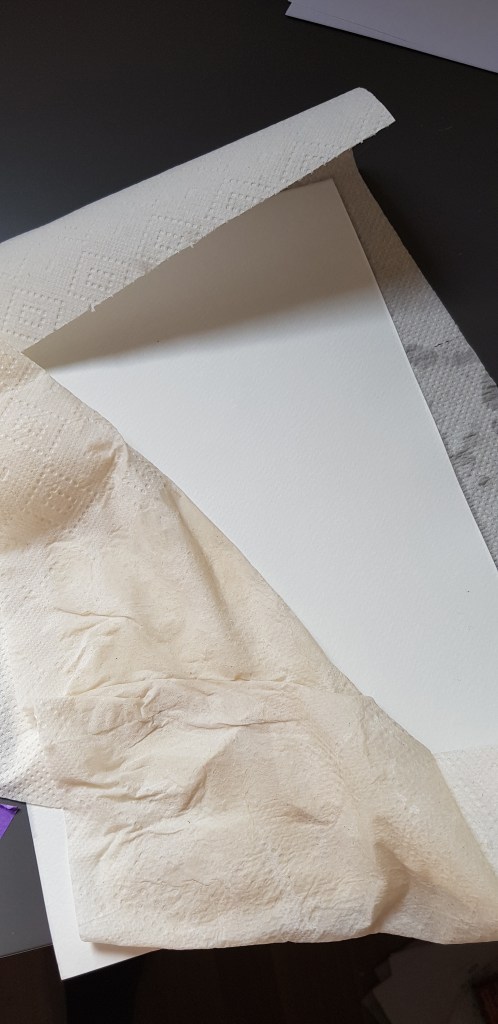
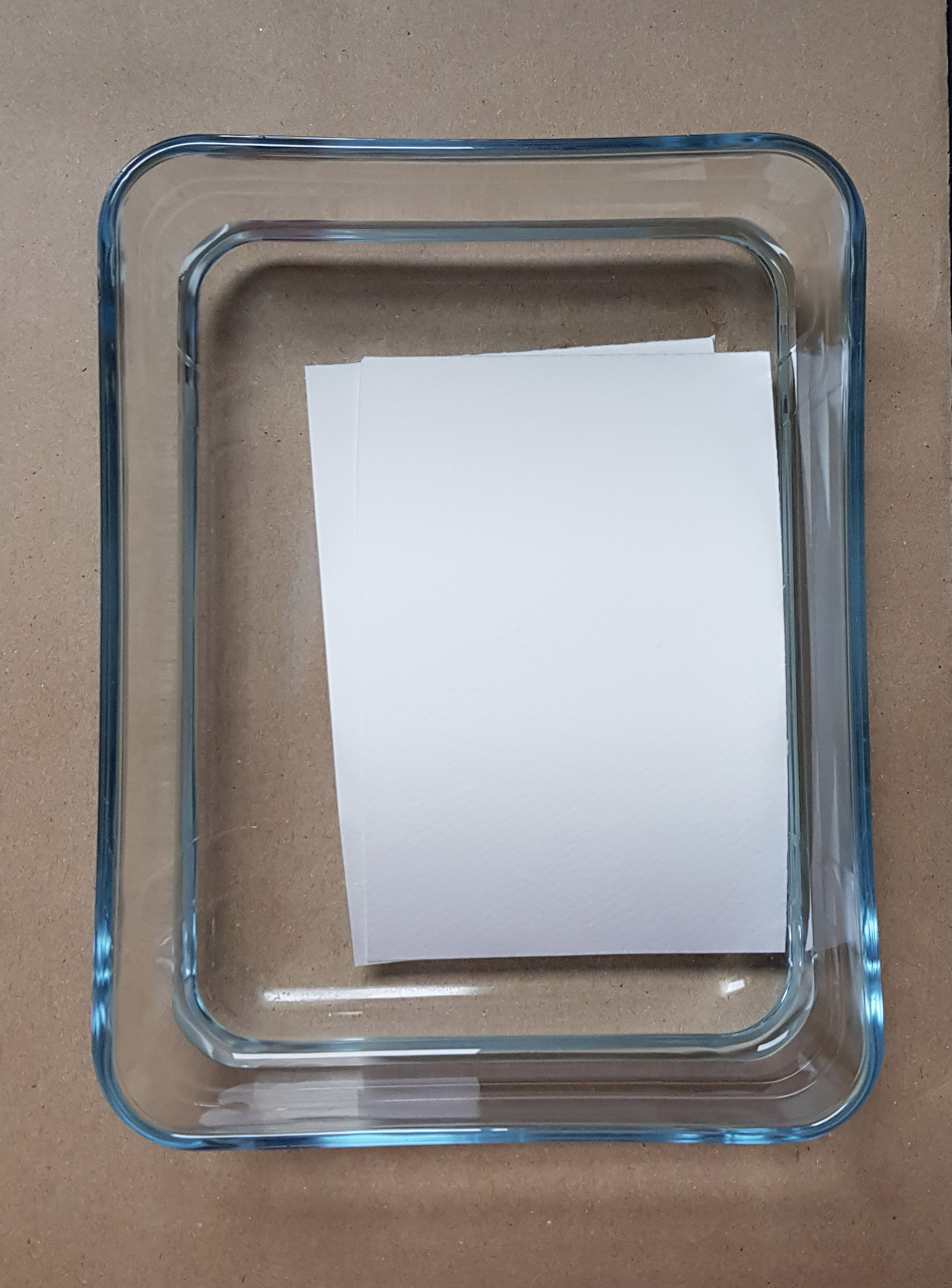
6. Cut the watercolor paper the size or larger than engraved image and soak it for 20 minutes in a flat rectangular bowl of water.

7. Also cut two cardboard pieces and two paper pieces the size of the watercolor paper.

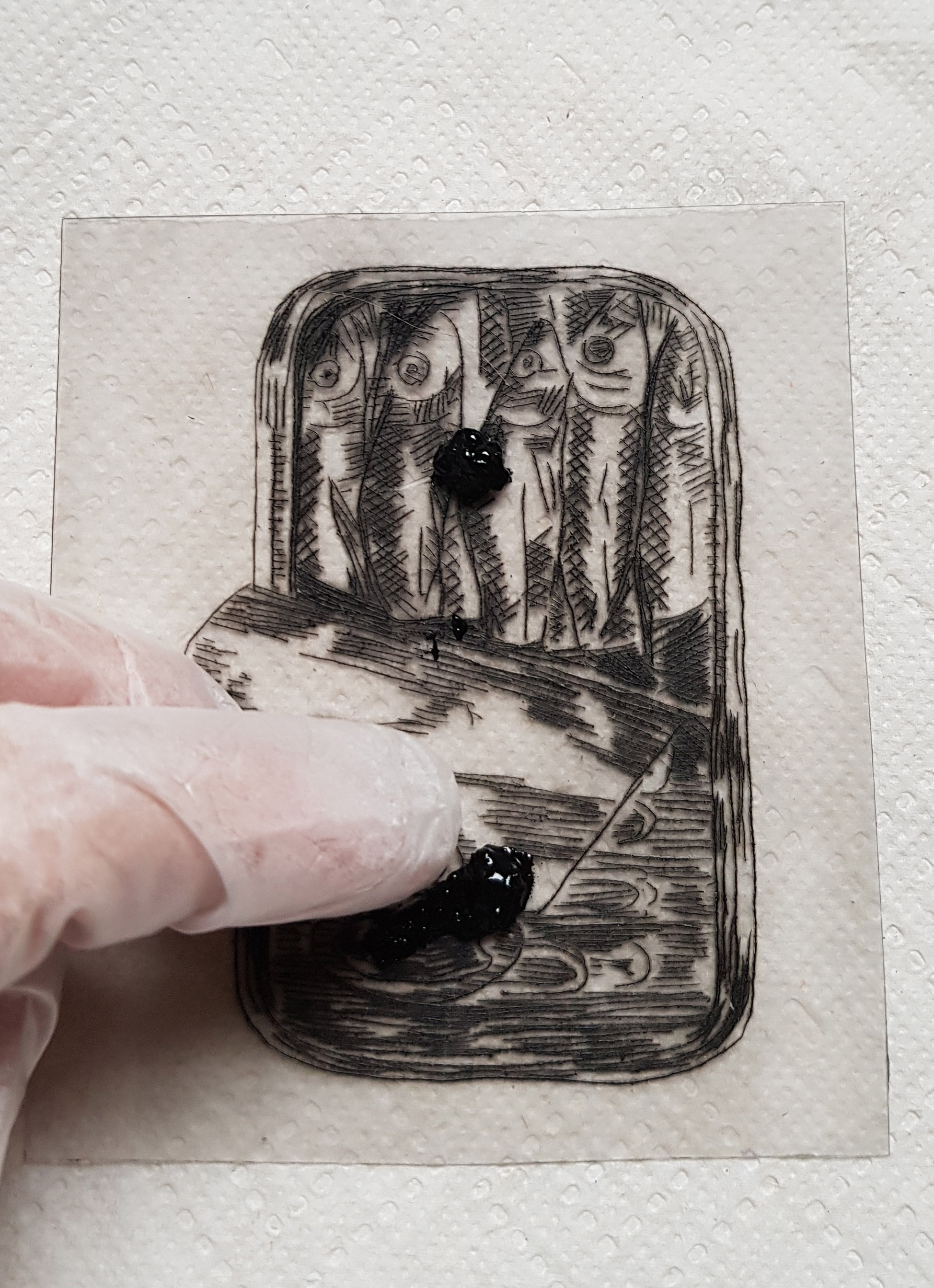
8. Put the plastic gloves on and put a dollop or two of the ink onto the carton plate.

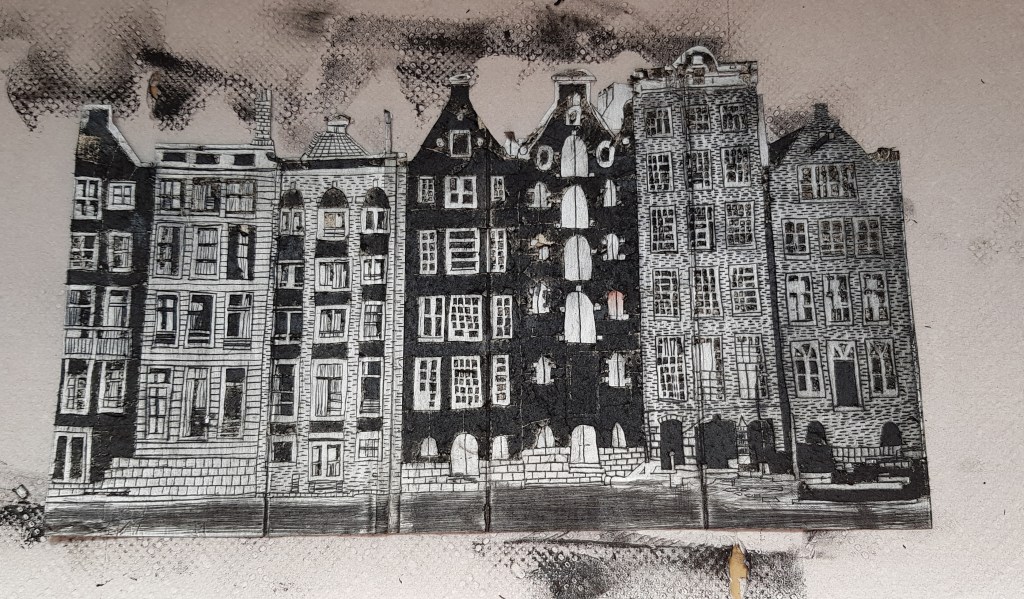
9. With circular movements rub the ink with your finger into the grooves and cover the whole plate. You may also use an old bank card to swipe the ink over the carton plate.

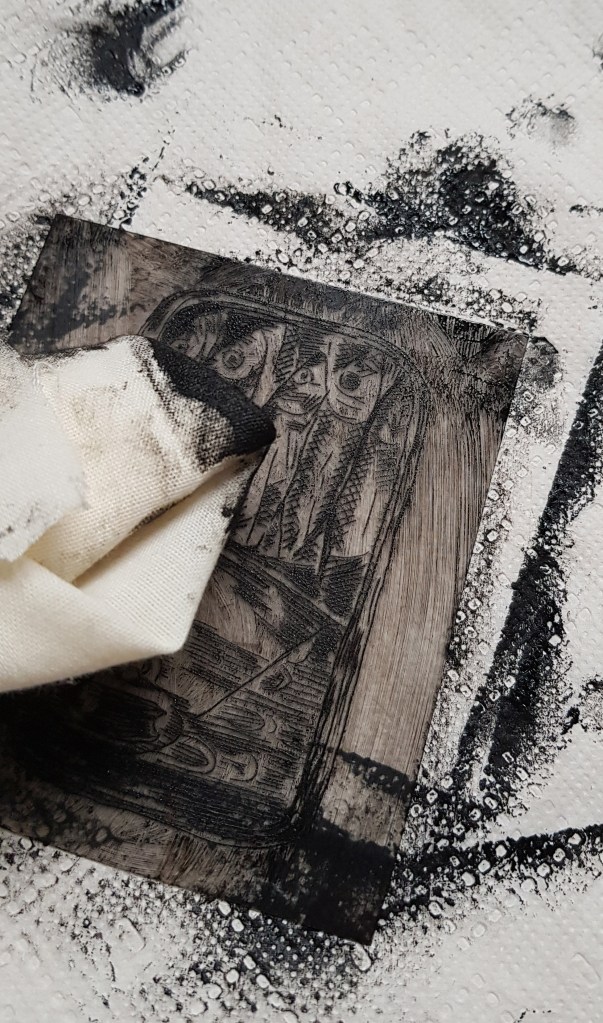
10. With the cloth, rub all the excess ink from the plate. Lastly with light movements and kitchen towel, wipe off any excess ink so that the silver parts are more clear.

11. Use the cotton swabs and wipe small highlight areas.

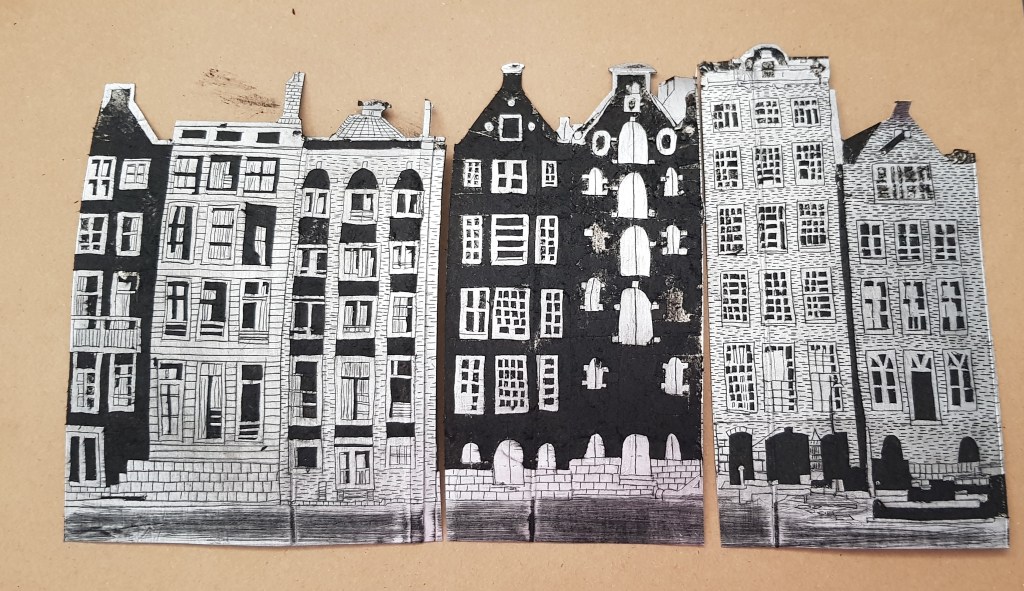
12. When you are happy with your plate, remove your gloves and wash your hands. You do not want any black fingerprints on your paper. I have decided to cut the image into 3 to make it easier for me to handle through the pasta machine.

13. Remove the watercolor paper from the water and tap dry with kitchen towel. When you hold the paper against the light, there should be no shiny parts.

14. Stack the pieces as follows: a piece of cardboard, then a piece of paper on top of the cardboard, next the watercolor paper, then the plate – face down onto the watercolor paper, again a piece of paper and lastly a piece of cardboard.

15.Grip it firmly and feed it into the pasta machine while rolling it evenly through the machine.

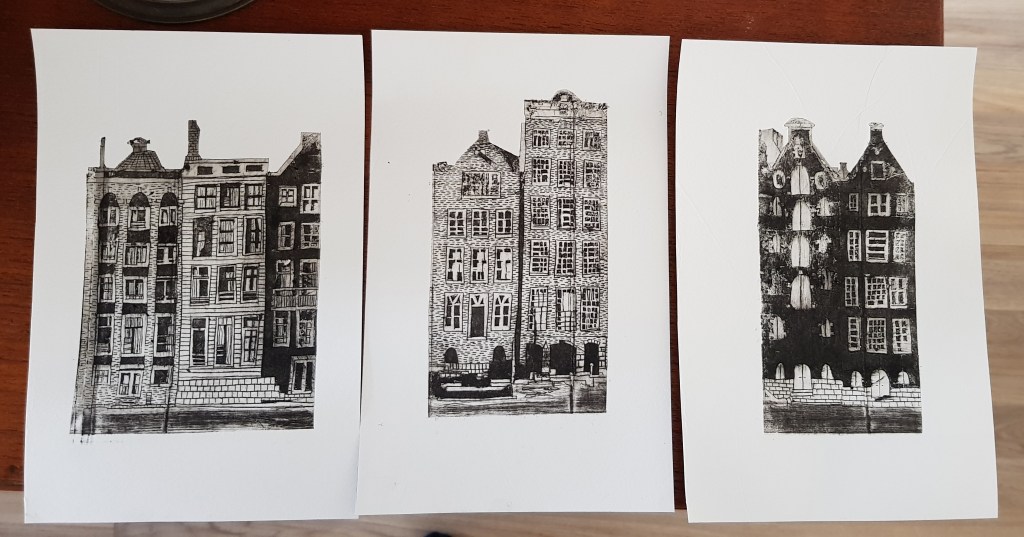
16.Remove all the pieces and enjoy your first piece of art!!!!

art print

Printing with a pasta machine

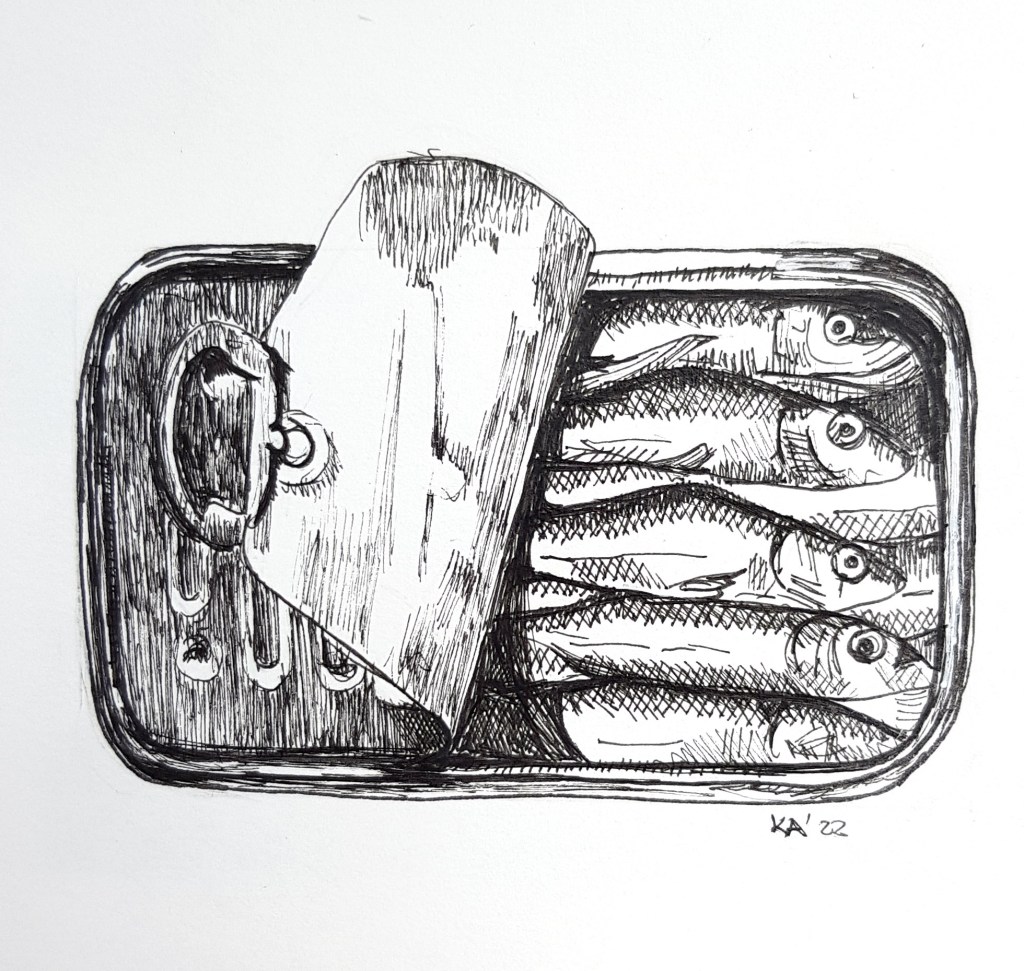
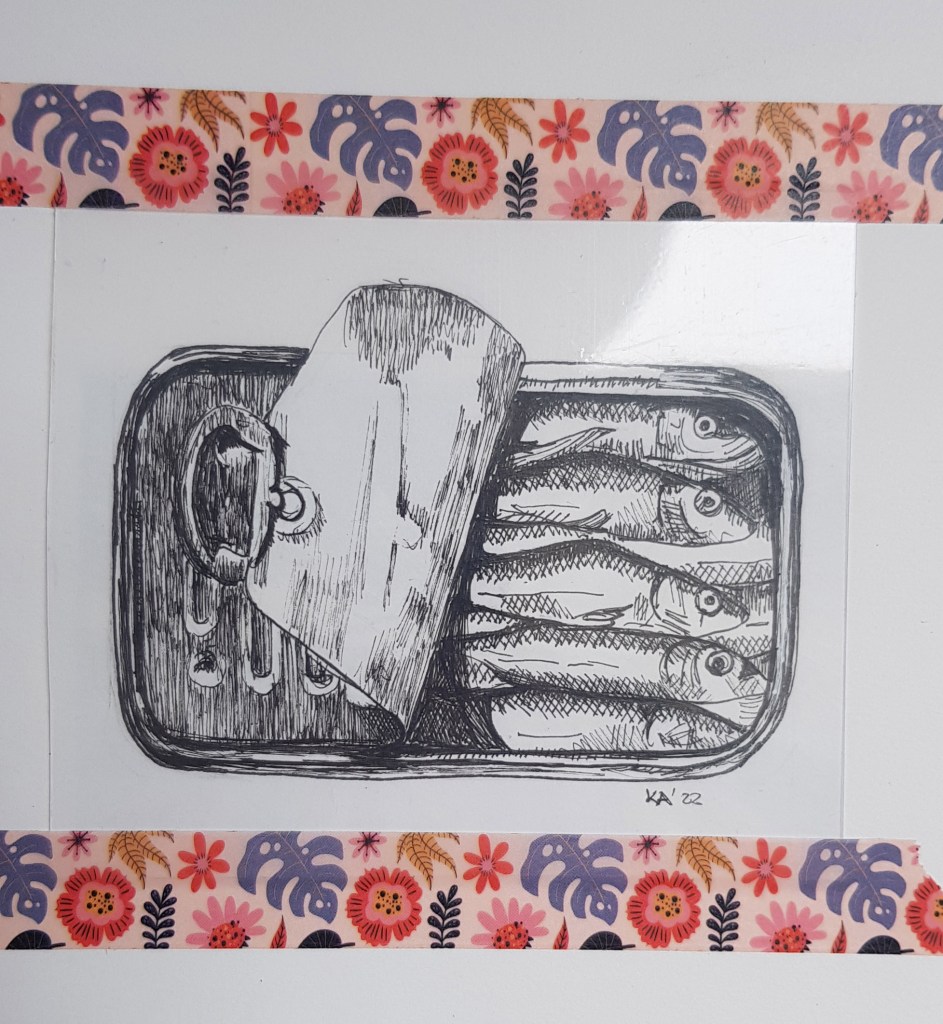
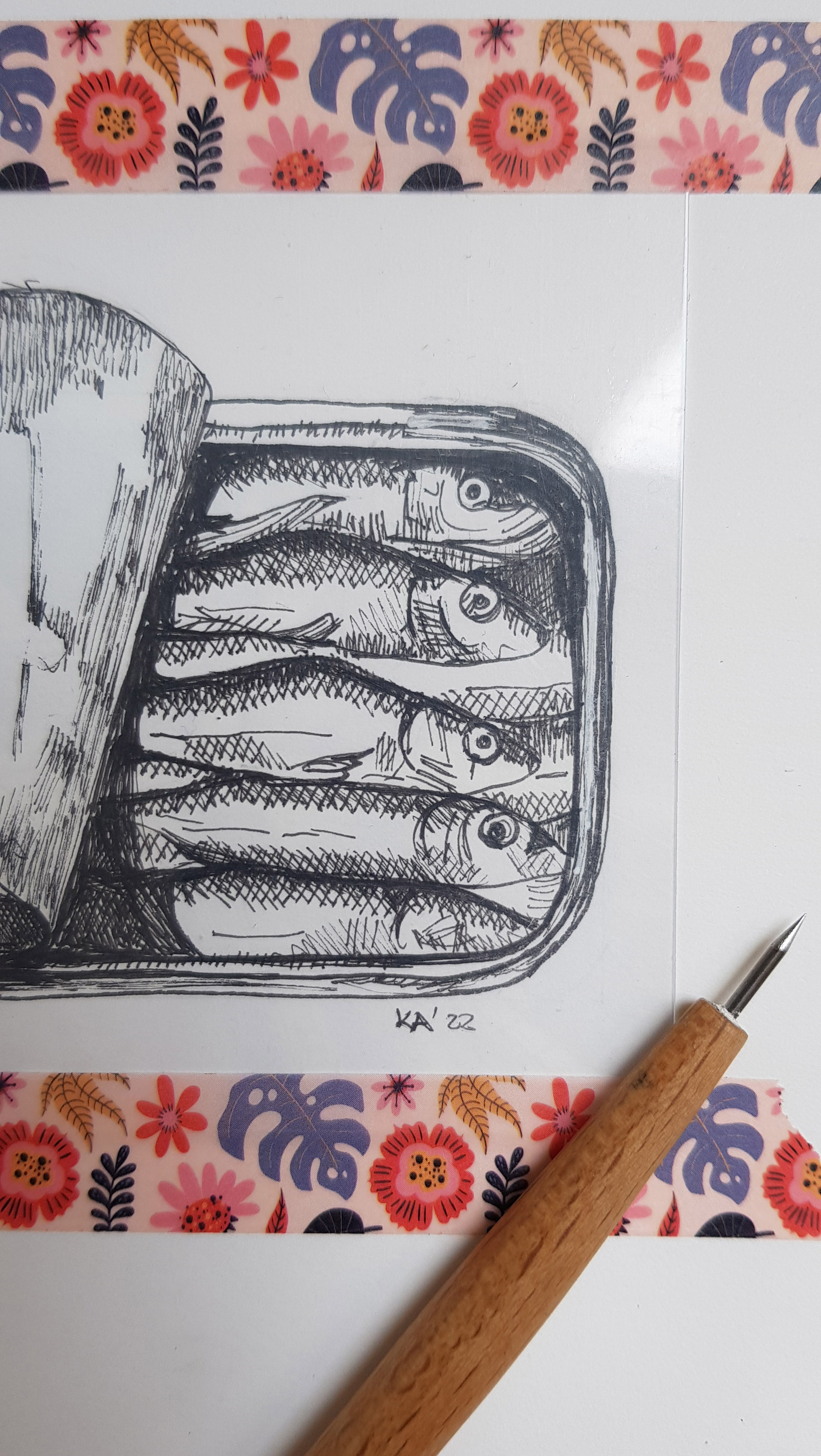
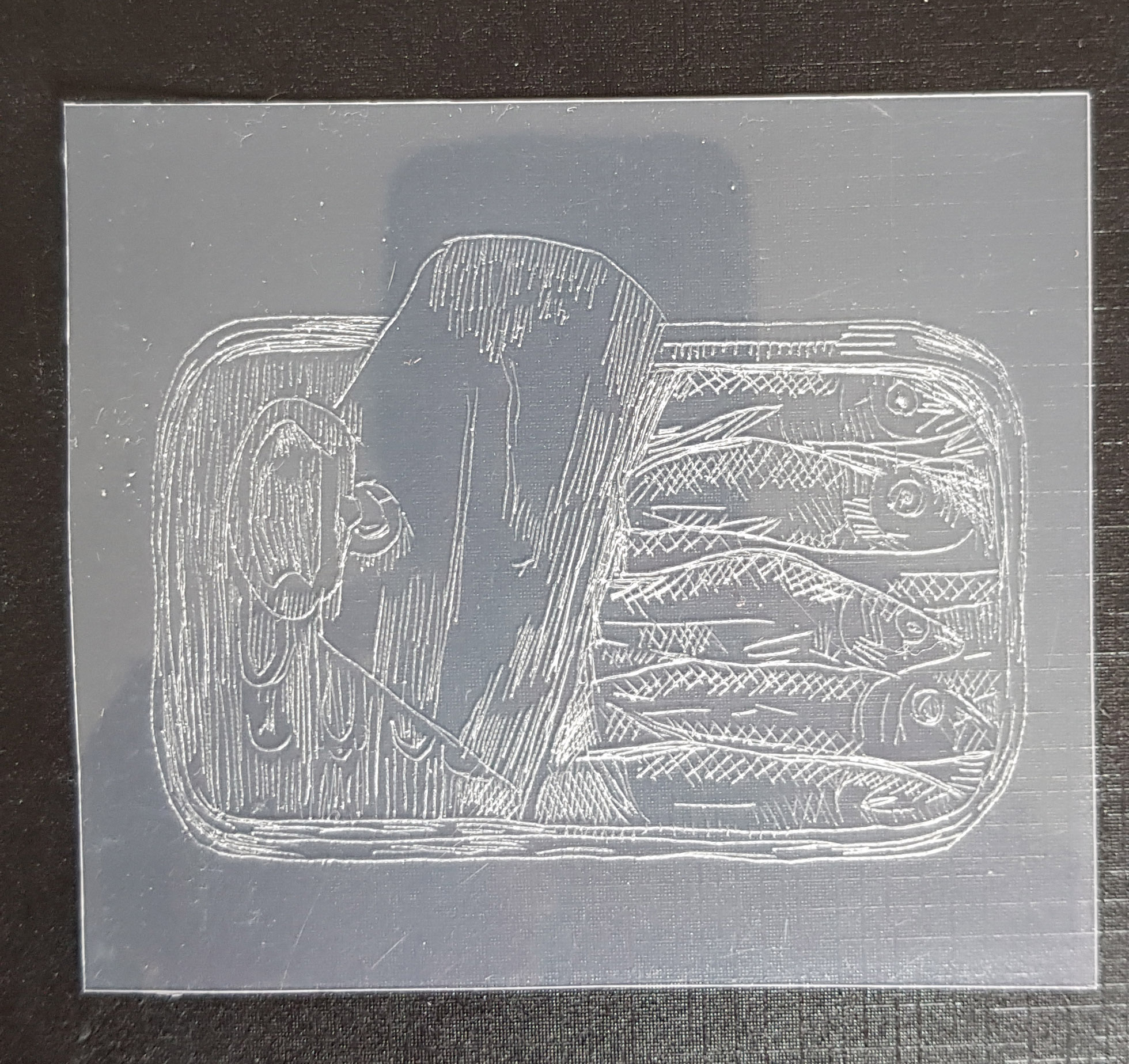
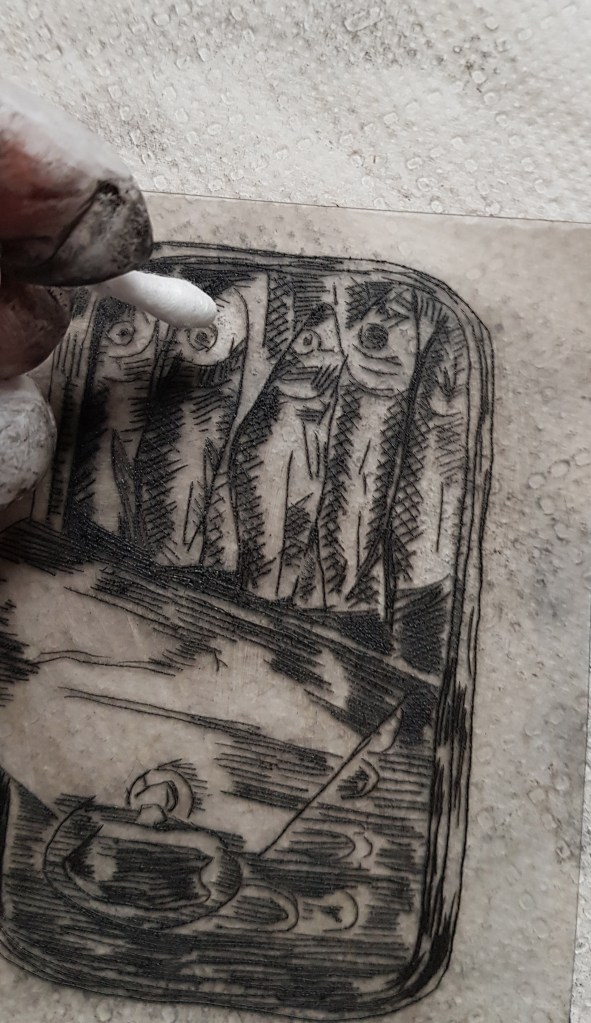
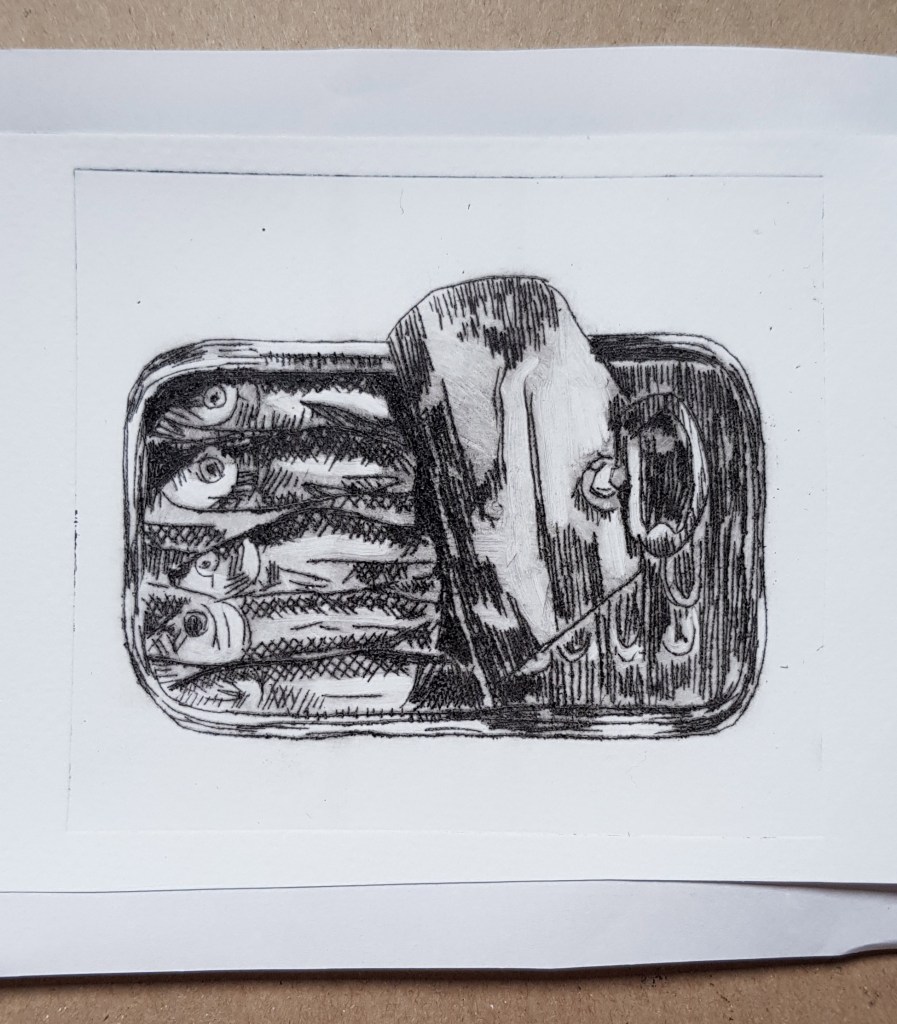
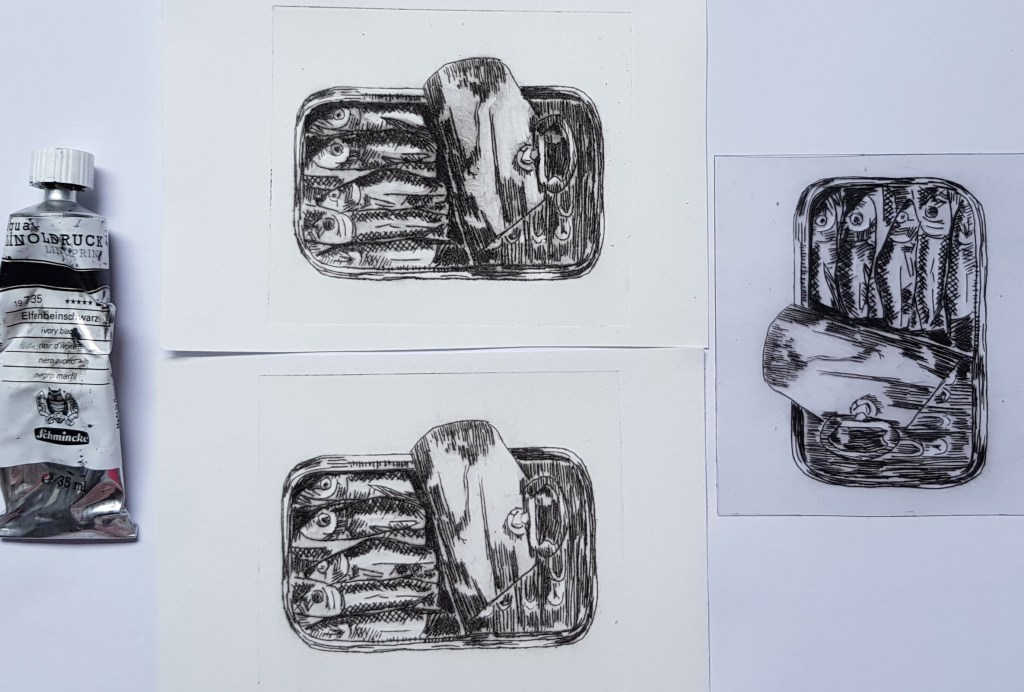
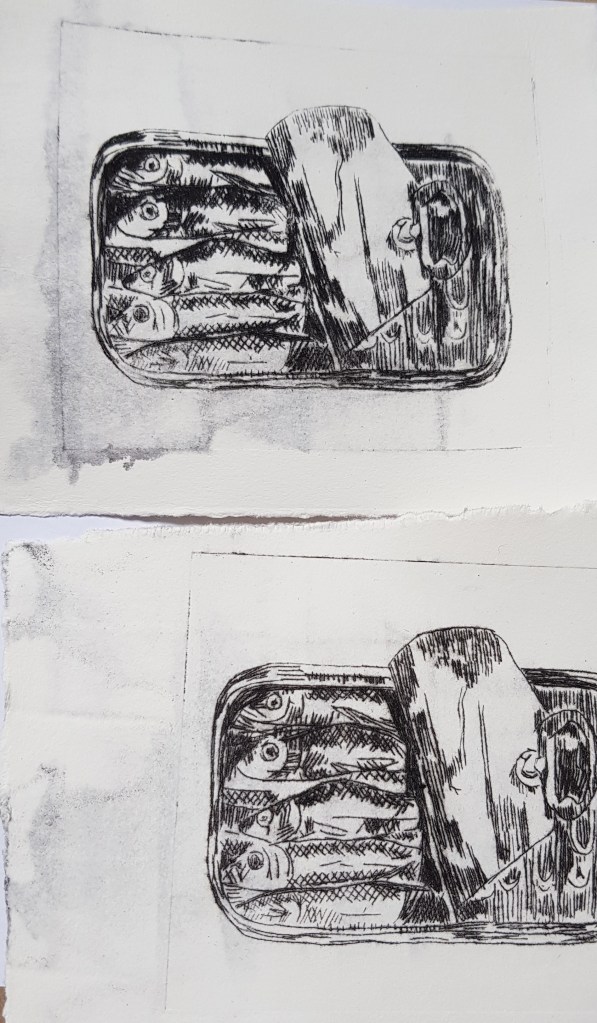
This printing process is called drypoint printing. Drypoint is a printing technique, where an image is engraved with a sharp point tool into a material such as metal or plastic. When the ink is rubbed over the engraved lines, the ink lies in the grooves of these lines while the rest is rubbed away.

This is a fun way to print at home without an etching press and a wonderful way to recycle plastic from food containers.

What you need:

  • Sketch/photograph
  • Plastic from a food container
  • Washi tape or sensitive masking tape: too strong masking tape might tear the surface of your sketch paper or image
  • Etching tool or craft knife
  • Watercolor paper
  • Rectangular bowl with water
  • Plastic gloves
  • Etching ink
  • Soft cotton fabric like cheese cloth
  • Kitchen towel
  • A few cotton swabs
  • Paper (it can be printing paper or unprinted newspaper)
  • Cardboard from cereal box
  • Pasta machine, mounted firmly on a table

Method:

  1. Make a sketch on paper or in your sketchbook or use a picture or photograph. REMEMBER: your image is going to print as a mirror image.

2. Cut a piece of plastic the size of the image – when you cut it slightly larger than the image, it will have more space around the image.

3. Stick the plastic with washi tape/sensitive tape onto the image or sketch to keep it in place while you trace it.

3. Use the etching tool or the sharp point of a craft knife and make engravings into the plastic along your black sketch lines. If you want dark areas, make small cross-hatched engravings.

4. Cut the watercolor paper the size or larger than engraved image and soak it for 20 minutes in a flat rectangular bowl of water.

5. Also cut two cardboard pieces and two paper pieces larger than the watercolor paper.

6. While waiting, remove the engraved plastic plate from the paper image or sketch.

7. Put the plastic gloves on and put a dollop or two of the ink onto the plastic plate. I have used Lino ink, because I already had it in my arts stash and it is water based. Other non-water based etching inks will be stickier and harder to rub clean, but also works perfect.  

8. With circular movements rub the ink with your finger into the grooves and cover the whole plate.

9. With the cloth, rub all the excess ink from the plate. Lastly with light movements and kitchen towel, wipe the plate on both sides clean.

10. Use the cotton swabs and wipe small highlight areas.

11. When you are happy with your plate, remove your gloves and wash your hands. You do not want any black fingerprints on your paper.

12. Remove the watercolor paper from the water and tap dry with kitchen towel. When you hold the paper against the light, there should be no shiny parts.

13. Stack the pieces as follows: a piece of cardboard, then a piece of paper on top of the cardboard, next the watercolor paper, then the plate – face down onto the watercolor paper, again a piece of paper and lastly a piece of cardboard.

14. Grip it firmly and feed it into the pasta machine while rolling it evenly through the machine.

15. Remove all the pieces and enjoy your first piece of art!!!!

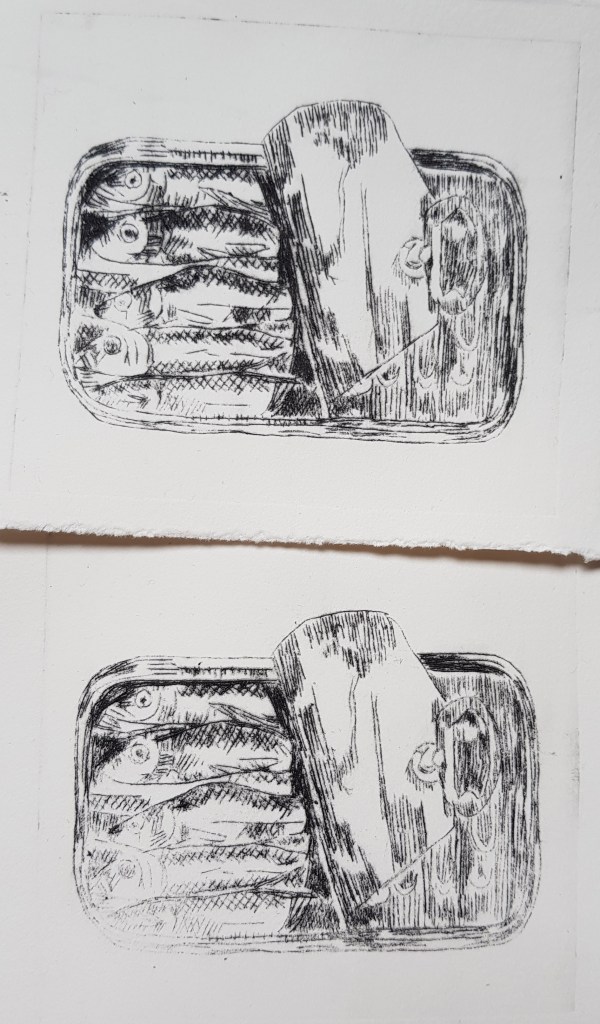
Some possible problems you might encounter:

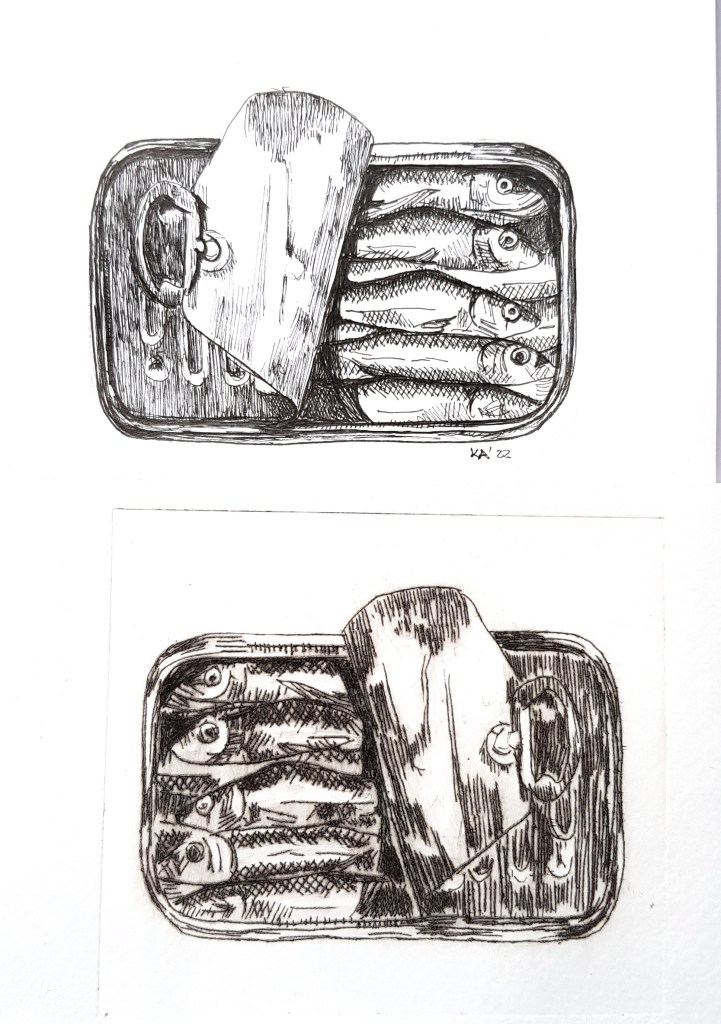
If it is too light, you have rubbed away too many ink:

If your paper was too wet, you will have runny ink marks:

Experiment, have fun and just enjoy the creative process!

xoxo Karen

Uncategorized

The Dutch Kremlin

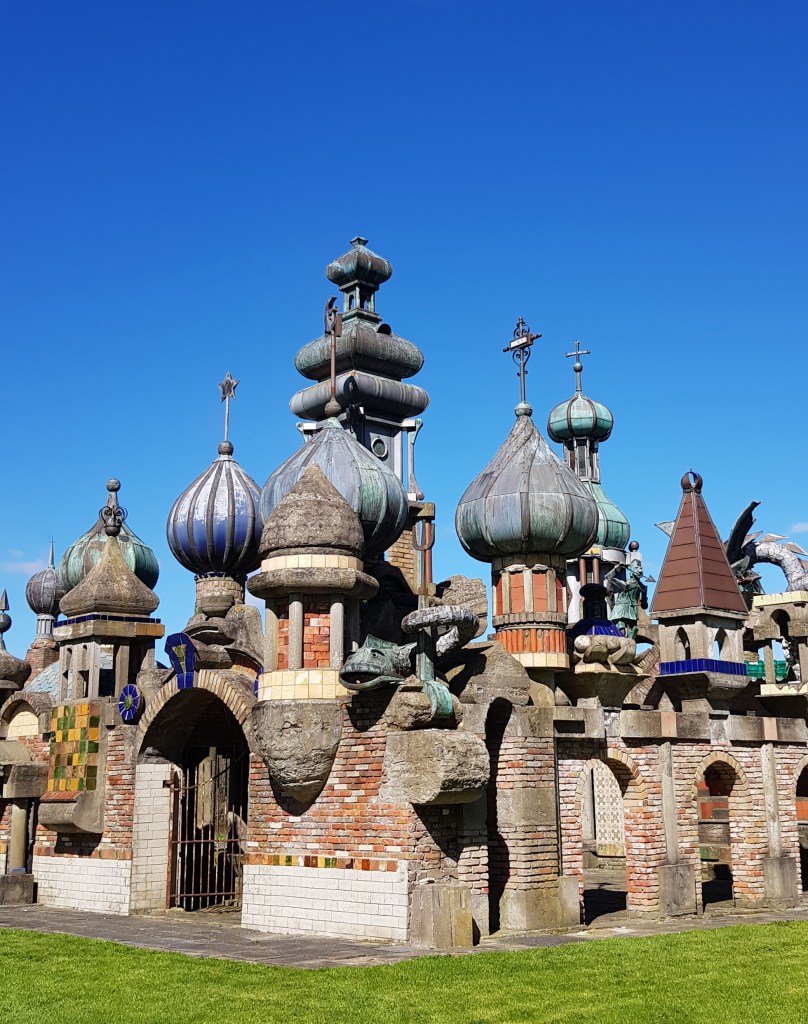
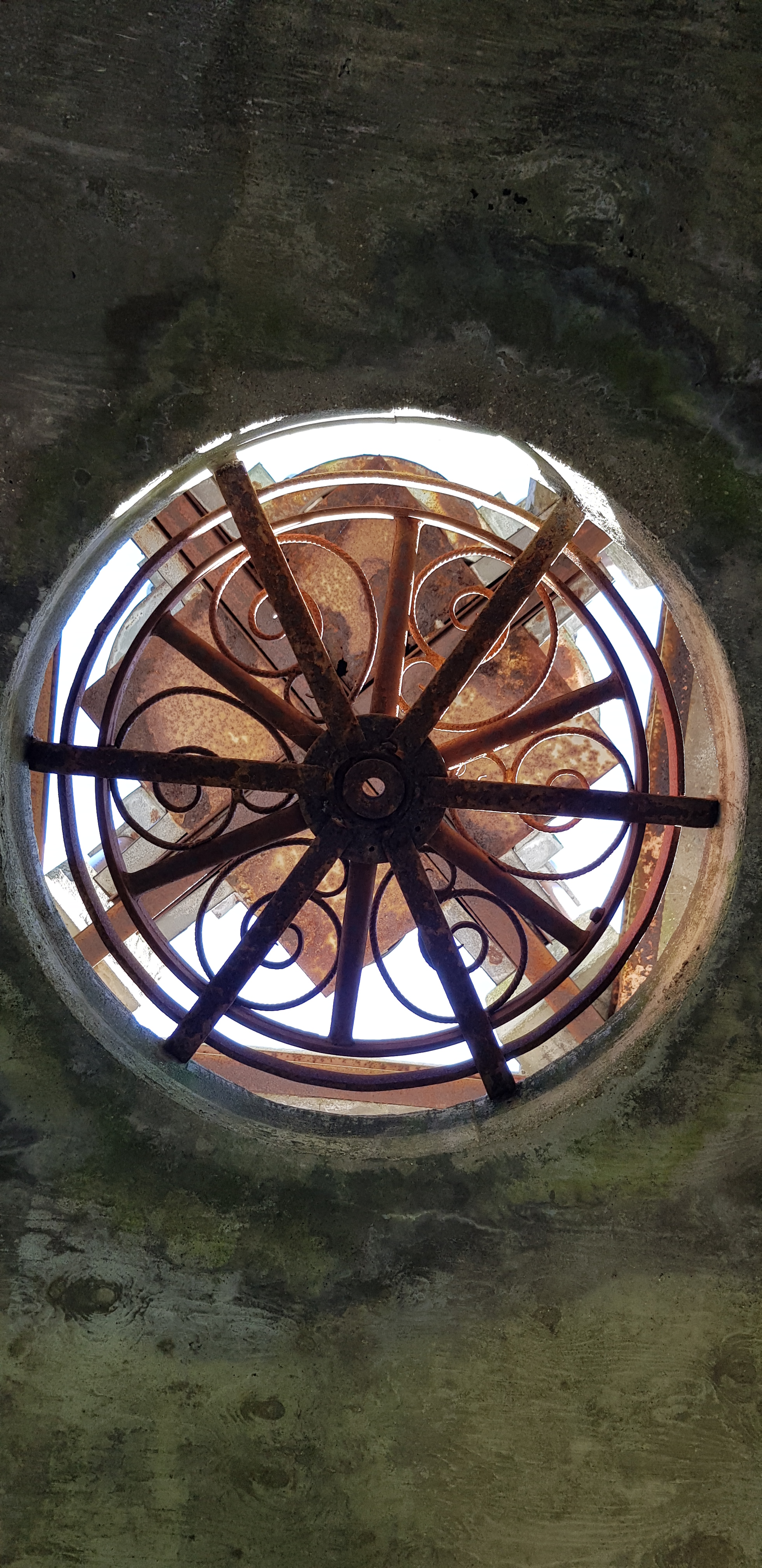
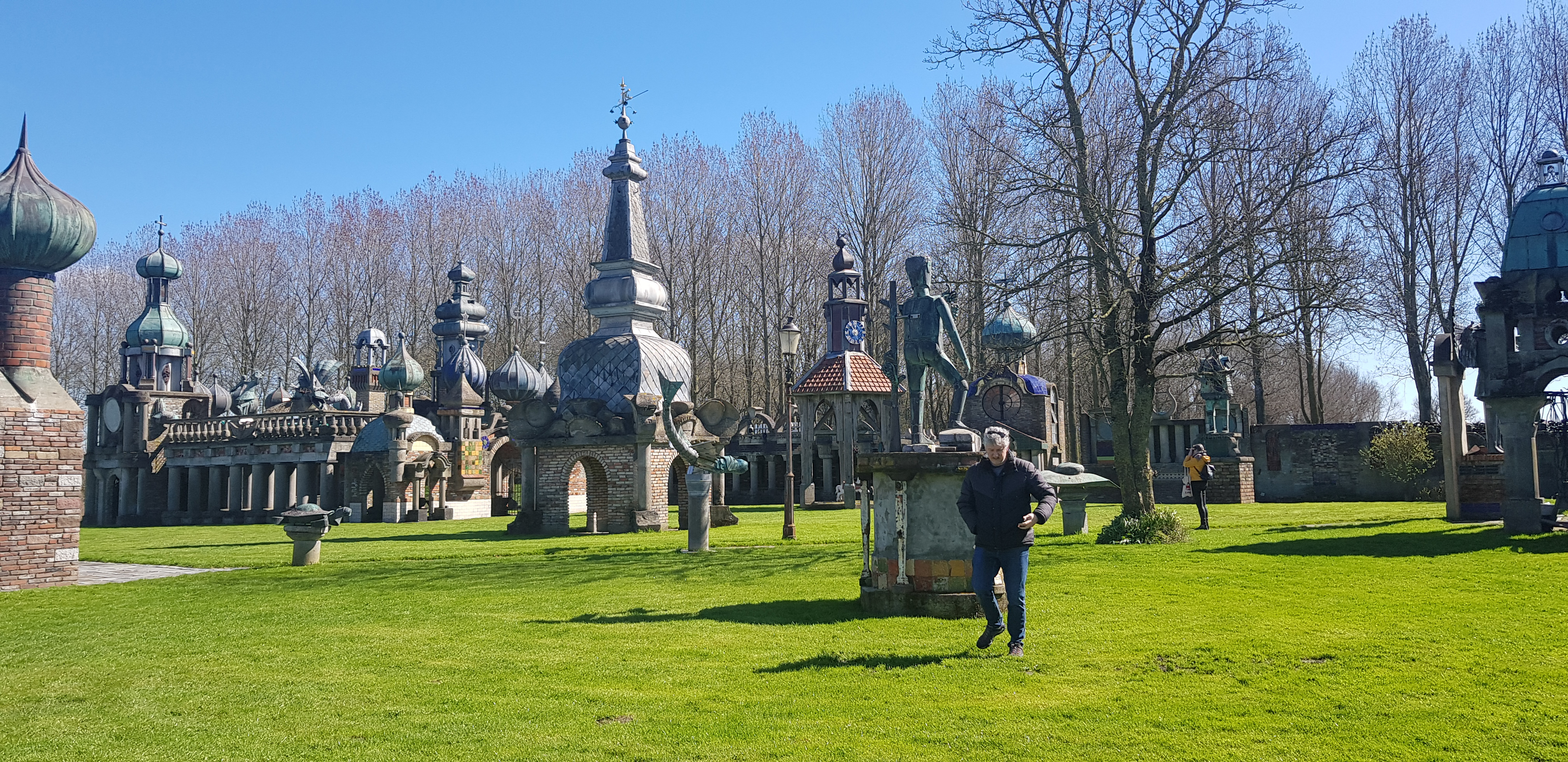
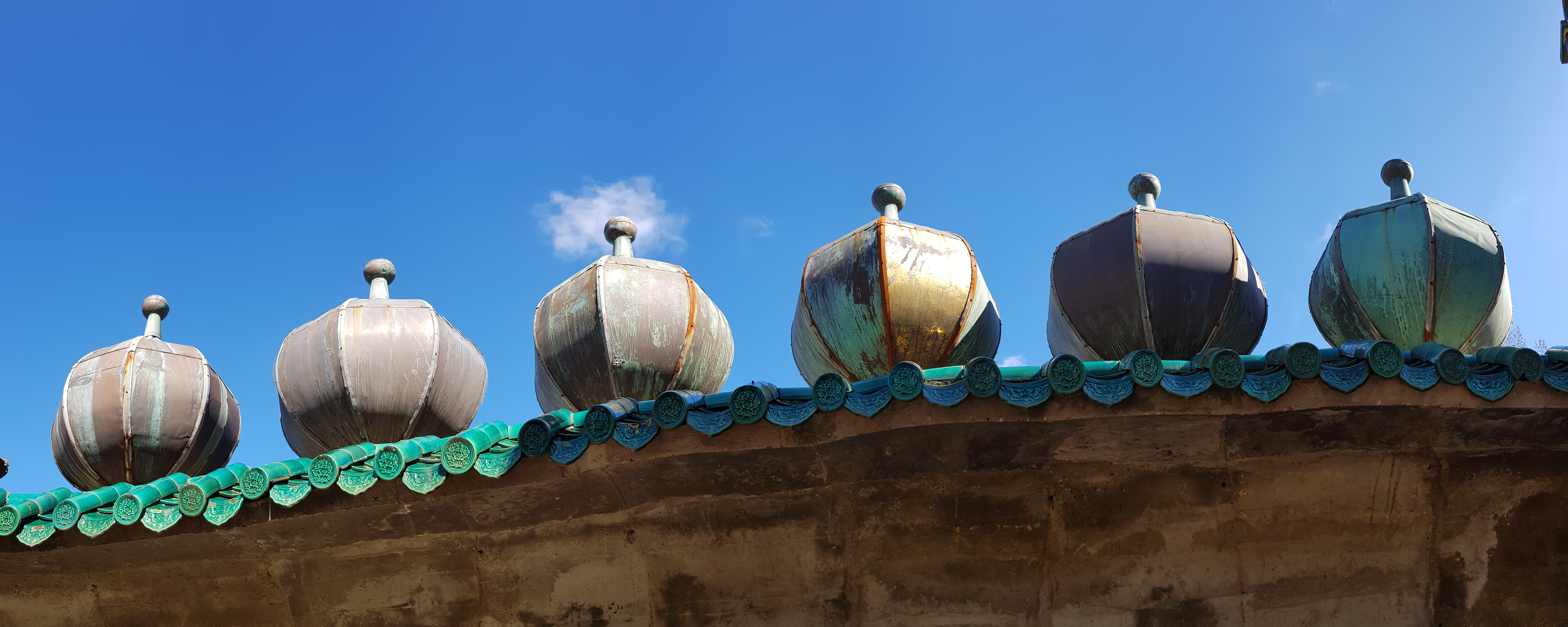
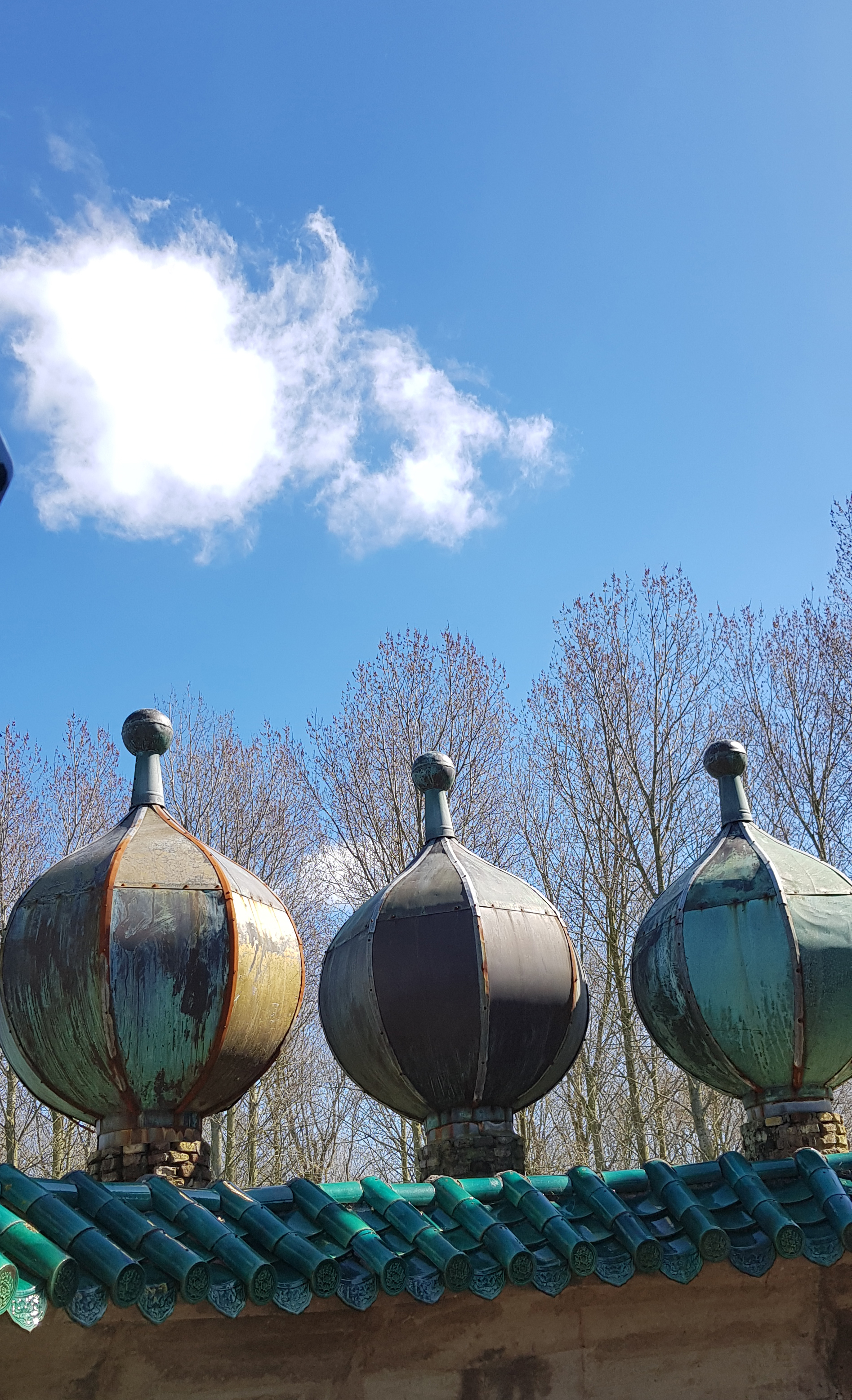
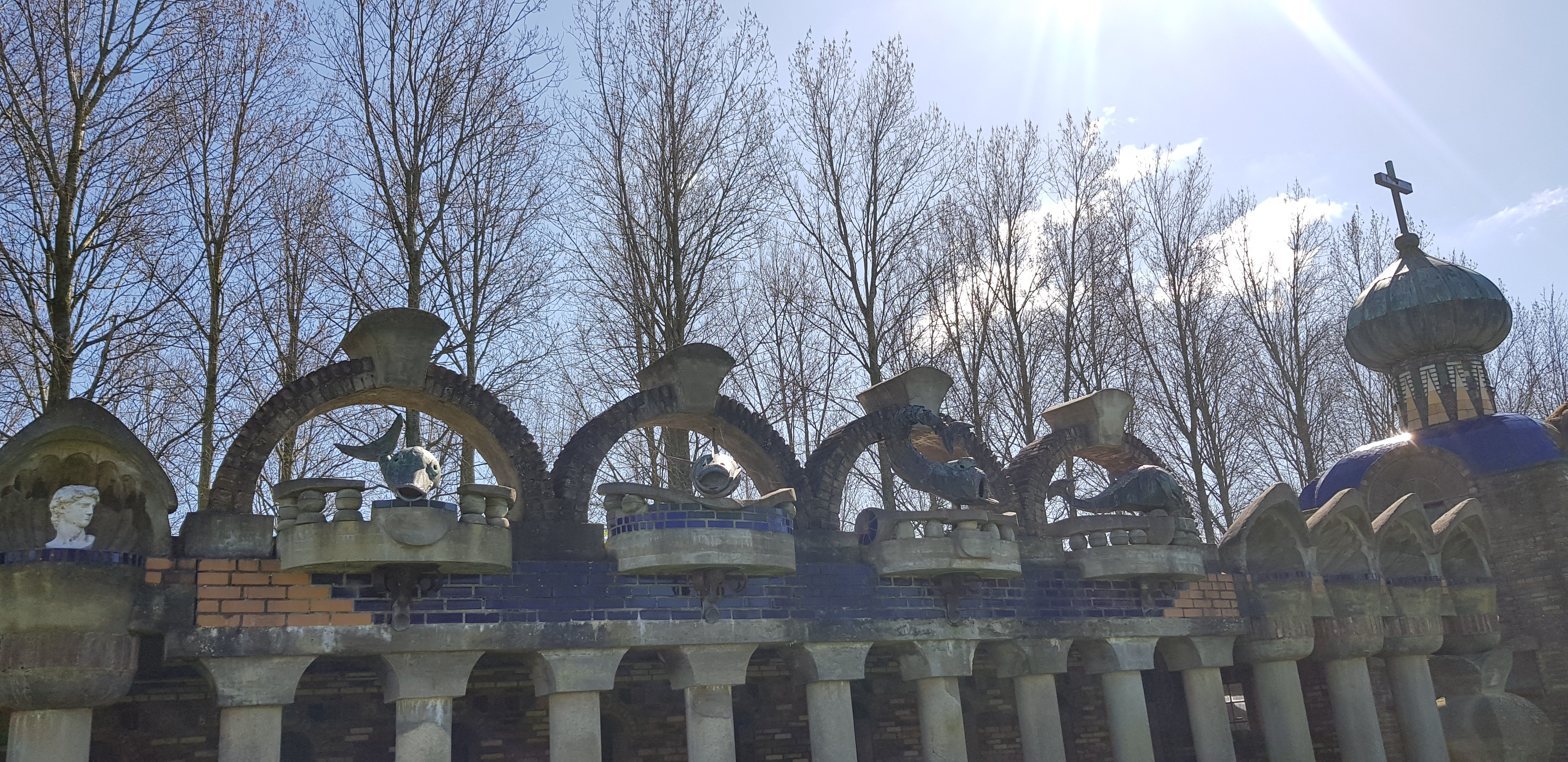
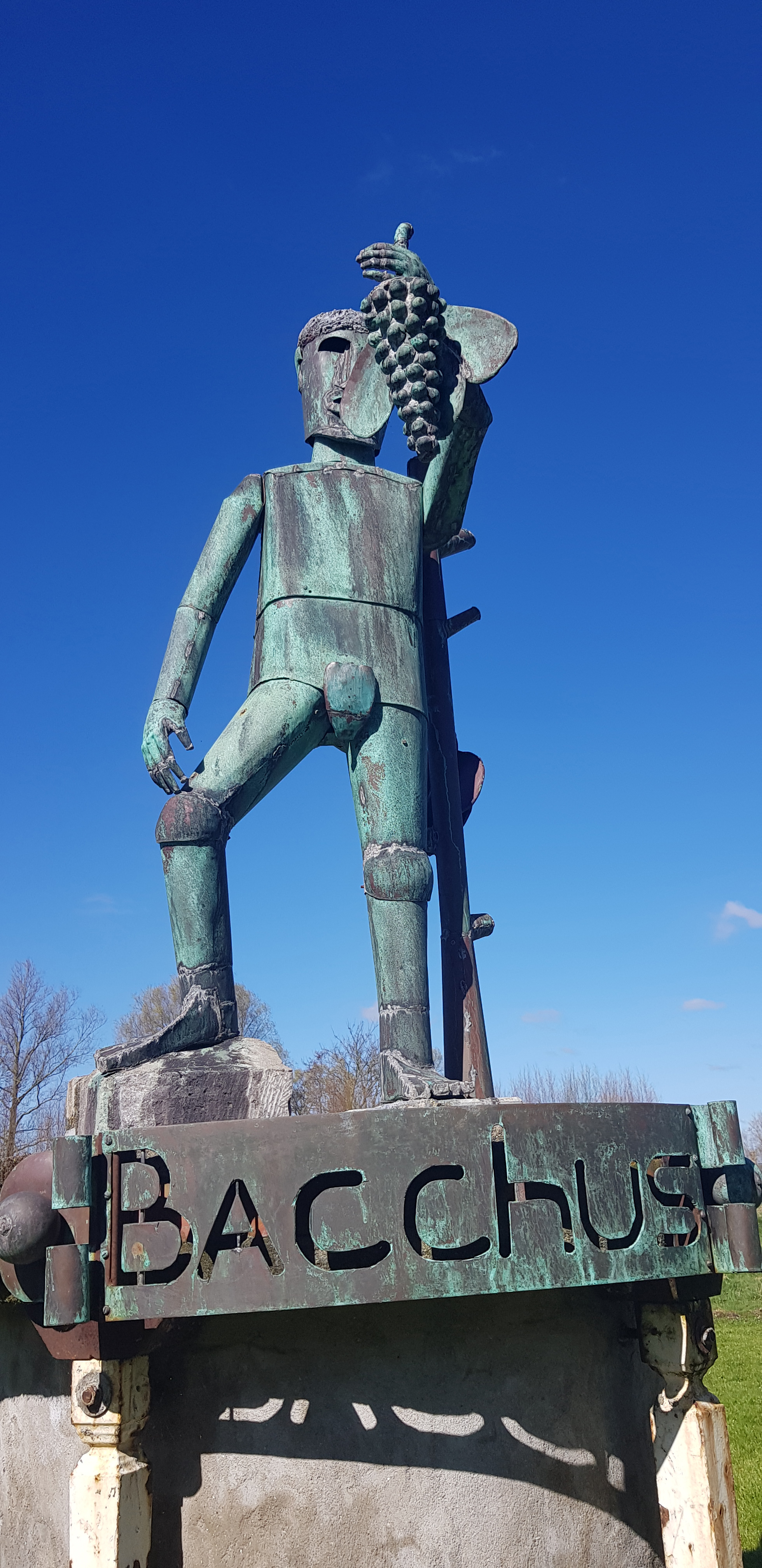
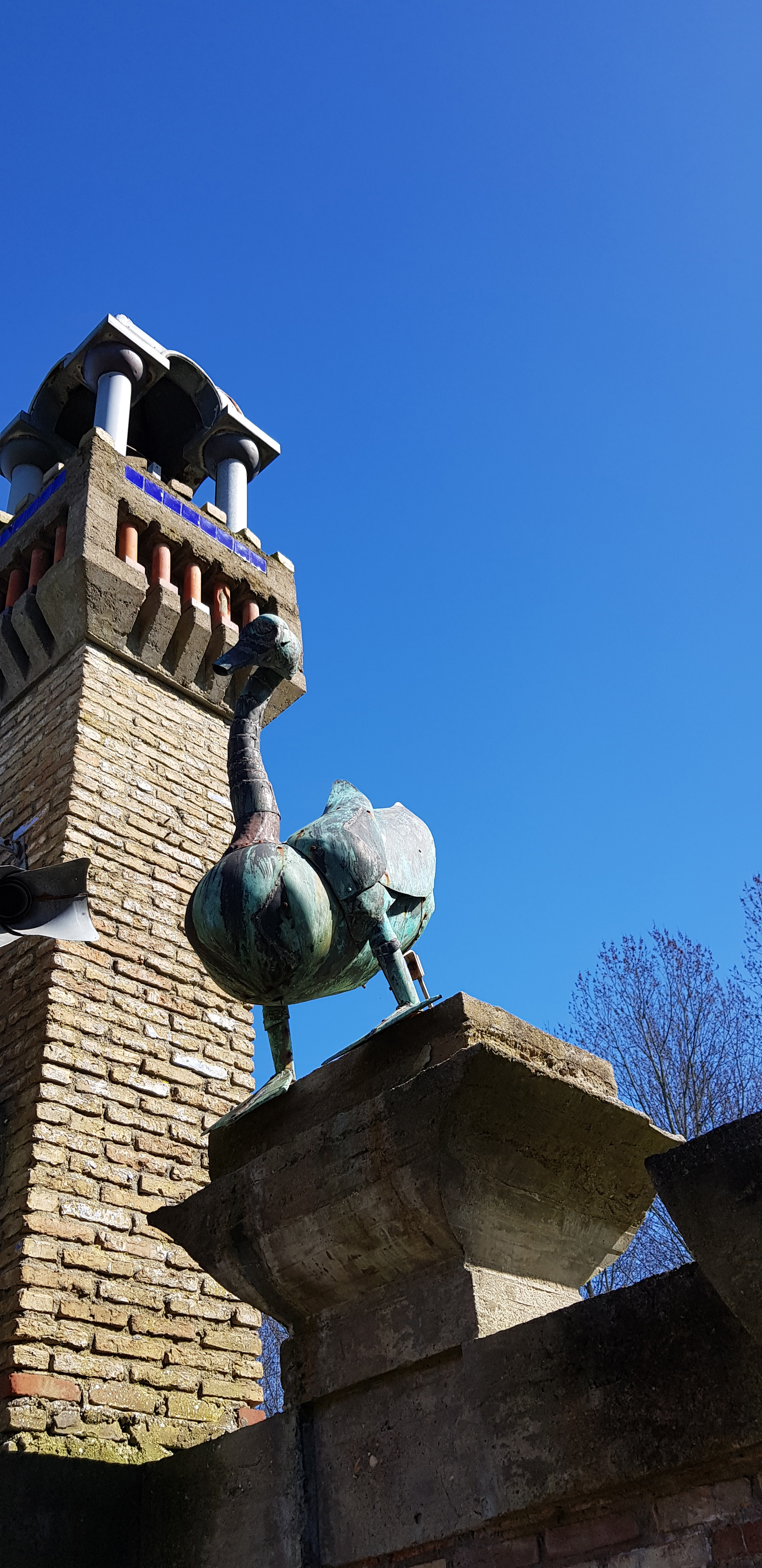
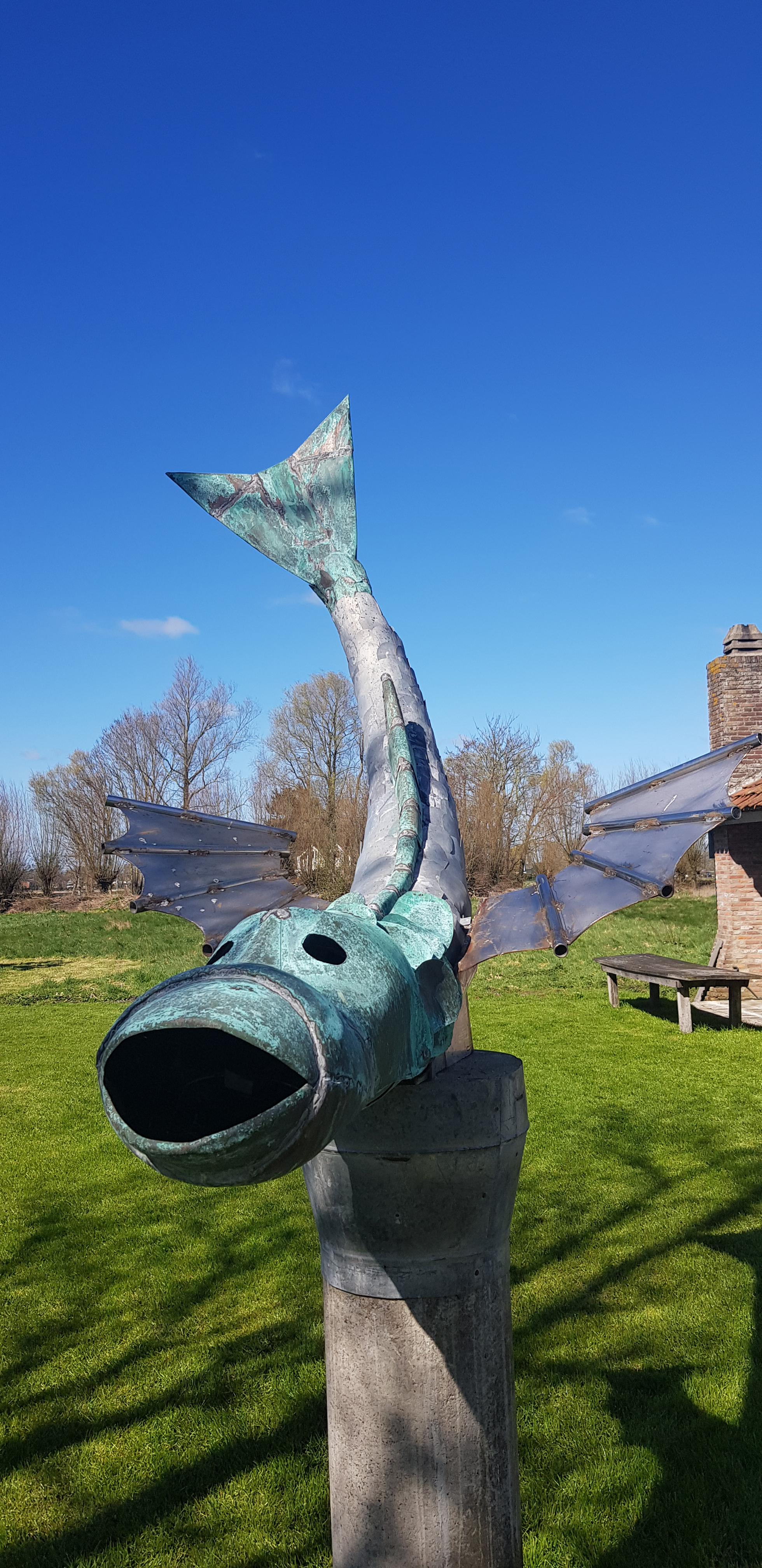
Just outside a small town in North Holland, called Winkel, you will find a ‘hutspot’ of architectural and creative wonder. From the N242 you have a glimpse of the Kremlin towers of a secret fantasy world.

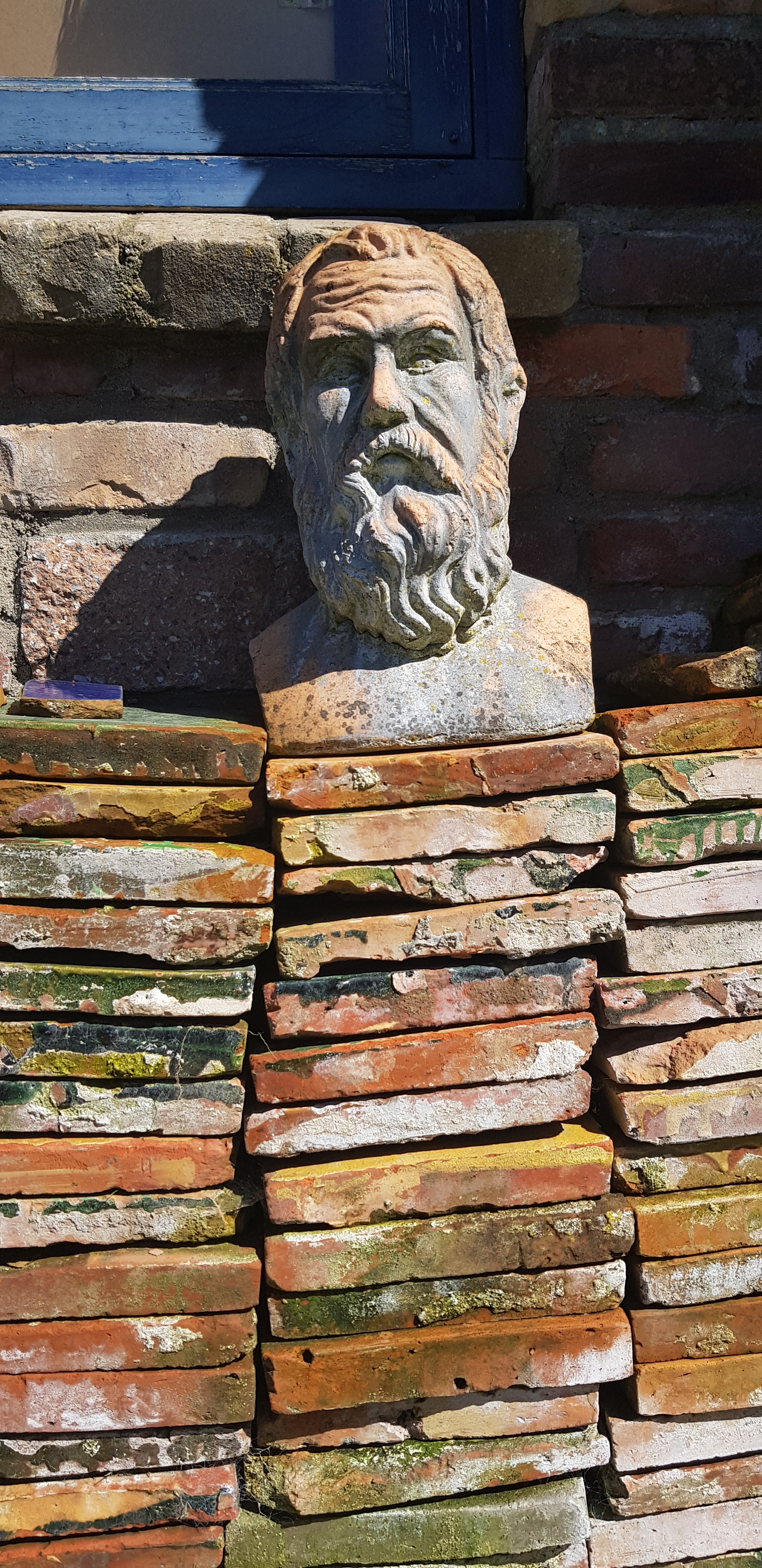
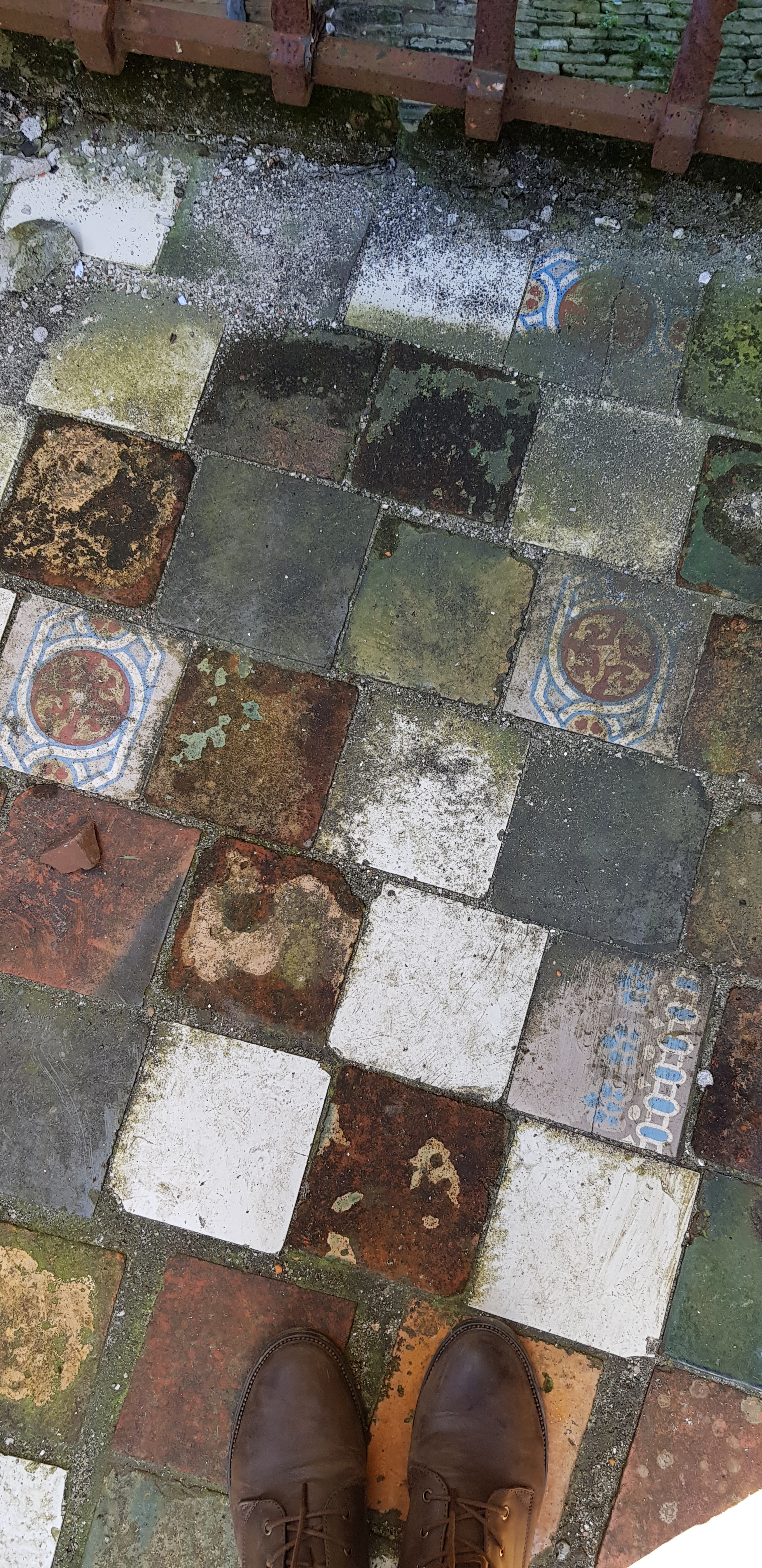
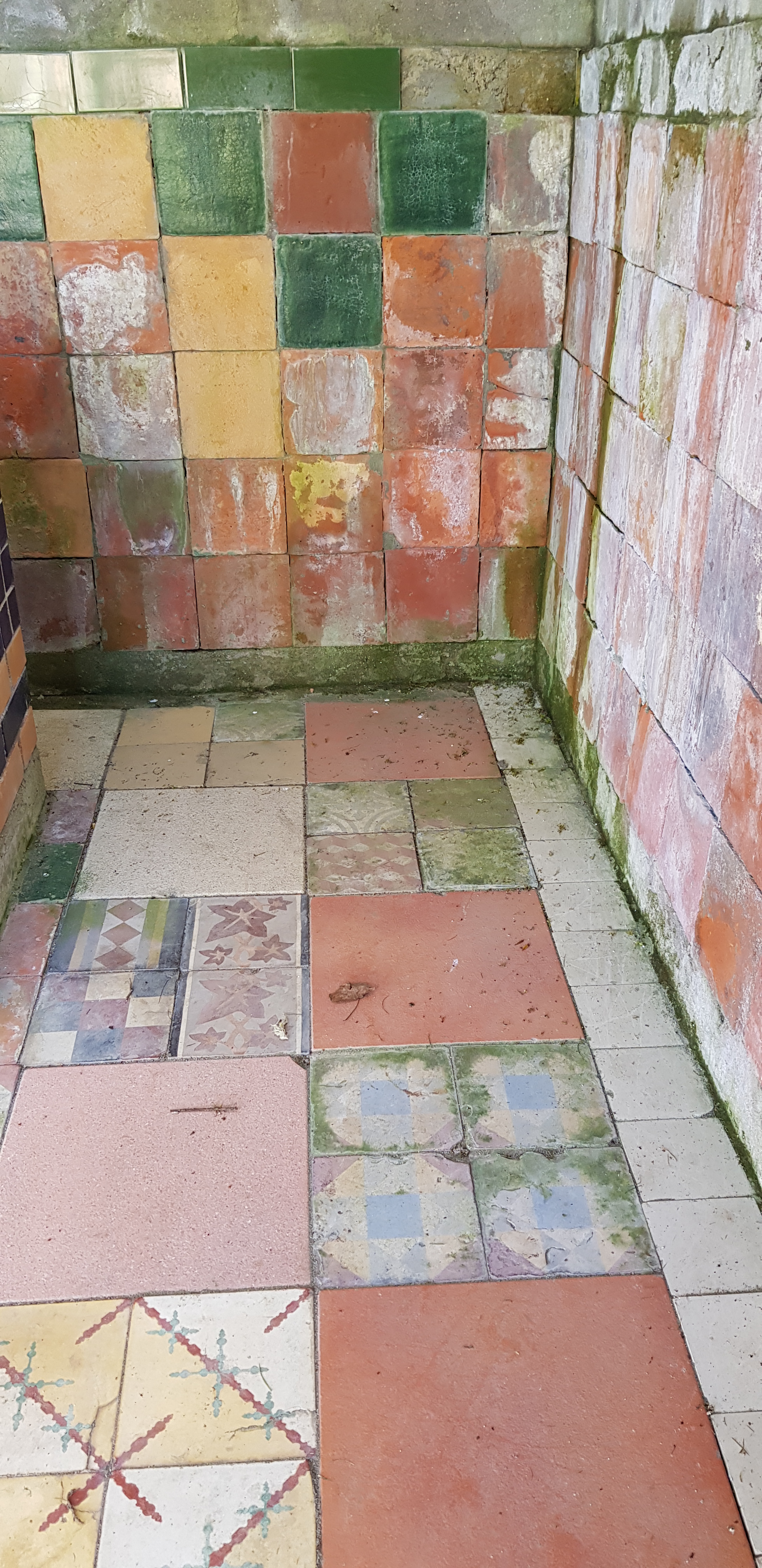
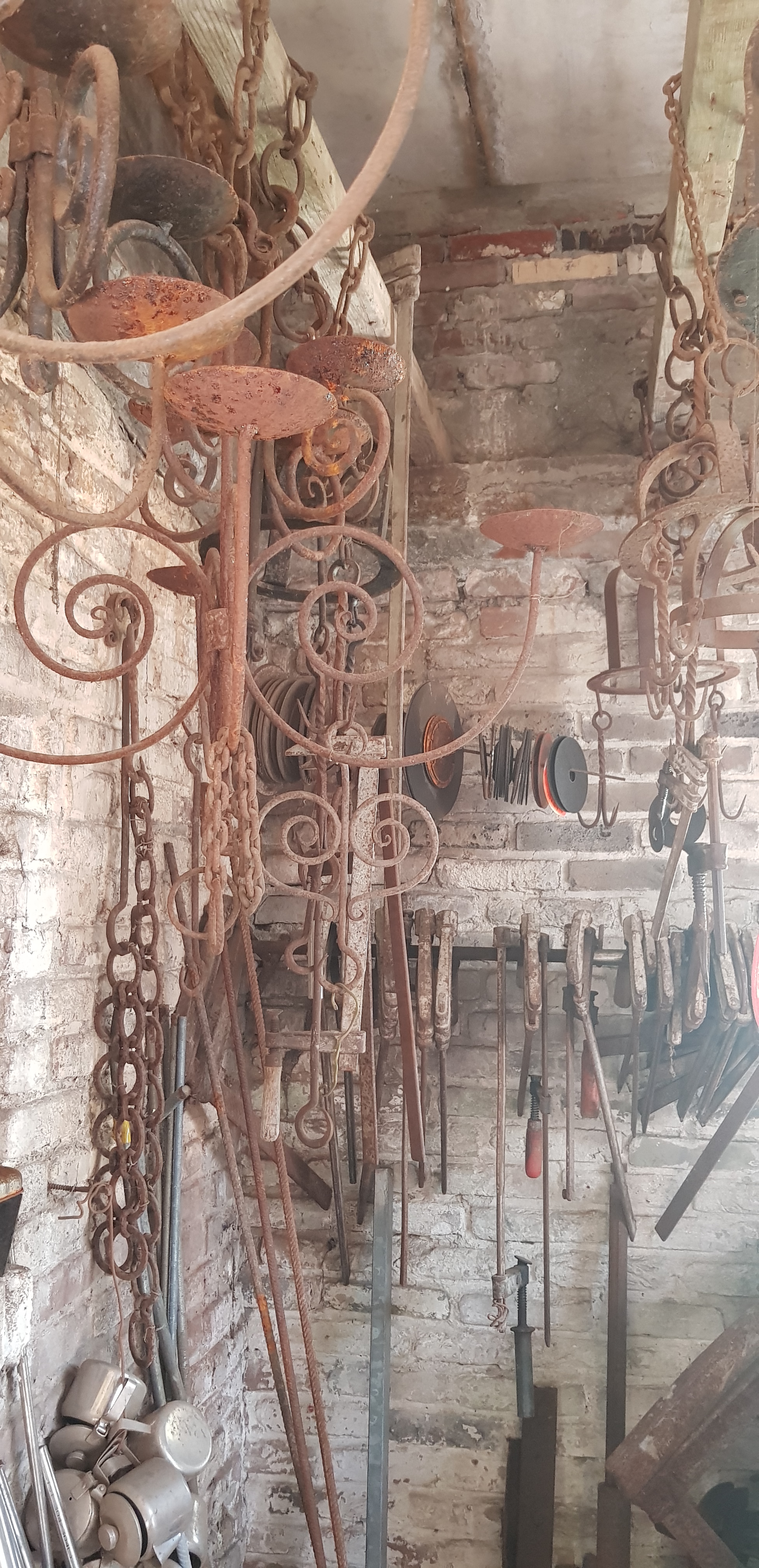
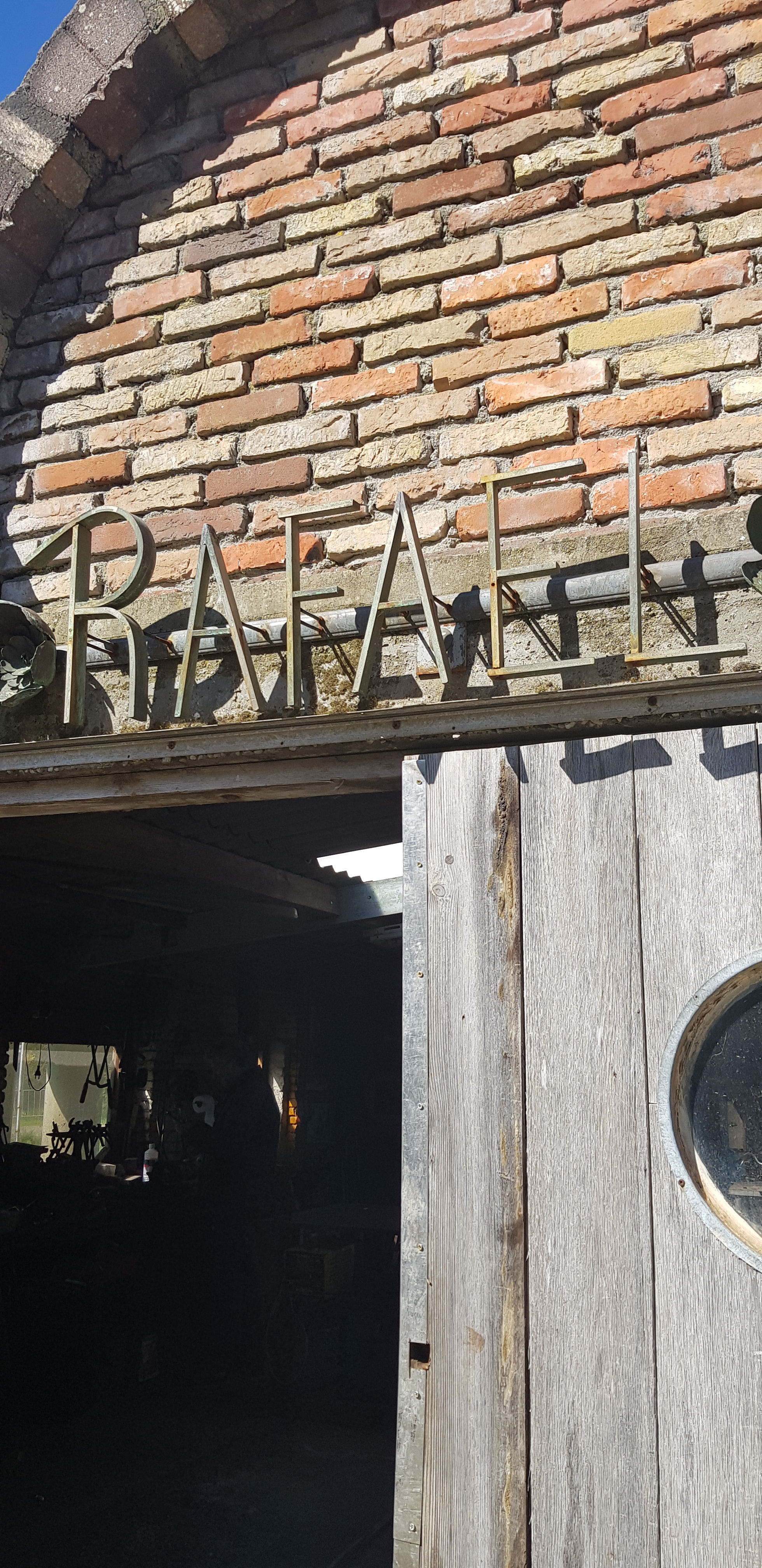
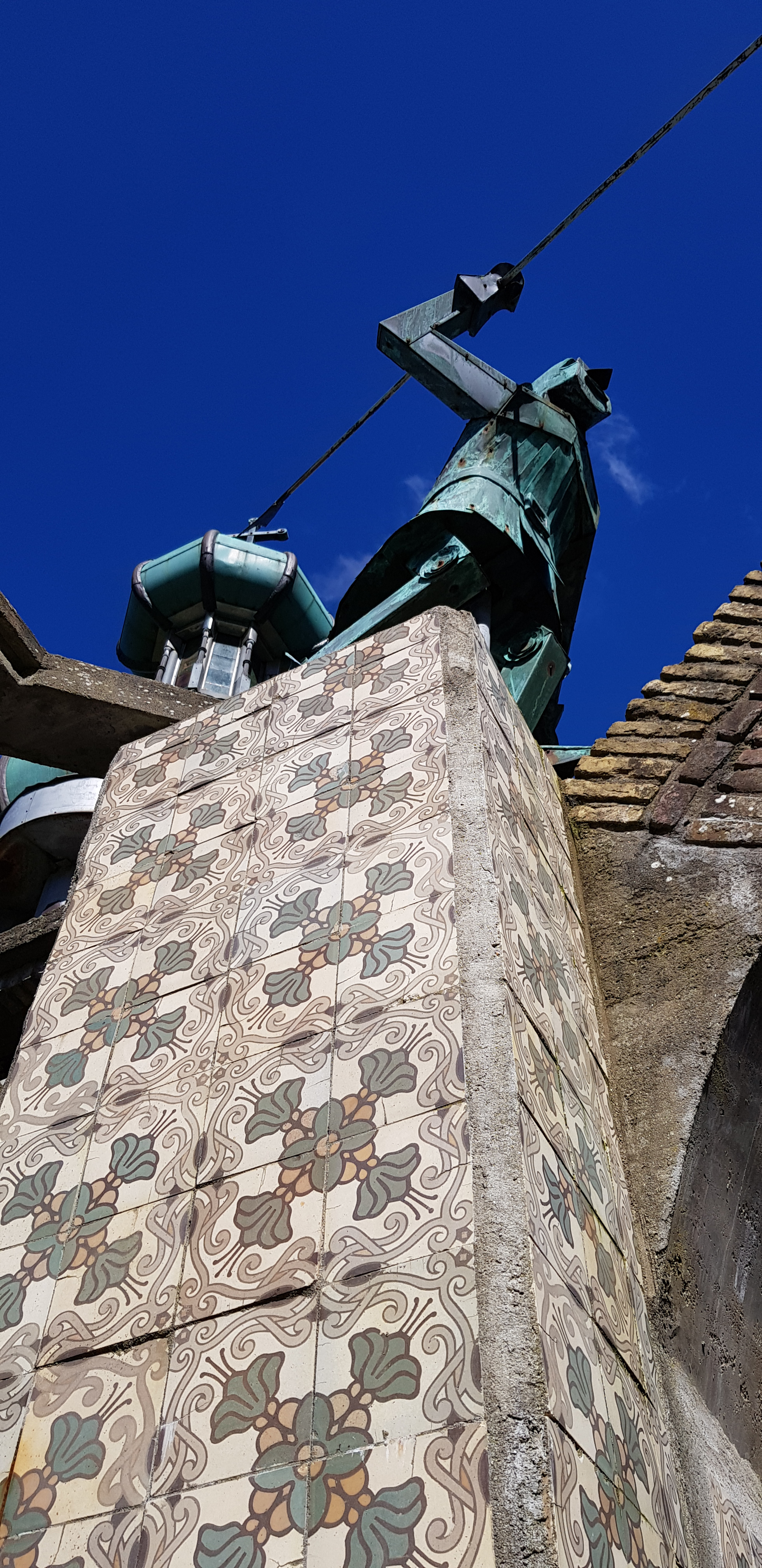
On this 1 hectare of land, Ger Leegwater (in his late 70’s), Mientje and a photogenic rescue rooster, called Gerrie, shares Ger’s love and passion for fantasy, mythology, history and unique craftmanship. Ger takes proud ownership of his knowledge of architecture and the endless creative possibilities of building materials, such as metals, antique Italian tiles and curbs.

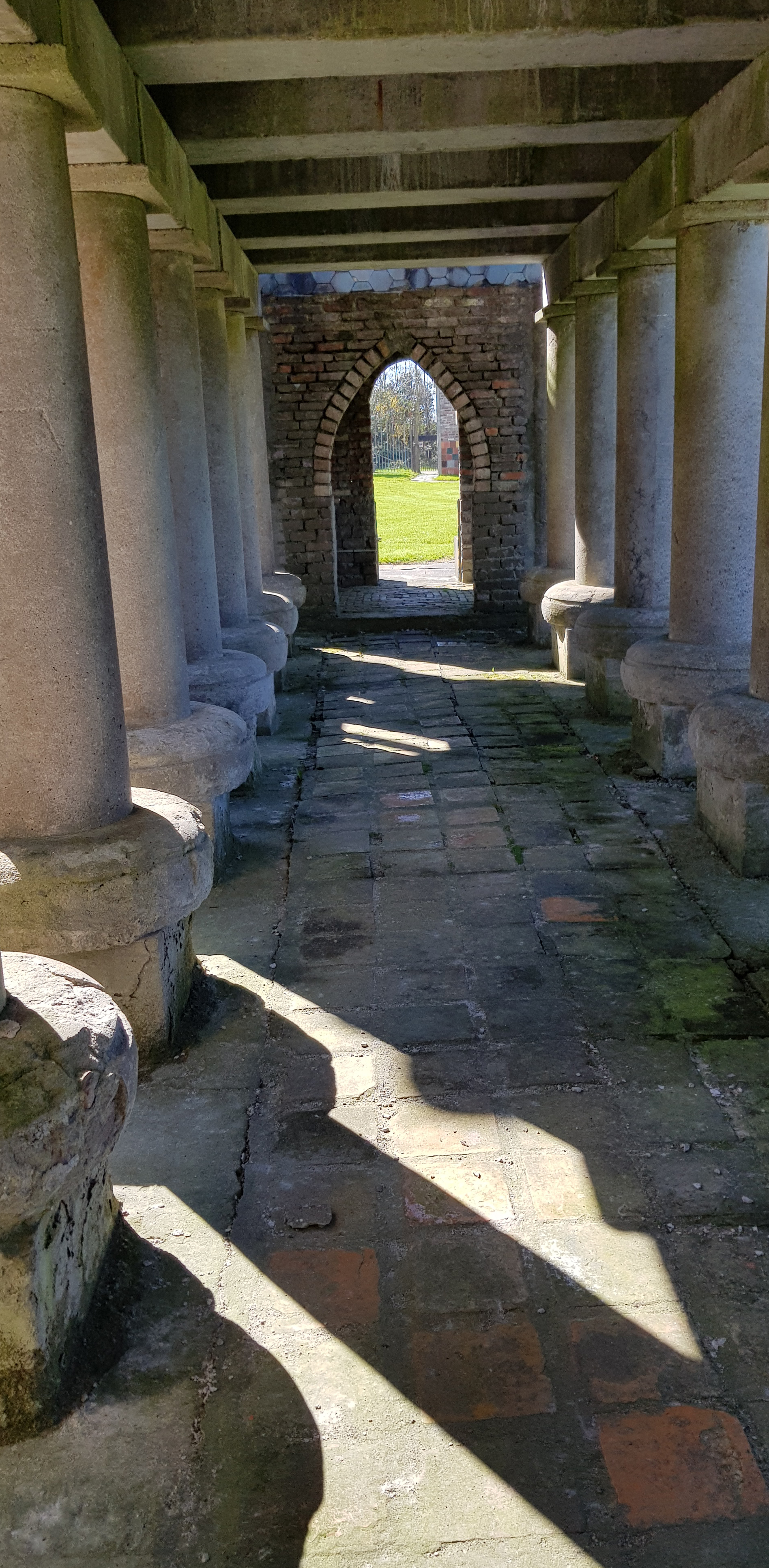
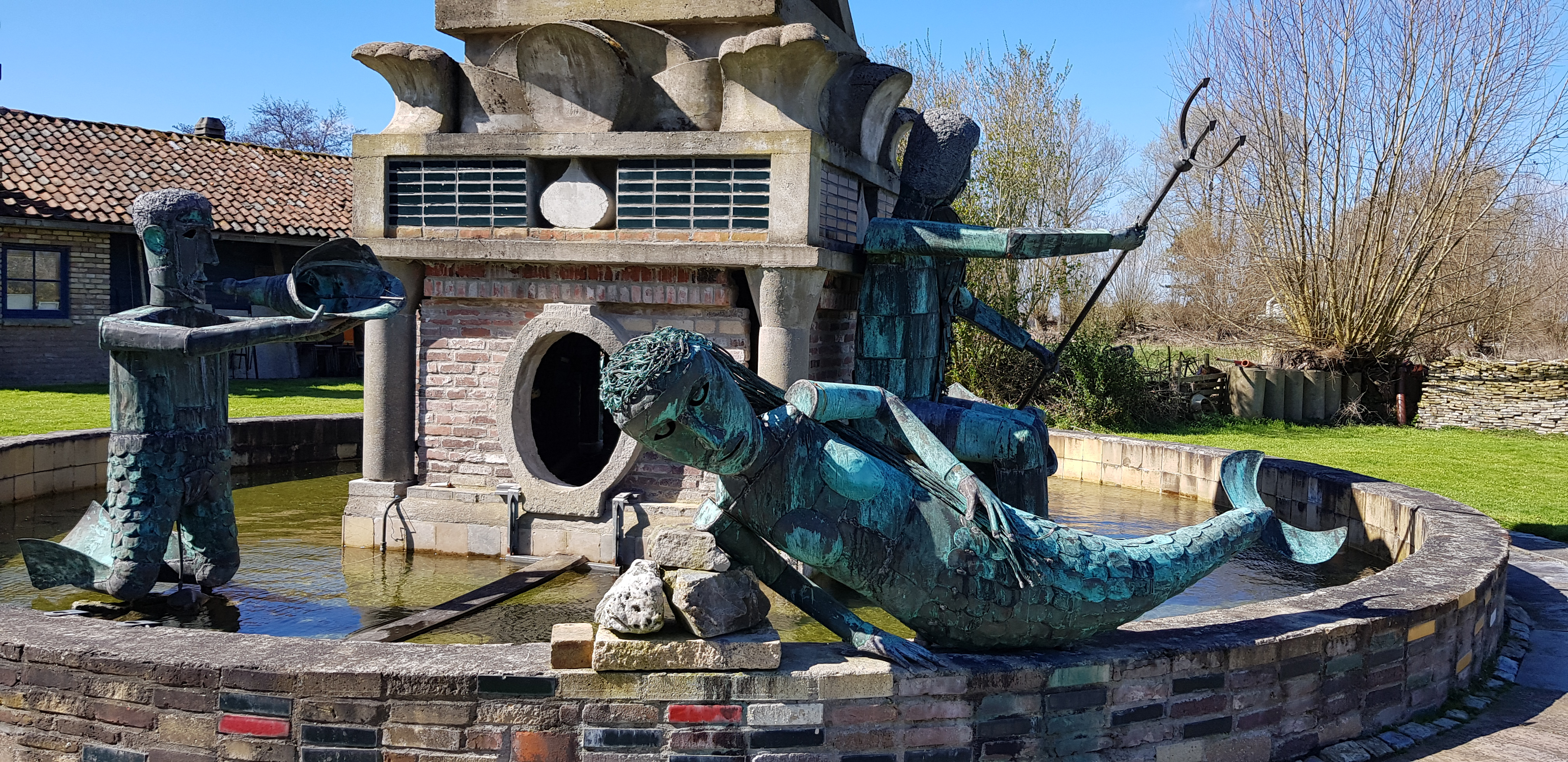
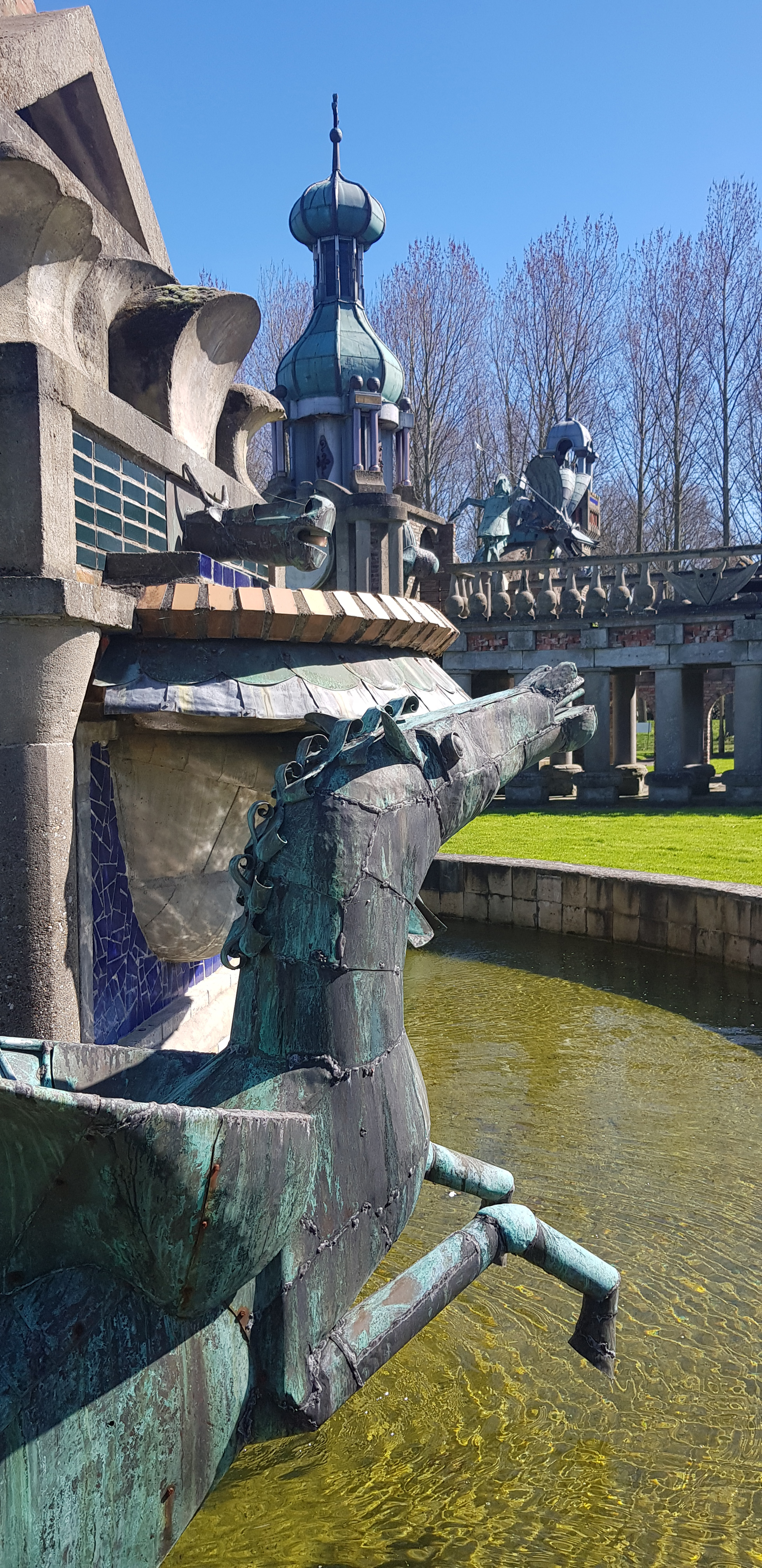
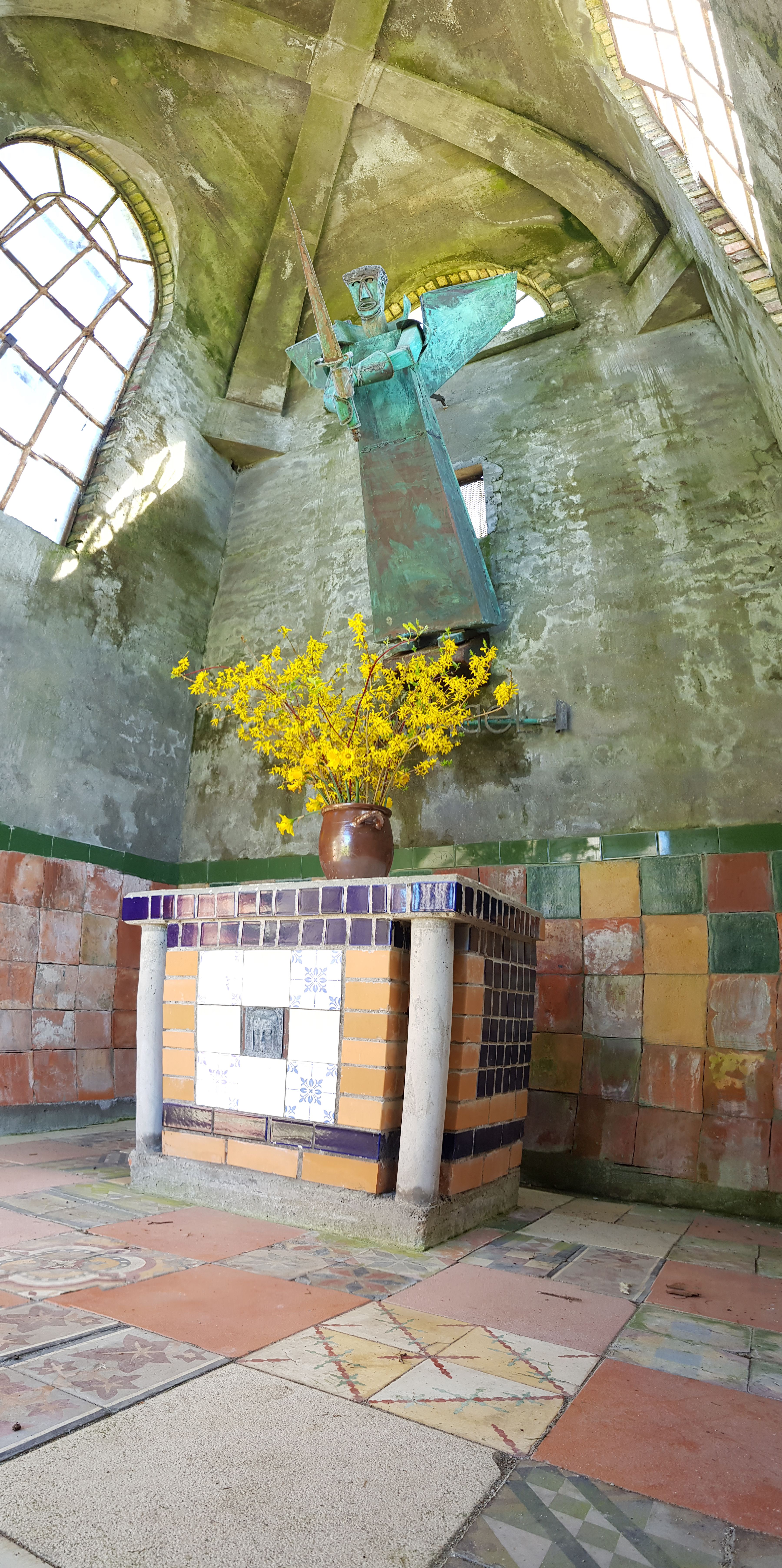
When entering this magical world, you immediately notice the Russian and Italian baroque influence of Bernini, Borromini and Rastrelli in the several buildings on this piece of land: The Michael chapel, Music room, Amphitheatre and the Winter Palace.

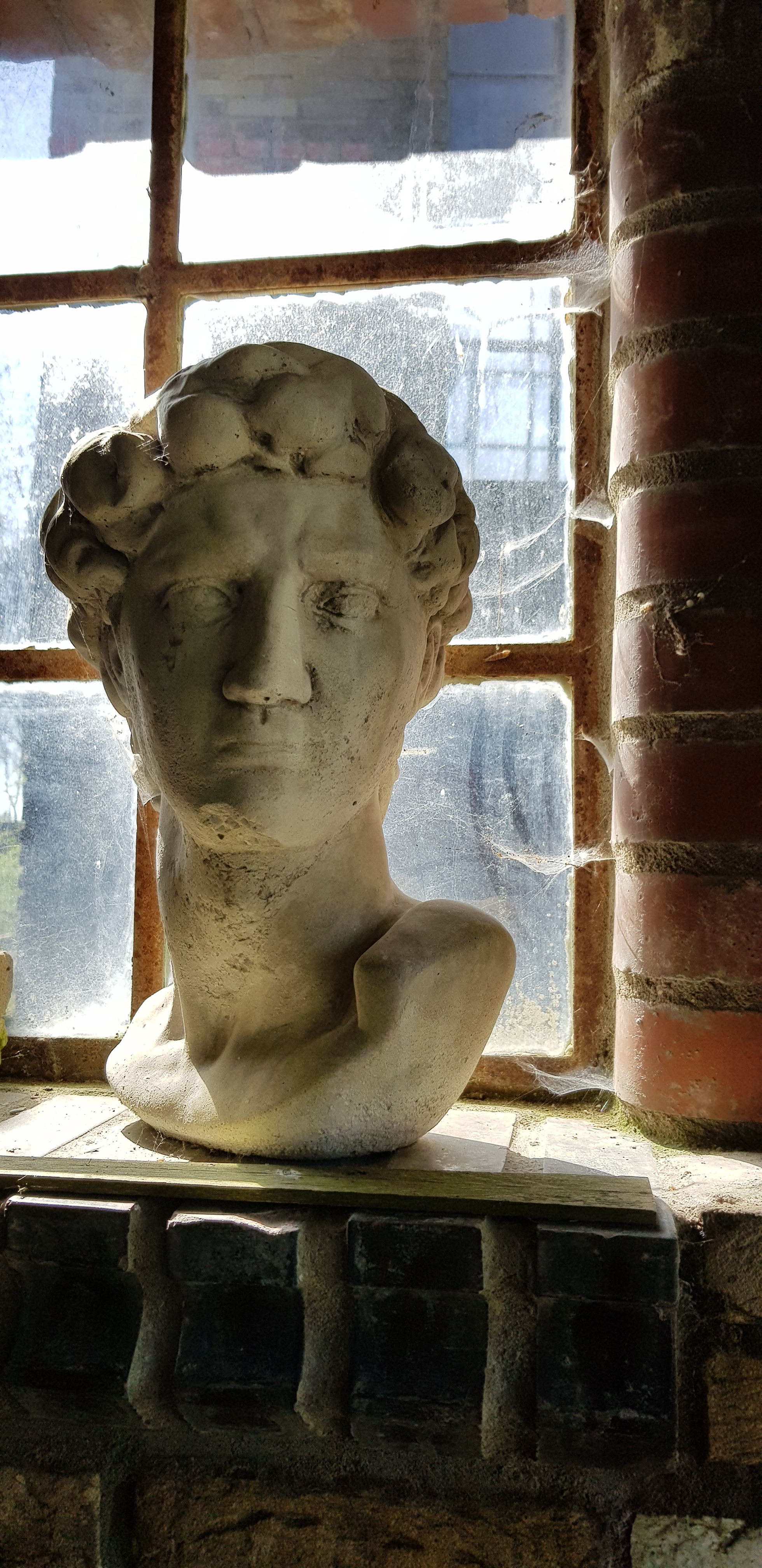
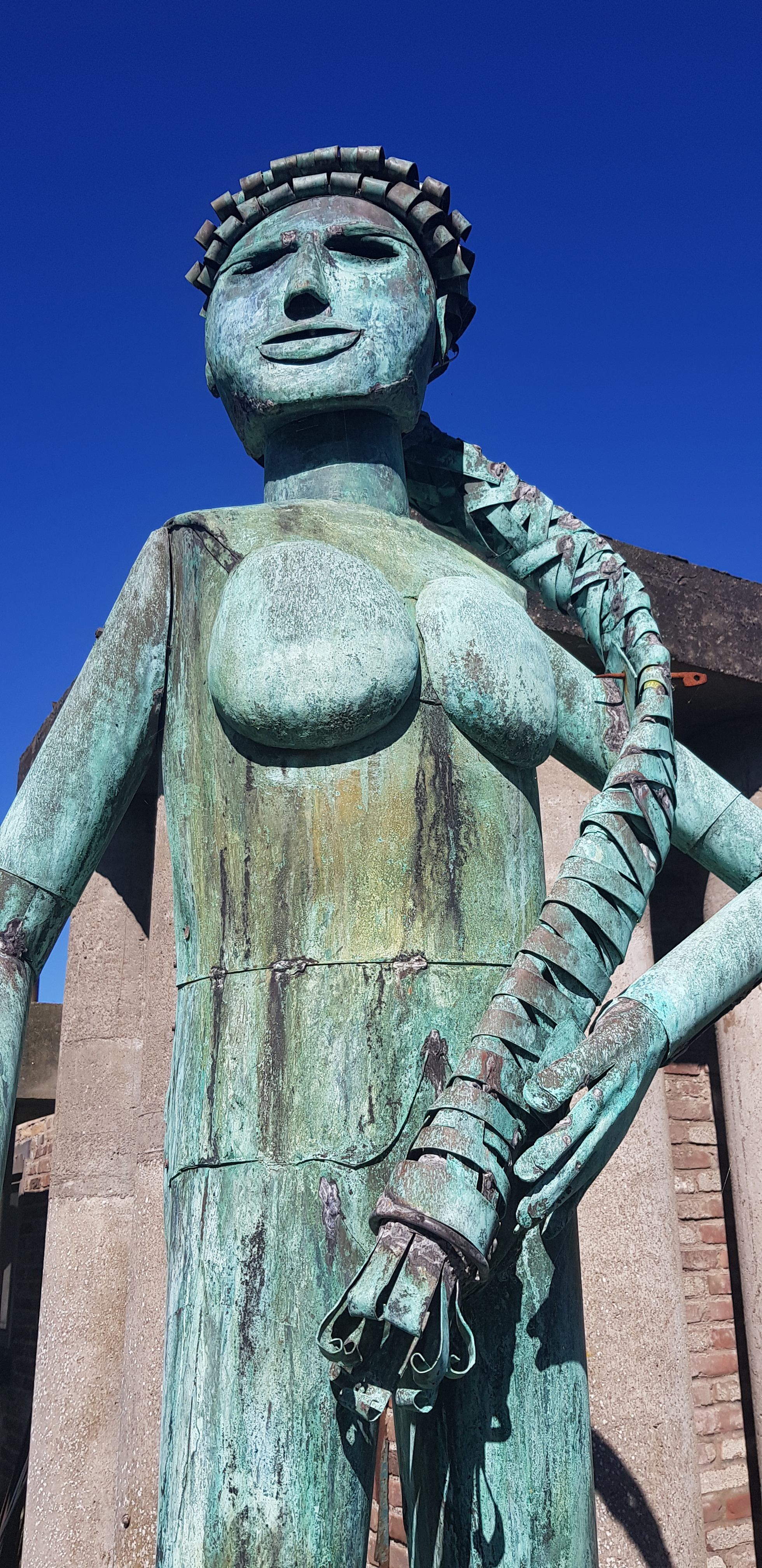
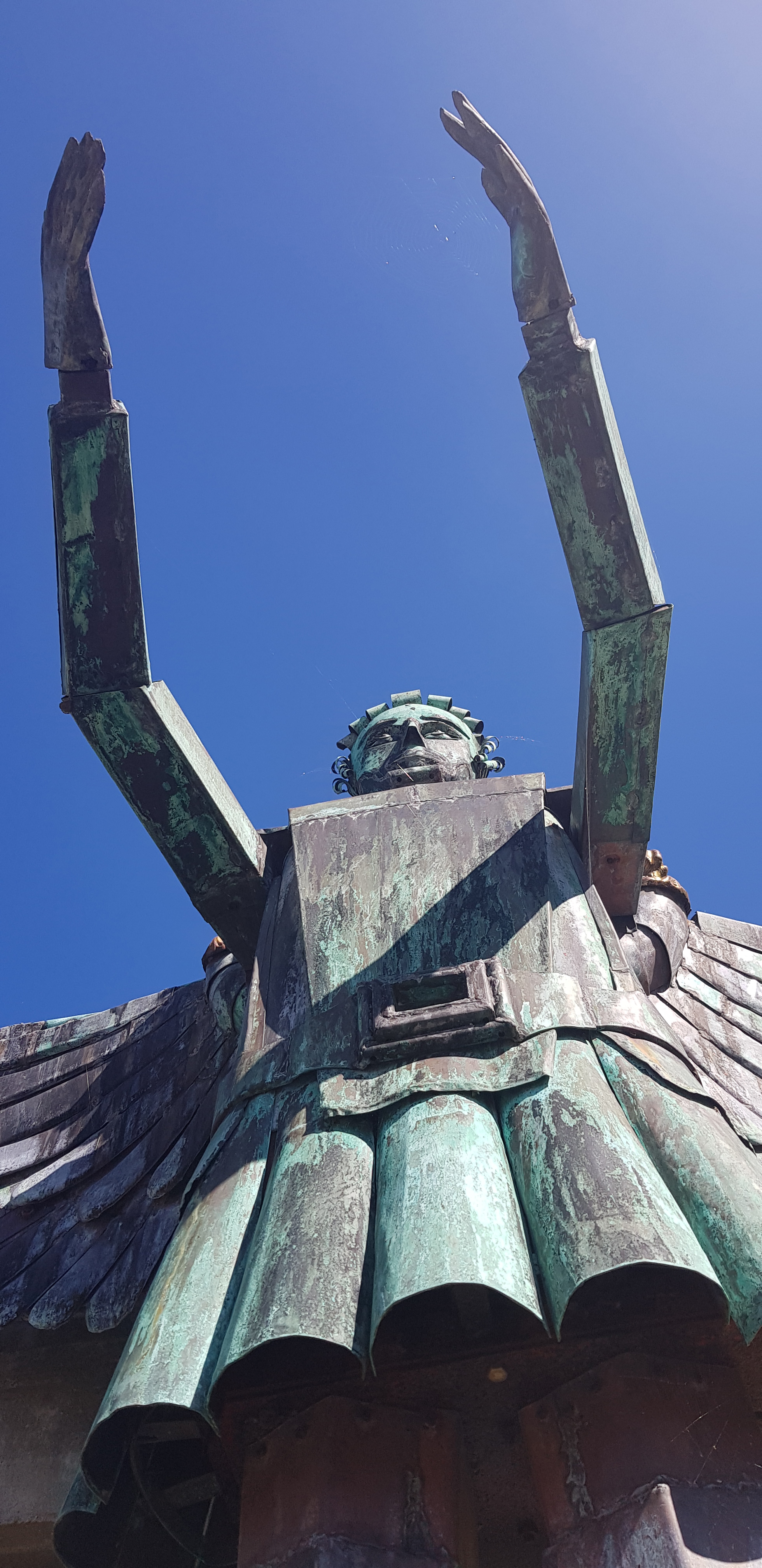
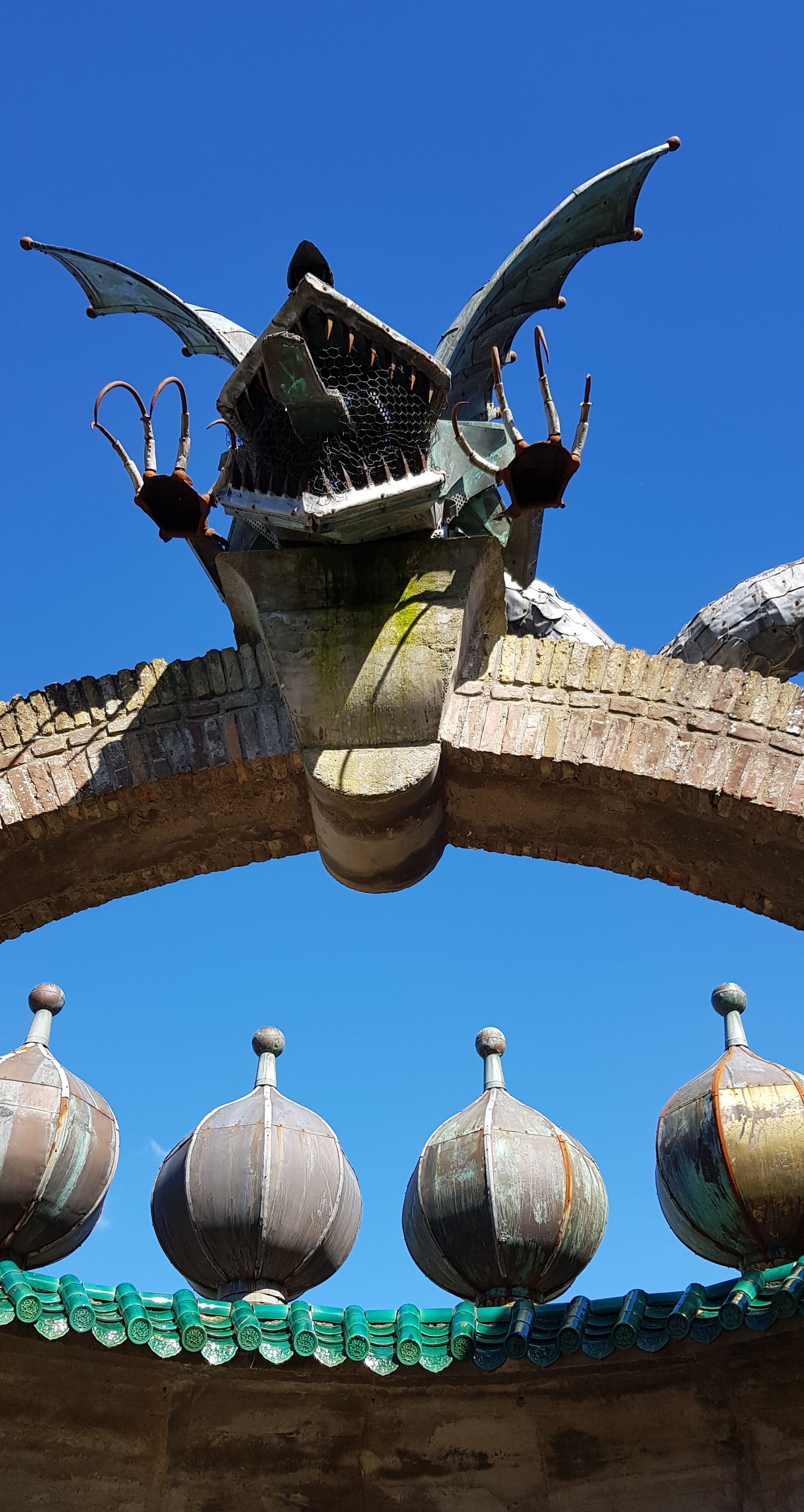
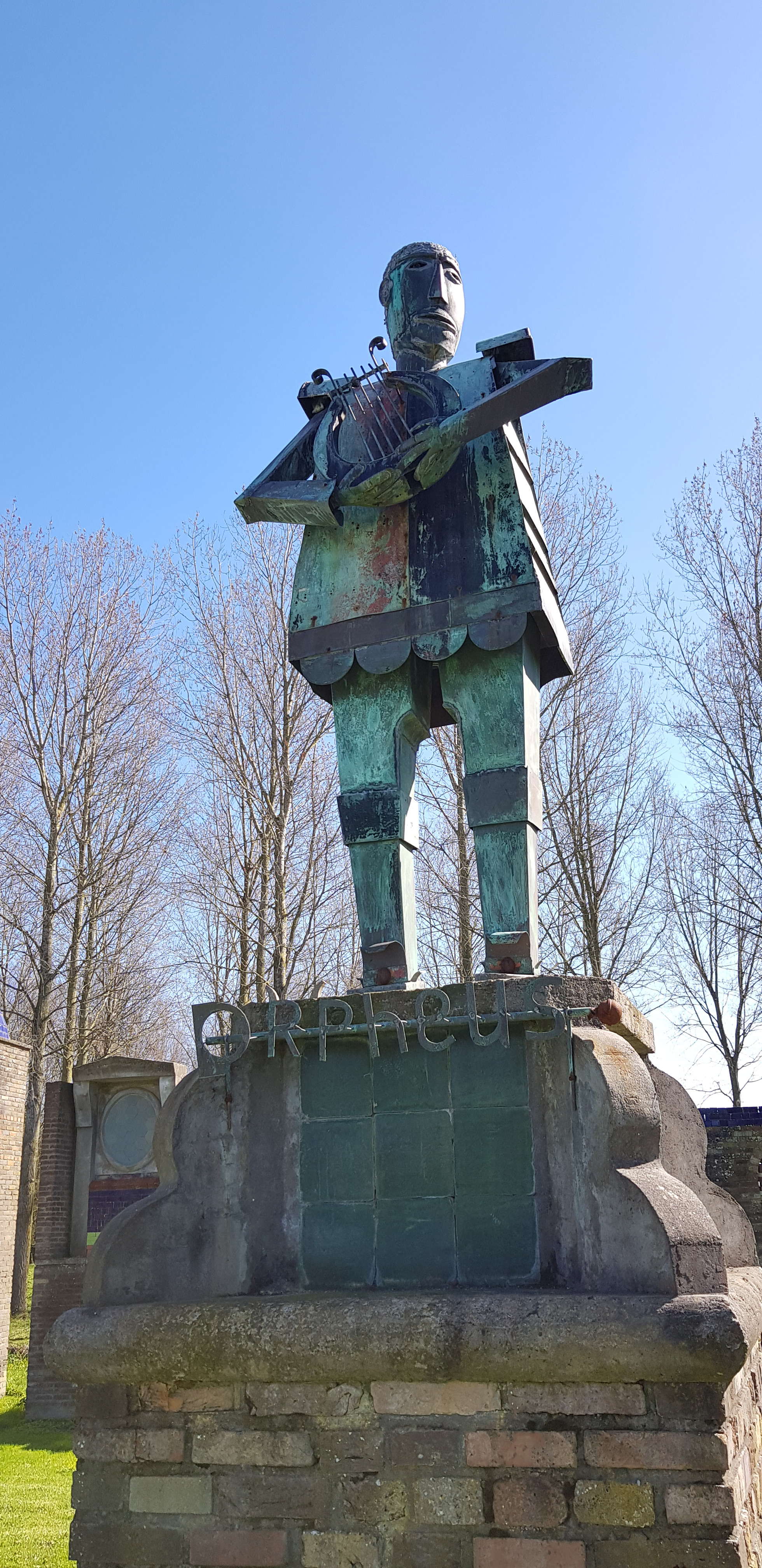
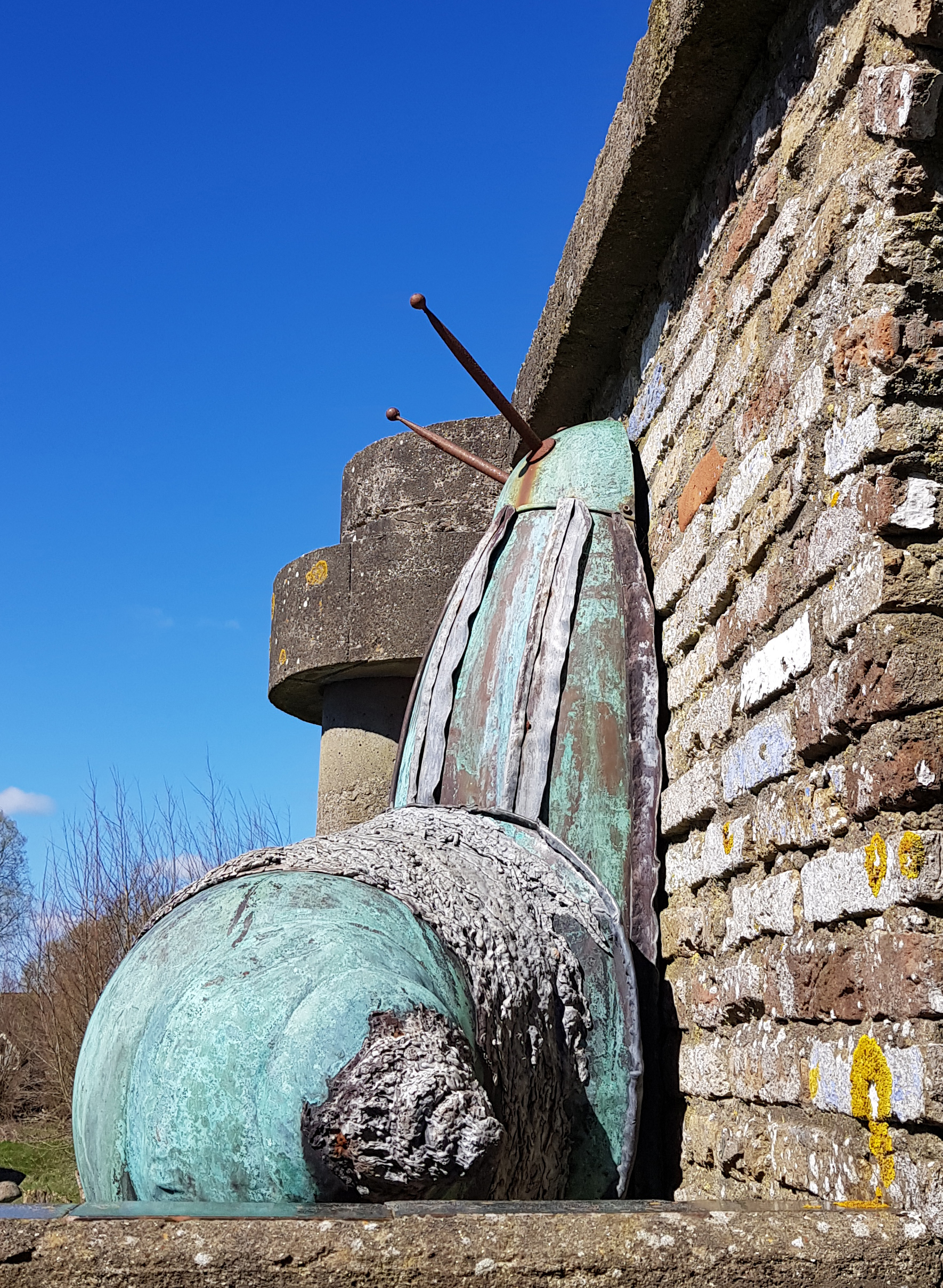
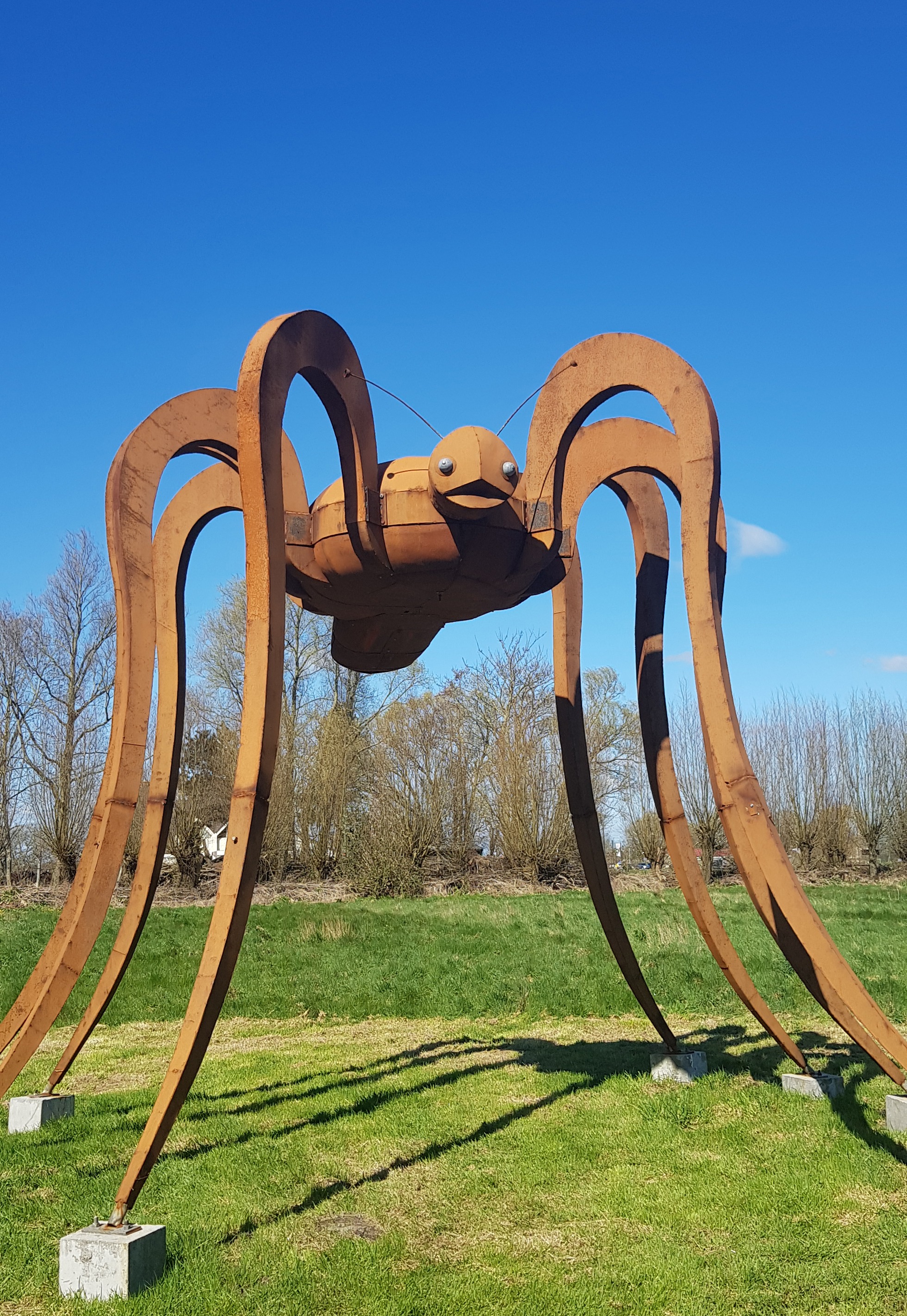
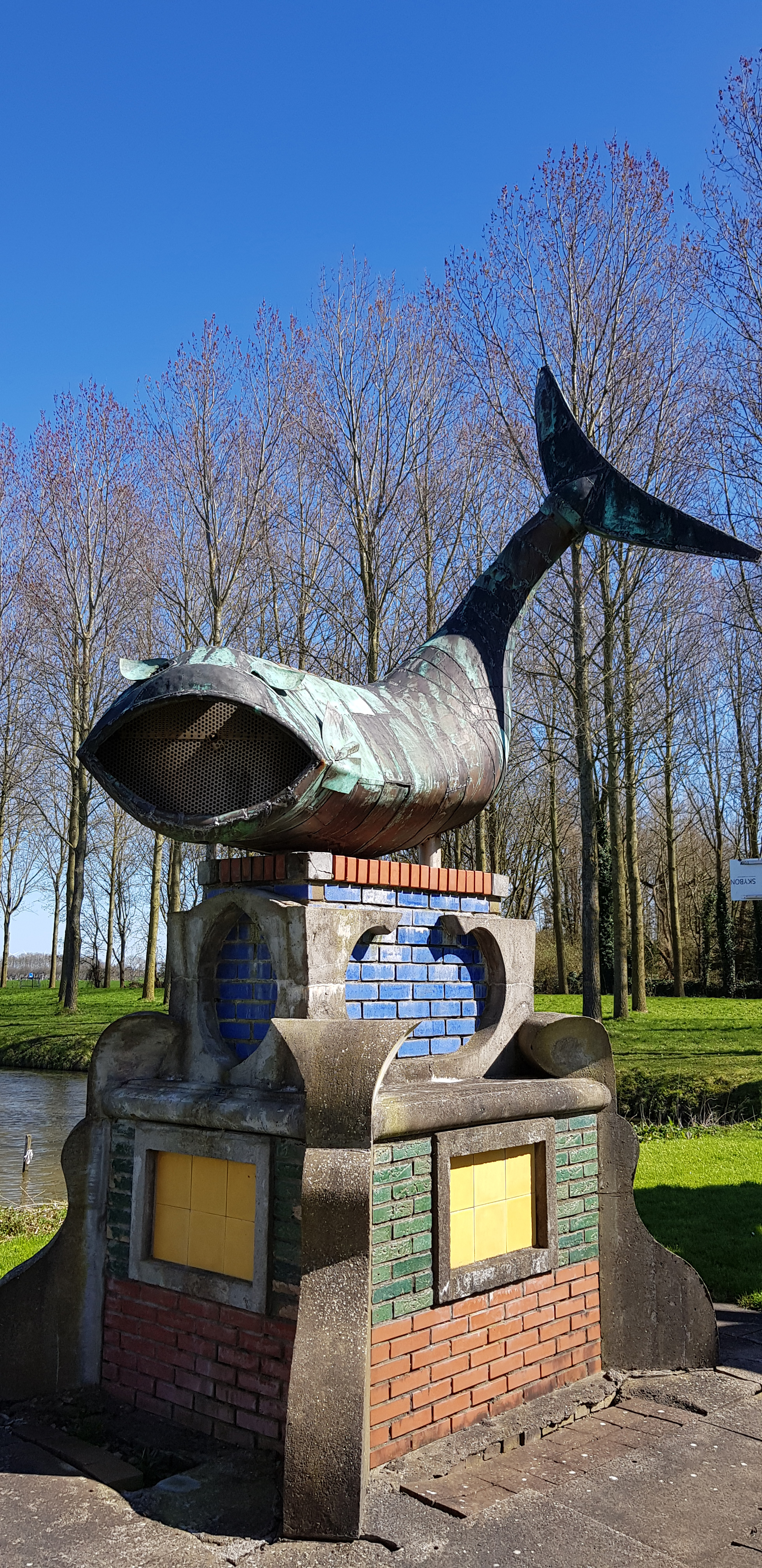
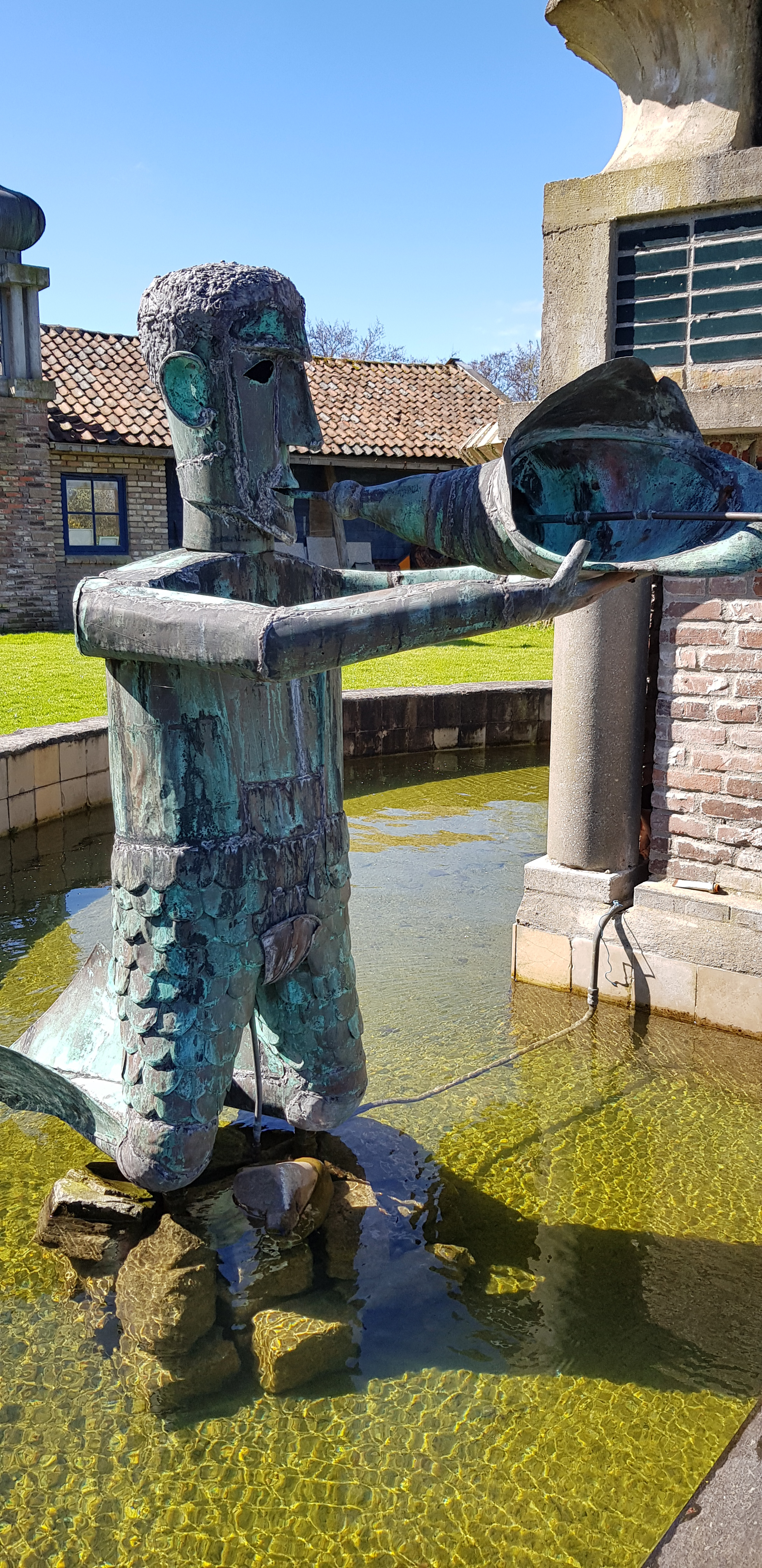
All of these structures are intertwined with mythological and biblical figures that majestically greets you while you wander through the garden.

Do not forget about the insects, fish and other beasts that lie beneath these giants like hidden treasures in the most unexpected places.

For me the most beautiful structures were the Chapel and the Neptunus fountain. The Neptunus fountain, including its obelisk, Triton and Pegasus was inspired by the Piazza Navona in Rome, Italy and this feature is a spectacular representation of Ger’s craftmanship when it come to the ability to ‘mould’ figures out of metal plates and objects.

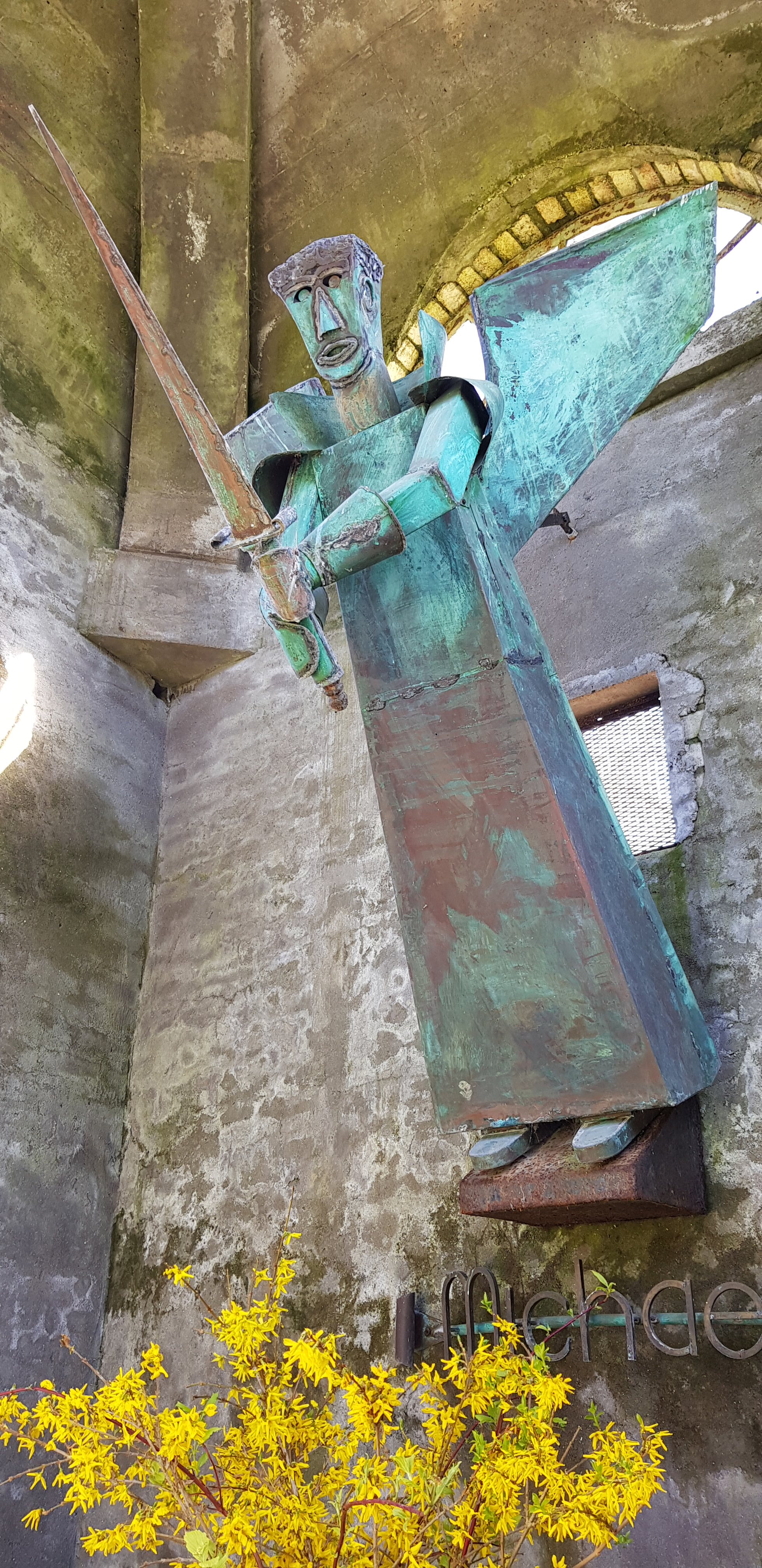
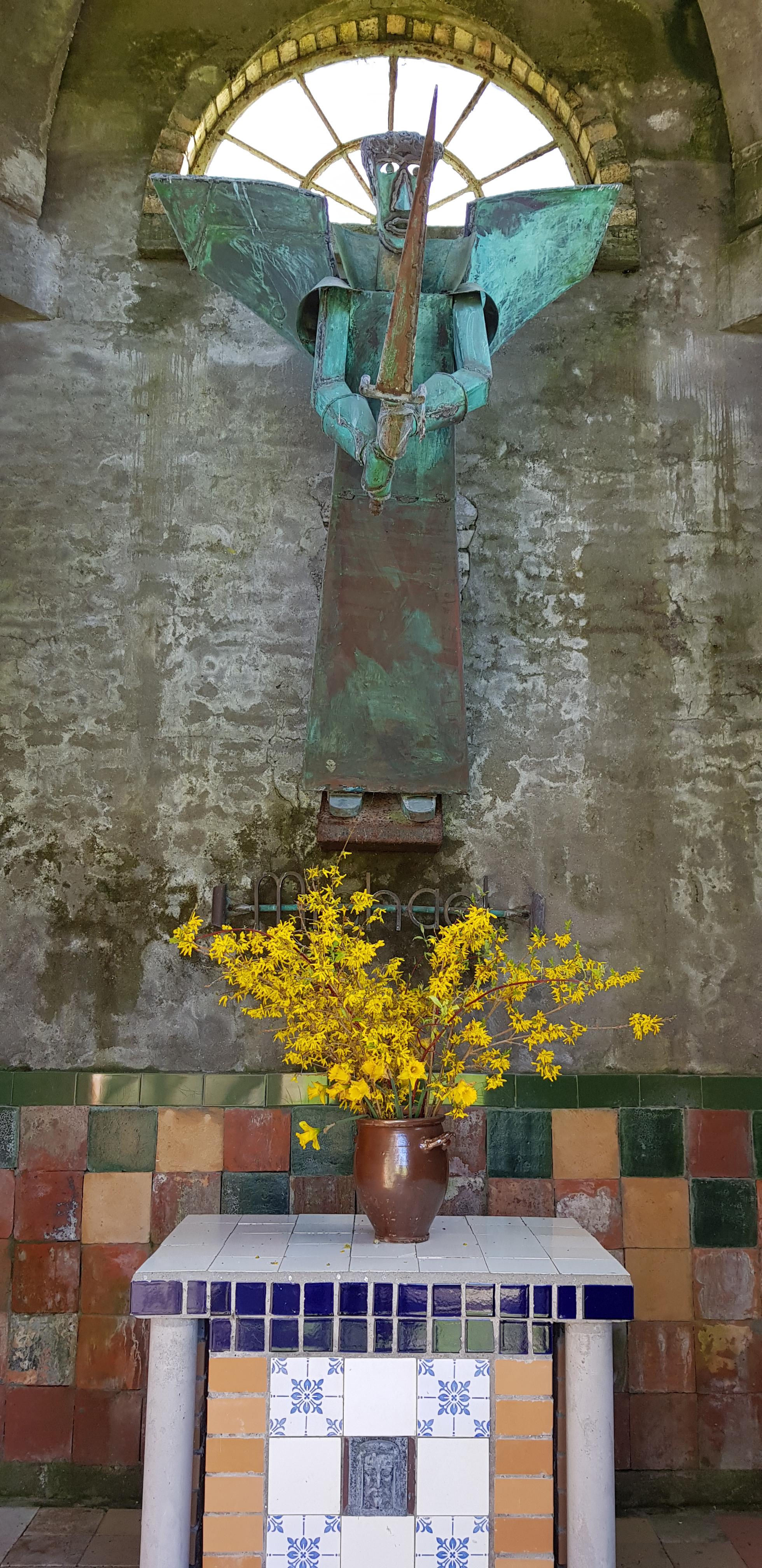
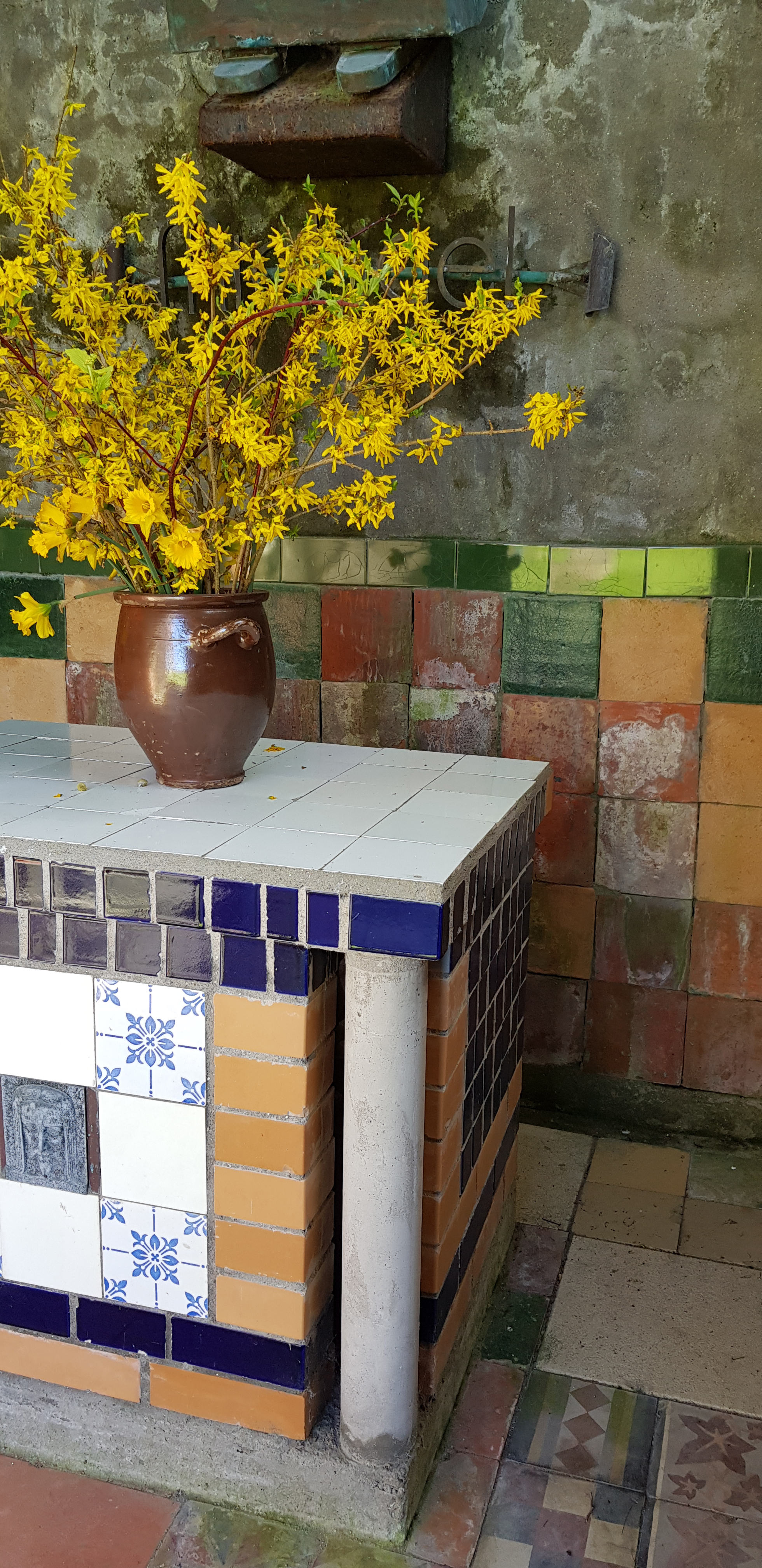
The chapel with Archangel Michael is a breathtaking display of the warm colors of the tiles against the huge turquoise metal angel with its sword, fighting all evil and enemies to protect the people of God.

If you ever visit North-Holland, this hidden architectural and artistic treasure should be on your list.

Please visit their website for more information on opening hours and directions: https://www.kunsttuinnederlandskremlin.nl/